Key points
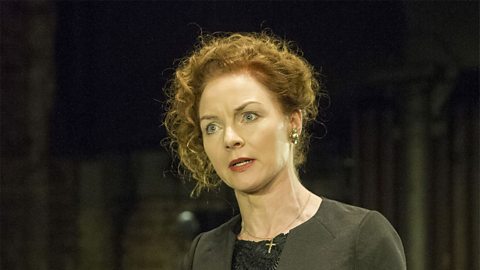
Queen Margaret is one of the main characters in the history playRichard III by William Shakespeare.
She is the widow of King Henry VI, who was killed in the Wars of the Roses.
Queen Margaret is an isolated figure at the English court and is full of rage against King Edward IV and his family.
She curses the other characters and warns them of Richard’s evil nature. Her curses are Predicting what will happen in the future. and many of them come true.
Did you know?
Shakespeare uses the character of Queen Margaret as a kind of chorus. A chorus is a device from Ancient Greek theatre, where a character or group of characters stands apart from the action, watching events and commenting on them.
Plot summary
Queen Margaret’s key moments
Click through the slideshow to see Queen Margaret’s key moments
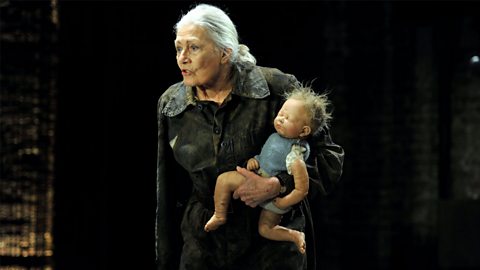
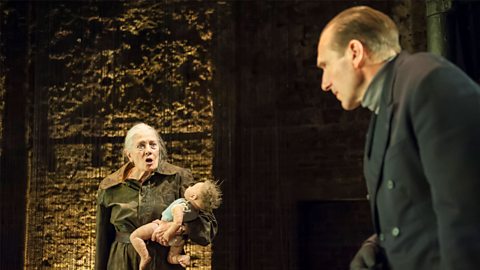
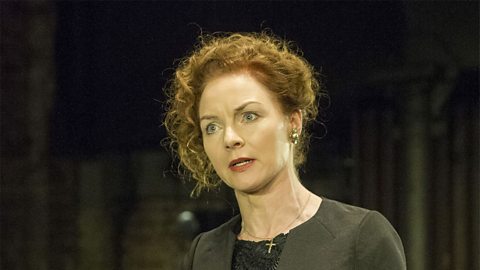
Image caption, These images are taken from a 2016 production of Richard III starring Vanessa Redgrave as Queen Margaret, Ralph Fiennes as Richard and Aislín McGuckin as Queen Elizabeth. Although Queen Margaret has been banished, she remains at the English court. She wishes grief on Queen Elizabeth and predicts the early deaths of Rivers and Hastings.

1 of 4
Character traits
Bitter
Queen Margaret’s grief and suffering have made her bitter. She has lost her family and her power, and as a result she is full of anger and wants revenge.
Cruel
Queen Margaret is guilty of committing cruel acts herself. Richard reminds the audience that she killed his younger brother and waved a cloth soaked in his blood in his father’s face. She also enjoys the suffering of others and mocks Queen Elizabeth in her grief for the deaths in her family.
Prophetess
Queen Margaret is a A woman who makes predictions. and curses the other characters at court, predicting their early deaths and suffering. For example, she curses Queen Elizabeth with the prediction that her children will die: “Long mayst thou live to wail thy children’s death”. All her predictions come true, and the other characters start to see the power of her words.
What is the purpose of Queen Margaret’s curses?
The curses are a type of prophecy. A prophecy is a prediction of the future and Queen Margaret’s curses predict the fates of many characters in the play. The curses remind the audience of the other characters’ sins. Queen Margaret’s role is to remind the audience of the cycles of sin and guilt in history.
Queen Margaret’s curses also give a structure to the play. Each character reflects on Queen Margaret’s particular curse when they face death and their own guilty consciences.
Relationships
Queen Margaret’s family are from the House of Lancaster and Richard’s family are from the House of York. The families are enemies in the Wars of the Roses. The House of Lancaster has been defeated and Queen Margaret has lost everything, including her husband and son. She curses all the main characters and predicts their unhappy fates.
Richard killed King Henry VI, Queen Margaret’s husband and her son, Edward, Prince of Wales. Queen Margaret is not afraid of Richard and he becomes the focus of her anger. She sees his true evil nature.
Queen Elizabeth has replaced Queen Margaret on the English throne and at first they are bitter enemies. Later in the play, Queen Elizabeth asks Queen Margaret to teach her how to curse and they join forces in their grief.
Did you know?
The character of Queen Margaret appears in many of Shakespeare's plays, including Henry VI Part 1, Henry VI Part 2 and Henry VI Part 3. Overall, she has more lines than any other Shakespearean female character.
Changes in character
At the start of the play, the other characters mock Queen Margaret and view her as mentally unstable. They often overlook her, which allows her to listen to their schemes.
When her curses start to come true, the characters realise her power. Queen Margaret is now seen as a prophet of doom. When Lord Grey is arrested in Act 3, scene 3, he says, “Now Margaret’s curse is fall’n upon our heads”.
In Act 4, Queen Elizabeth asks Queen Margaret to teach her how to curse. Queen Margaret gives advice to Queen Elizabeth and the Duchess of York about using their grief to fuel their curses. Then Queen Margaret leaves for France, satisfied that she has had her revenge.
Listen to a scene
Listen to this audio clip from Act 4, scene 4, in which Queen Margaret and the Duchess of York chant together, and then answer the question below.
Queen Margaret: Tell all your woes again by viewing mine.
I had an Edward, till a Richard killed him;
I had a husband, till a Richard killed him.
Thou hadst an Edward, till a Richard killed him;
Thou hadst a Richard, till a Richard killed him.
Duchess of York: I had a Richard too, and thou didst kill him;
I had a Rutland too, thou holp'st to kill him.
Queen Margaret: Thou hadst a Clarence, too,
And Richard killed him.
What is the effect of Queen Margaret’s language in this scene?
The repetition within Queen Margaret’s speech has the effect of a chant or a spell. Her language and desire for revenge make her sound cold and oddly inhuman. The Duchess of York starts to speak like Queen Margaret. Their grief has turned to anger and a need for revenge. Shakespeare shows that words become the women’s only weapons.
Activity - Order it
What do these key quotations mean?
Thy friends suspect for traitors while thou livest,
And take deep traitors for thy dearest friends!
Queen Margaret
Act 1, scene 3
Queen Margaret curses Richard and predicts that he will trust the wrong people in his scheming for power. The repetition of the words “friends” and “traitors” gives her words a spell like power.
The time will come when thou shalt wish for me
To help thee curse that poisonous bunchback’d toad.
Queen Margaret
Act 1, scene 3
Queen Margaret speaks to Queen Elizabeth and continues to insult Richard, using animal imagery to show the intensity of her hate. In Shakespeare’s day, toads were associated with the devil. Queen Margaret tells Queen Elizabeth that she will want help from her in the future.
Teach me how to curse mine enemies.
Queen Elizabeth
Act 4, scene 4
Queen Elizabeth asks Queen Margaret to teach her how to curse. She now shares the bitter Queen’s anger and recognises her power. The women have come together, united in their grief.
Test your knowledge
Solve the Story!
An exciting new series from the Other Side of the Story, designed to help young people strengthen their media literacy skills.

More on Richard III
Find out more by working through a topic
- count1 of 5

- count2 of 5

- count3 of 5

- count4 of 5