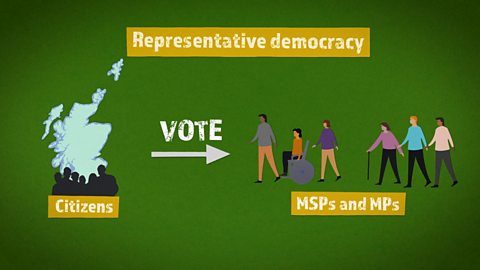
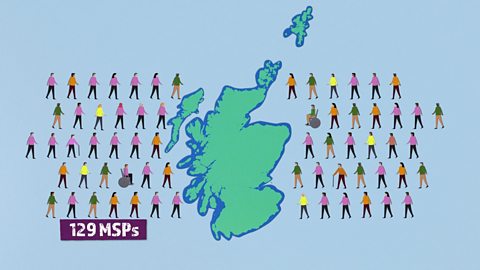
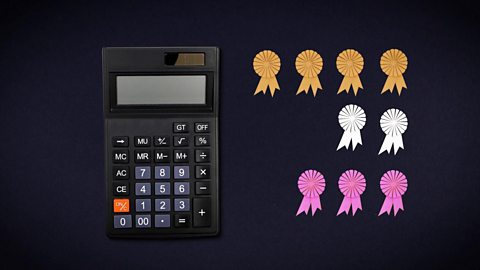
The Scottish Parliament is made up of 129 members or MSPs, who represent everyone in Scotland. The country is divided into eight electoral regions and 73 constituencies. Each voter in Scotland is represented by eight MSPs. One constituency MSP and seven regional MSPs. They are elected using the Additional Member System or AMS. At an election voters are given two ballot papers, one for their constituency and one for their region. On the constituency ballot paper voters mark one cross next to the name of the individual person they wish to vote for. The candidate who wins the most votes is elected as that constituencies MSP. On the regional ballot paper, voters place a cross next to their preferred political party or independent candidate. The total number of regional votes is counted and used to work out the number of MSPs each party or independent candidate should have to fairly represent the proportion of votes they received in the region. The number of constituency MSPs each party has already had elected is subtracted from each party’s total. The party’s regional list of candidates is then used to top this up until the proportional number of MSPs is reached. This makes the additional member system a form of proportional representation, where the number of seats a party gains relates to the number of votes it receives.
Description
Learn how MSPs are chosen for the Scottish Parliament using an electoral system called the Additional Member System (AMS).