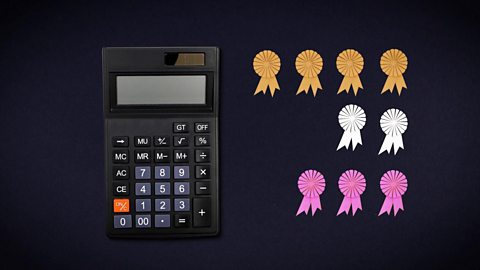
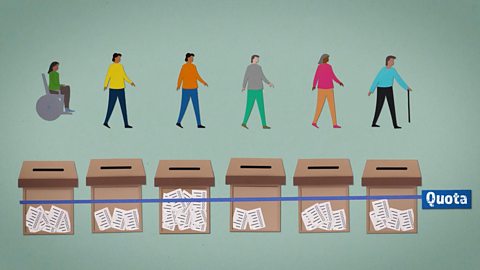
Scotland is divided into 32 local authorities which are in charge of public services like libraries, schools, bins, planning and social care. Each local authority is divided into areas called council wards. Each ward is represented by three or four councillors. The councillors are elected using a voting system called the Single Transferable Vote or STV. On the ballot paper, voters can choose to vote for one candidate by putting a ‘1’in the box by their name or they can rank candidates in order of preference with a ‘1’ for their favourite, a ‘2’ for their second favourite, and so on for as many of the candidates as they wish. To be elected, candidates must achieve a minimum percentage of all the votes counted. This is called the quota. If a candidate reaches the quota, they are elected. Any surplus votes they receive above the quota are redistributed amongst the other candidates based on voters’ second choices. If this brings them above the quota, they too are elected and so on until all councillors are elected. If no candidate reaches the quota based on the people’s first choice, the candidate with the fewest votes drops out. People who voted for them have their vote transferred to their second choice. In the end, the number of councillors elected from each party as in proportion with the number of votes cast for them. This makes STV a form of proportional representation.
Description
Watch this video to learn how the Single Transferable Vote or STV works.
Now playing video 5 of 5