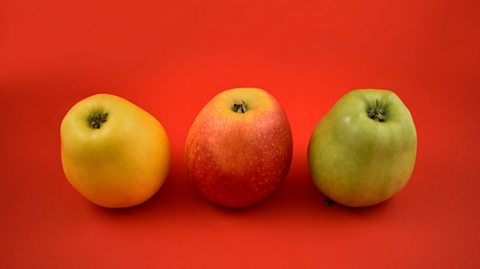
Key points about superlative adjectives

A word that describes the most of something, for example the biggest, the strongest, the fastest, the most interesting. are used to compare things and show which one is the most or least of something, eg most exciting, least interesting, strongest, the best.
A superlative A describing word that describes a noun can come before a noun, eg the highest mountain, or after the verb to be, eg the mountain is the highest.
Check your understanding
Forming superlative adjectives
Superlatives can be placed before a noun using the The definite article means 'the'. The definite articles changes depending on whether the noun is masculine, feminine, neuter or plural, eg der/die/das - and adding -ste or -sten depending on the gender of the noun, the Shows how nouns function in a sentence and relate to other words. They indicate who is doing an action, who owns something, and who is affected by an action. and the number. The superlative adjective must agree with the noun.
For example:
Check your connection, refresh the page and try again..
Mr Schmidt is the friendliest teacher.Check your connection, refresh the page and try again..
Mrs Müller is the funniest teacher.Check your connection, refresh the page and try again..
He has the dirtiest shoes.Check your connection, refresh the page and try again..
I bought the cheapest keyring as a souvenir.
Superlatives can also be placed after the verb seinto be. The word am precedes the adjective and the ending -sten is added to the adjective.
For example:
Check your connection, refresh the page and try again..
The girl is the funniest.
Check your connection, refresh the page and try again..
Pop music is the best.
Check your connection, refresh the page and try again..
The aeroplane is the fastest.
Some superlative forms are irregular:
| Adjective | Superlative before a noun | Superlative after sein |
|---|---|---|
| Check your connection, refresh the page and try again.good | Check your connection, refresh the page and try again.best | Check your connection, refresh the page and try again.the best |
| Check your connection, refresh the page and try again.many | Check your connection, refresh the page and try again.most | Check your connection, refresh the page and try again.the most |
Some short, one-The beat of a sound in a word. adjectives add an An accent added to the vowels o, a, and u. ö, ä and ü. An umlaut lengthens the sound of the vowel. in the superlative forms:
| Adjective | Superlative adjective before a noun | Superlative after sein |
|---|---|---|
| Check your connection, refresh the page and try again.big | Check your connection, refresh the page and try again.bigger | Check your connection, refresh the page and try again.the biggest |
| Check your connection, refresh the page and try again.young | Check your connection, refresh the page and try again.younger | Check your connection, refresh the page and try again.the youngest |
| Check your connection, refresh the page and try again.long | Check your connection, refresh the page and try again.longer | Check your connection, refresh the page and try again.the longest |
| Check your connection, refresh the page and try again.near | Check your connection, refresh the page and try again.nearer | Check your connection, refresh the page and try again.the next |
| Check your connection, refresh the page and try again.warm | Check your connection, refresh the page and try again.warmer | Check your connection, refresh the page and try again.the warmest |
| Check your connection, refresh the page and try again.high | Check your connection, refresh the page and try again.highest | Check your connection, refresh the page and try again.the highest |
If the adjective ends in -d, -t, -s, -ß, -sch, -x and -z an additional -e is added to the superlative ending, eg -este or am -esten:
| Adjective | Superlative adjective before a noun | Superlative after sein |
|---|---|---|
| Check your connection, refresh the page and try again.interesting | Check your connection, refresh the page and try again.most interesting | Check your connection, refresh the page and try again.the most interesting |
| Check your connection, refresh the page and try again.wet | Check your connection, refresh the page and try again.wettest | Check your connection, refresh the page and try again.the wettest |
| Check your connection, refresh the page and try again.hot | Check your connection, refresh the page and try again.hottest | Check your connection, refresh the page and try again.the hottest |
| Check your connection, refresh the page and try again.short | Check your connection, refresh the page and try again.shortest | Check your connection, refresh the page and try again.the shortest |
For example:
Check your connection, refresh the page and try again..
Today is the hottest day.
Check your connection, refresh the page and try again..
I read the most interesting book.
Mini quiz
- Translate into English: Check your connection, refresh the page and try again..
He drives the fastest car.
- Translate into English: Check your connection, refresh the page and try again..
Hiking is the most popular.
Quiz
More on Adjectives and adverbs
Find out more by working through a topic
- count1 of 5
- count2 of 5
- count3 of 5

- count4 of 5