Full stops and commas.
Full stops and commas are punctuation marks.
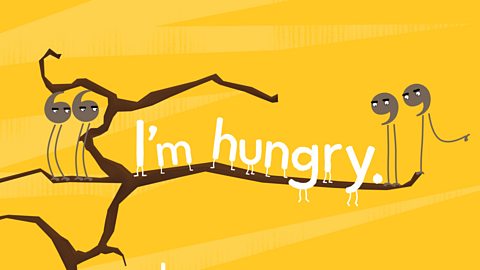
A full stop ends a sentence.
A comma shows a pause, breaks up a list or separates parts of a sentence.
Full stops are easy. They always go at the end of a sentence.
I love tennis. I love rugby. In fact, I love lots of sports. But I’m not so keen on football.
A comma could be used to link these sentences and form a list.
I love tennis, rugby, and lots of other sports, but not football.
Be careful though! Commas can completely change the meaning of a sentence.
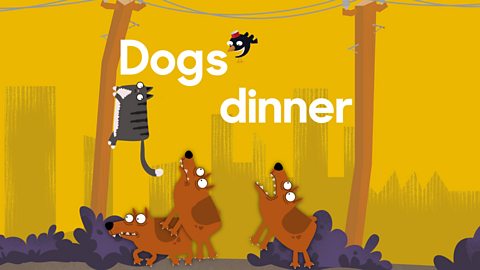
“Let’s eat, Lucy!” means you are inviting Lucy to eat.
“Let’s eat Lucy!” means you are about to eat Lucy for dinner!
If you aren’t sure where to put a comma, try reading the sentence out loud.
A comma is where you tend to pause for breath, before continuing.
In her poem Originally, Carol Anne Duffy uses full stops and commas to emphasise that growing up is about change.
“All childhood is an emigration. Some are slow, leaving you standing, resigned, up an avenue where no one you know stays. Others are sudden.”
The short sentences at the beginning and end of this passage cause impact, and the list in between reinforces the points that the short sentences are making.
The structure of the sentences also reflects the point being made. “Others are sudden” is short and sharp, whereas the middle sentence is slow and long, emphasising the time taken for some changes to take place.
Once you get your head round full stops and commas, there will be no stopping you.
Description
Punctuation is very important in writing. Without commas and full stops, writing would be a mess of letters and words, which would be difficult to understand. Watch this video to learn how to use full stops and commas correctly.
Now playing video 8 of 8
- 2 of 8
- 3 of 8
- 4 of 8
- 5 of 8
- 6 of 8
- 7 of 8