Throughout history, people have used art, music and literature to express their religious beliefs, and to help them to focus on practices such as prayer and worship. Beautiful words, images and objects have played a big part in many world religions, but there are some very different ideas about how they should be used.
Explore the issues
Watch Jamarl as he examines religious and non-religious teachings about art and spirituality.
How can people express the spiritual through art, music, and literature? Spiritual can describe our deep thoughts and feelings but also the things in life that inspire us, help us to think about the meaning of life and make us feel awe, wonder, and happiness. Art, music, and writing, doing anything creative can help us to share these feelings.
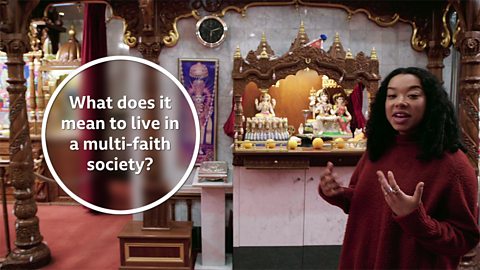
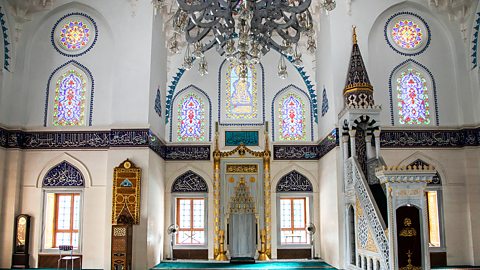
Walk into a holy building like this and the first thing you might feel is, wow! This whole building is designed to make us feel like God is here.
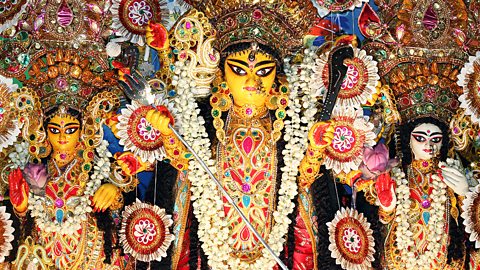
In a Hindu mandir, you'll see murtis which are images of gods and goddesses. But for Hindus, murtis aren't just statues or paintings. A ceremony is performed to invite God's Energy to fill the image. So the murtis are always treated as honoured guests.
Hindus and Buddhists create these detailed circular patterns called mandalas, which can be used to concentrate on during meditation. Christian icons are works of art that show Jesus and other important people from Christian history. The beauty of an icon is designed to stir spiritual thoughts.
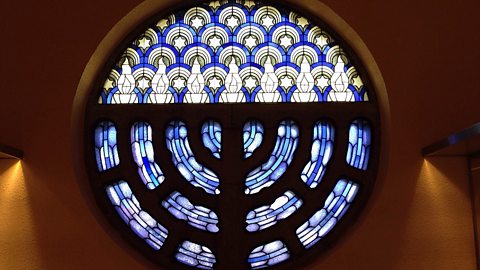
Jews believe they should only be praying to God who cannot be seen or imagined. So there are no pictures of God in a synagogue and you won't usually find any pictures of people either. Instead, synagogues are often decorated with pictures of plants and trees and religious symbols.
And for the same reason you won't usually find pictures of people or animals in a mosque. Muslims use other kinds of decoration, such as calligraphy, the art of beautiful writing. These are lines in Arabic from the Qur'an, the Muslim holy book.
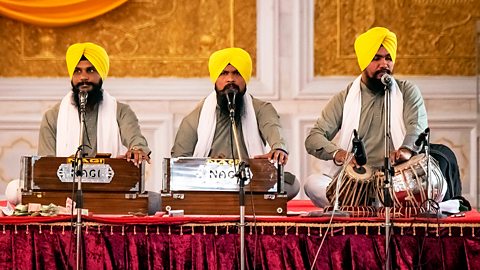
Music! It's always been a big part of religious worship because it has a way of expressing our deepest emotions. Synagogues employ a cantor or chazzan whose job it is to lead the singing of prayers, songs and passages from the Hebrew Bible. In a church, you'll hear hymns or more modern worship songs. Hindus and Sikhs sing hymns called bhajans and some Muslims chant nasheeds, which are sung without any instruments to worship Allah with just the beauty of the human voice.
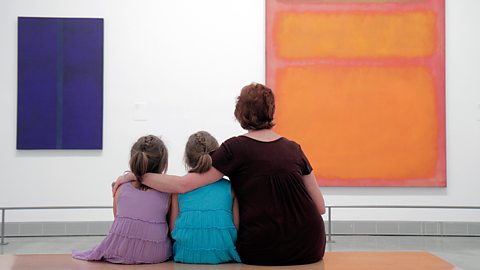
But spiritual doesn't have to mean religious. Many non-religious people would agree that the way we react to art is spiritual but not in a mystical or divine way. It's a wonderful and natural response to beauty. So whatever you believe, you can use art, music, poetry and stories to share your feelings and ask your questions about life and what it all means.
Which work of art has given you a spiritual experience?
A form of expression
Art, music and literature are important forms of expression for many people. Whether they are religious or not, many people believe that human beings have a spiritual existence. There is a wide variety of ideas about what this actually means, but put simply, it means that being human goes beyond what we can experience with our senses, minds and intelligence.
Religious people might say that humans have a soul or some sort of non-physical form which connects them with a higher power, such as God, and which moves on to another life after the body dies.
People who are not religious may also say there is a spiritual dimension because they believe that there is more to being human than just body and mind. But they will usually not think of this as having a soul that is connected to a God.
Throughout history, people have made and used art, music, and literature to express their beliefs and spirituality.
We see this in places of worship, like Orthodox Christian churches which are full of icons and often highly decorated with gold and vibrant colours, designed to give worshippers a glimpse of what heaven may be like. Religious people will often decorate their homes with religious art as well.
Decorative art in buildings
Click the image below to see how different religions decorate their holy buildings.
Worship and devotion
For many Hindus art has important connections to worship and devotion. Rangoli patterns created from coloured sand, rice, or grains, often adorn the doorsteps of Hindu homes around the time of Diwali. The bright colours of rangolis represent the idea of light, and they serve to offer a colourful welcome to Rama and Sita, the deities at the heart of the Diwali celebrations. Hindu mandirs, and often Hindu homes, feature shrines, which are places specially set aside for worship and devotion.
At the centre of a shrine is usually a colourful statue or painting of a god or goddess, or sometimes several of them together. These statues are often called murtis, which means ‘forms’. Sometimes a murti will be made using expensive materials, like gold and may be dressed in the finest silks.
For many Hindus, the great care, skill and effort taken to make images of gods and goddesses shows the artist’s devotion. The beautiful images help Hindus to focus on the deity they are worshipping.
Buddhists will often have a shrine around a statue of the Buddha, which helps them to meditate at home or in their temple (often called a vihara).
The mandala is an important art form in Buddhist tradition. It is a picture starting in the centre and expanding outwards. Buddhists believe this symbolises the entire universe. Mandalas can take the form of paintings on a wall or scroll, they might also be created with coloured sands or grains on tables or floors. The concentration and focus needed to create a mandala is thought of as a meditation in itself. A mandala isn’t necessarily a physical object. Some Buddhists create mandalas in their minds through meditation. Many Buddhists believe that mandalas can help a Buddhist along their path to enlightenment.
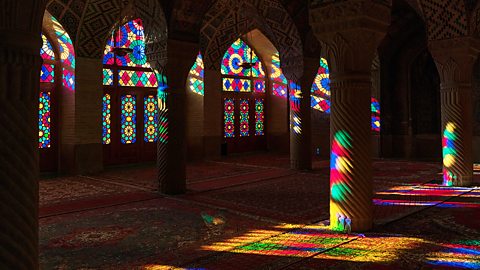
Abstract imagery
The lack of pictures of saints, important figures, and depictions of God or the heavens in a place of worship, also shows us a lot about the beliefs of the worshippers who go there.
For instance, Muslims and Jews believe that God is too great to try to capture in pictures or sculptures, and so they find other ways to adorn their holy spaces and make them look beautiful. Many mosques will have beautiful calligraphy and geometric patterns, while synagogues are often decorated with pictures of plants, trees and religious symbols.
Reflective music
Songs, chants and instrumental music help to create an atmosphere that reflects the type of worship the people will participate in. This is very important in Sikh worship where prayers, called ragas, are sung by ragis who lead the worship. They are usually accompanied by music played on traditional instruments. If worship happens without music, perhaps even in silence, this too can be a way of expressing the spiritual.
Art, music and literature in pictures
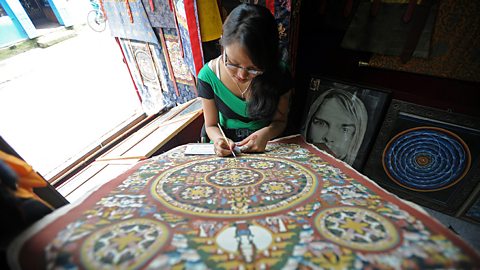
Image caption, Buddhism – Painting a mandala
In Buddhism, art and meditation are closely linked. The imagination and concentration involved in the process of creating or looking at art, or listening to music helps some Buddhists to meditate. For many Buddhists, meditating is a very important part of the journey towards enlightenment. How do you think looking at art or listening to music helps people to think more deeply about the world around them?
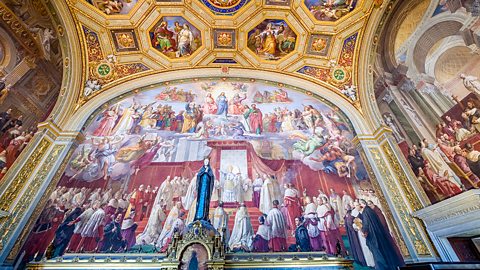
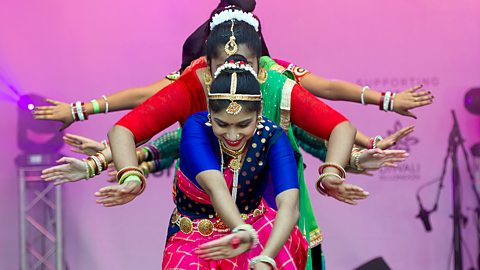
1 of 7
Quiz
Careers advice and tips from BBC Bitesize
Future careers, further studies and the world of work - we're here to help with advice from experts and from young people who've found their path.

More on Morals, ethics and philosophy
Find out more by working through a topic
- count3 of 8