The world is full of suffering, but why? Is suffering just a part of life that we must accept and try to deal with? Questions about suffering and evil have always been a big challenge for religious believers. It has caused some people to doubt the existence of God or a higher power, but despite the presence of evil and suffering, most religious people firmly believe in a God who is good.
Explore the issues
Watch Niamh as she examines religious and non-religious teachings about suffering.
Why do people suffer? It's a difficult question to answer especially for religious people. Because if God is omniscient which means he knows everything, and omnipotent, he's all powerful, and benevolent, he's kind, then why does he allow bad things to happen to good people?
Most religions teach that good people will be rewarded and bad people will be punished. For example, most Muslims believe that God will judge everyone and decides who deserves reward in paradise and who deserves punishment in hell.
But if God is all powerful, then why doesn't he stop people doing bad things in the first place? But then we'd be like robots following a program. Jews and Christians believe that God has given us free will – the right to choose how we want to live our lives – and so the opportunity to do the wrong thing has to exist. This is called moral evil, which is suffering caused by people making bad choices like stealing something or murdering someone. But that doesn't explain natural evil, which is suffering caused by the natural world like earthquakes, floods and diseases.
Some Christians would say natural evil is explained by the story of Adam and Eve – the first man and woman. God gave them a paradise to live in and just one rule: don't eat the fruit from that tree. But Adam and Eve disobeyed him. Paradise was ruined. The balance of nature upset and suffering began.
Jews might point to the story of a farmer called Job who, despite being a good man, is tested by God. His animals are stolen or destroyed. His servants are killed. All his children die and he gets horribly ill. But Job remains faithful. But what does this mean? That we should patiently put up with suffering? That we will never understand God's plans for us? Or maybe God doesn't know everything, isn't all powerful, or doesn't care what happens to us.
Atheists might go even further and say that suffering is proof that God doesn't exist at all. Some people believe that suffering happens because of karma, the belief that all actions have consequences in this life or the next. Hindus and Sikhs generally believe that a person's soul lives on after their body dies and is reborn in a new body. If someone lives a good life, then they'll be rewarded with a better life next time. But if they do bad things, then they'll get a worse life next time. That's karma.
Buddhists believe that people suffer because they want the wrong things. And the only way for someone to stop suffering is to stop wanting. Eventually, instead of being reborn, Buddhists believe that they will be released from a physical life and from suffering altogether.
Whatever we believe, we can all make better choices to reduce suffering as much as possible. What could you do to make the world a better place?
A sense of unfulfillment
Buddhism sees suffering as a central feature of human life. Even when we are not suffering outwardly from things like illness, loss of loved ones or being a victim of a crime, we still suffer because we are unfulfilled, and life is unsatisfactory. Just think about it: you could be on the holiday of a lifetime, having lots of fun, but in the back of your mind, you might still be worrying about this great experience coming to end and having to do something you don’t enjoy. Buddhists call this unsatisfactoriness dukkha.
Buddhism teaches that dukkha is part of being human. The Buddha taught that we can control and try to end this suffering by being aware that dukkha is caused by our own desires and cravings, and by realising that pleasure, along with everything else in life, does not last forever. Therefore, because nothing lasts forever, and things are in a constant state of change, we should aim to avoid becoming attached to worldly things.
Words of wisdom
What do religions and non-religious beliefs teach about suffering? Click the image below to find out.
What is evil?
Evil is a word used to describe all that is bad, sinful and wicked in the world. Evil is the cause of great suffering and there are different types of evil:
- Moral evil describes the behaviours of human beings that cause suffering, such as murder, lying and stealing.
- Natural evil describes the things that cause suffering that humans have no control over, such as illnesses, tsunamis and hurricanes.
Sadly, suffering is a fact of life; nobody escapes it, and this causes a huge problem for religious believers like Jews, Muslims and Christians who believe that there is a God who is all-loving, all-knowing and all-powerful. But, how can people believe this when suffering is such a big part of life? The problem of suffering and evil is one of the reasons why some people are atheists.
Moral evil, the wrongful behaviour of human beings, is easier for religious people to understand, because of the idea of free will. Therefore, it can be argued that God gave everyone free will so they can choose to do good or evil.
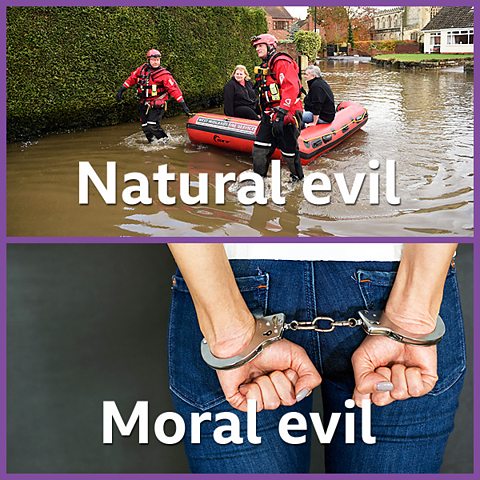
Natural evil (such as disasters like floods, earthquakes or droughts) are more difficult for believers to understand. However, some believers argue that there is a purpose to suffering which sometimes we cannot see or understand. Sometimes suffering can make us more caring and help us to develop a relationship with God through prayer and worship.
There is also the idea in Christianity and Judaism that Adam and Eve brought suffering into the world when they disobeyed God in the Garden of Eden. Natural disasters can of course be made worse by moral evil, and the decisions of humans.
Life after death
For some people the idea of life after death presents a solution for the problem of evil and suffering. Yes, people suffer in this world, but there will be justice from God in the end. People who have suffered through no fault of their own will find peace in heaven, and people who have done evil deeds will be punished by God.
In religions that believe in reincarnation, like Hinduism and Sikhism, people are born into easier lives with less suffering because of good actions in their previous lives, and those who cause suffering will be reborn into lives where they too will suffer. This type of cosmic justice system is called karma.
Suffering in pictures
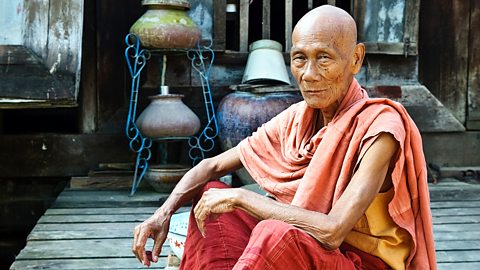
Image caption, Buddhism – An elderly monk in Mandalay, Myanmar
The Buddha, Gautama Siddhartha, was sheltered from the realities of life in his father’s palace and only became aware of old age, poverty and sickness as a young man. On becoming aware of suffering, he renounced his life of luxury and began his journey towards enlightenment. Buddhist monks follow the Buddha's example and live a life of simple poverty. Do you think young people should be sheltered from seeing suffering in the world?
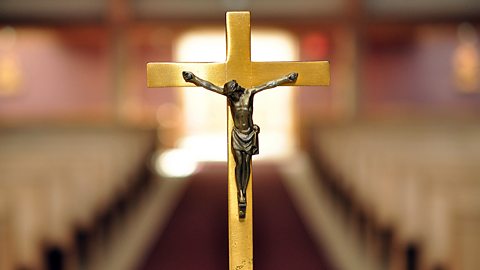
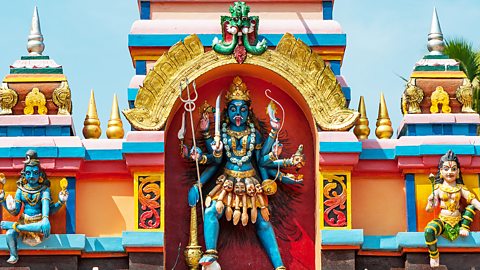
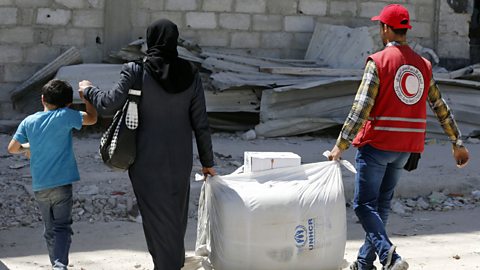


1 of 7
Careers advice and tips from BBC Bitesize
Future careers, further studies and the world of work - we're here to help with advice from experts and from young people who've found their path.

More on Morals, ethics and philosophy
Find out more by working through a topic
- count7 of 8