Religious teachings tend to focus on how people can live alongside each other with love, understanding and compassion. However, there are many different religions and different beliefs, and this can sometimes lead to conflict.
Explore the issues
Watch Niamh as she examines religious and non-religious teachings about war and conflict.
Is religion a power for peace or does it cause conflict?
Many religions such as Buddhism, Hinduism and Sikhism teach the principle of ahimsa - non-violence or doing no harm. Mohandas Gandhi was a Hindu and his life is a fantastic example of ahimsa in action. He led the campaign for Indian independence from British rule and he did it using non-violent methods of protest.
A famous Christian called Martin Luther King was inspired by Gandhi to use peaceful means of protest to get equal rights for black people in the USA. And as a Christian, Martin Luther King followed the teachings of Jesus who said, if anyone slaps you on the right cheek, let him slap your left cheek too, which seems to be saying that Christians should always be peaceful even when faced with violence. So religion can be a power for peace.
But Christians, Jews, Muslims, Hindus and Sikhs also believe that war is sometimes necessary to defend communities against violence. In that case, there are strict rules for war. In Islam, for example, war must be in self-defence. Fighting must be a last resort. Innocent people and children must not be harmed. Property must not be destroyed and no plants or animals should be killed. But rules like these are often ignored. Fighting is going on all over the world, and religion or at least religious people are often in the frontline. However, you could argue that it's not the religions that are causing the conflict. It's the people.
People might fight because they feel that their rights, their identities, their religions or their countries are under threat. Sometimes they fight because they're scared. Sometimes they fight to get revenge.
But often people fight because they want something: more money, more land, more power. They want change. They want to control what other people do and what other people believe. So they might say they're fighting for a religion, but are they really fighting for themselves?
Many non-religious people, like humanists, would like to live in a secular society, which means decisions would be made without any religious influence but would that stop conflict? Possibly not. People would still fight for power, for their political views, for greed.
So what do you think? Is religion a power for peace or would the world be a more peaceful place without religion?
The Golden Rule
It is often claimed that religion causes conflict and war. It is true that sometimes deeply held beliefs can lead to clashes, and there have been many wars that were caused by disputes over religion and beliefs. However, for many people religion can be a power for peace.
A message of peace and love towards others is at the heart of all of the major world religions. This is called The Golden Rule. It is the principle that you should treat others as you would like to be treated yourself, and it is found in one form or another in every major religion. Most religions prize forgiveness as a strength, and discourage people from taking revenge on those who have wronged them.
Pacifism
Some religions teach total non-violence and non-harm, such as branches of Hinduism and Buddhism. This approach is called pacifism. Followers of certain branches of Christianity are pacifists, such as Quakers. The Hindu leader, Mohandas Gandhi (often called Mahatma Gandhi) led a successful non-violent struggle to free India from British rule.
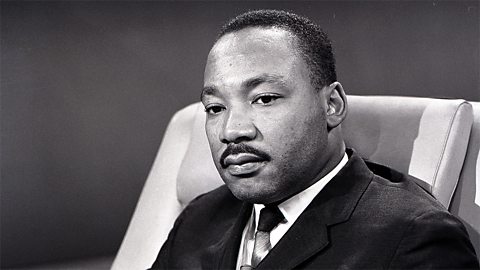
The Christian preacher, Dr Martin Luther King, found inspiration in Gandhi’s non-violent struggle. Dr King believed that Jesus had preached a message that you should love everyone, including your enemies. He led the struggle for black people to be given equal rights in the USA, and he did so without the use of violence.
Words of wisdom
What do religions and non-religious literature and texts have to say about war and conflict? Click the picture below to explore wisdom and teachings.
A just war
Some religions teach that conflict and taking up arms can be justified in the right circumstances. Sikhs, for example, have faced persecution throughout their history and have been involved in violent clashes with other faiths. Likewise, Islam is not a pacifist religion, but there are very strict rules about when a war can be justified and how to behave when wars are being fought. Islam is strict about avoiding unnecessary harm and violence both to the enemy and any innocent bystanders.
Similarly, most branches of Christianity accept that sometimes war and violence can be necessary, and like Islam, there are specific rules for when a war can happen and how it should be fought. People often refer to the Second World War as an example of a just war, because it brought an end to the Holocaust and to Nazi rule.
Conflict and peace in pictures

Image caption, Buddhism – A soldier pays his respects
This picture shows a Royal Thai Army officer making an offering during the Buddhist cremation rites of a mother and daughter who were killed in a drive-by shooting. Why would Buddhists, who follow the non-violent principle of ahimsa, consider joining the armed forces?
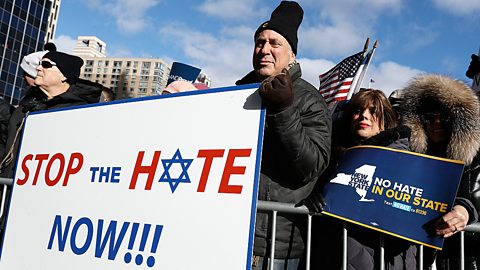
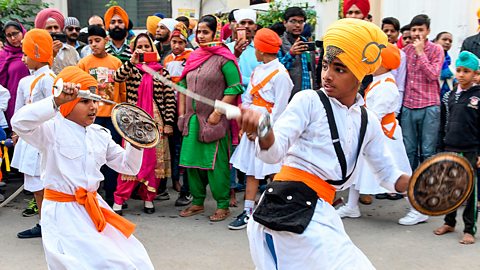

1 of 7
Careers advice and tips from BBC Bitesize
Future careers, further studies and the world of work - we're here to help with advice from experts and from young people who've found their path.

More on Morals, ethics and philosophy
Find out more by working through a topic
- count7 of 8

- count8 of 8

- count1 of 8