Discover how the process of separation works.
Narrator: Oh I do like to be beside the seaside. Ooh fish and chips, and some sea salt. Very posh. Aah I feel so relaxed.
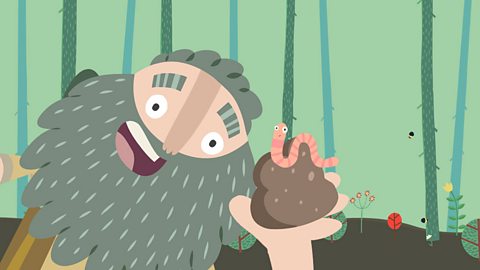
Woah, spoke too soon. Eurgh! Is that… a toenail collection?
Ah, now you’ve got sandy water and watery salt! What are the chances of that happening? Seriously though, what are the chances?
Well anyway, luckily you can reverse these changes using separation to get them back.
With a sieve we can separate the… toenails… that are mixed with the sand. The toenails are bigger than he holes in the sieve so he sand falls through but the toenails don’t.
Ah excellent. By pouring your sandy water through a paper filter you can separate the water and sand. Look at the sand residue left on that filter paper.
And look… mmmm… clear water, delicious.
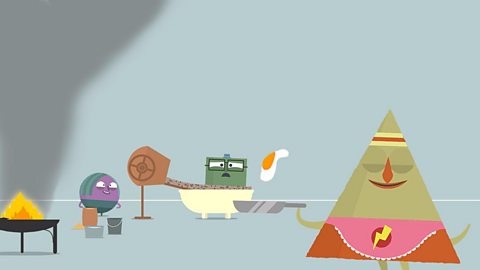
Brilliant! By heating the salty water to 100 degrees you can evaporate the water, leaving you with just the salt that was dissolved in it.
Well done everyone. All is well, hooray!
Oh… uk… we’ll leave you to it.
Separation
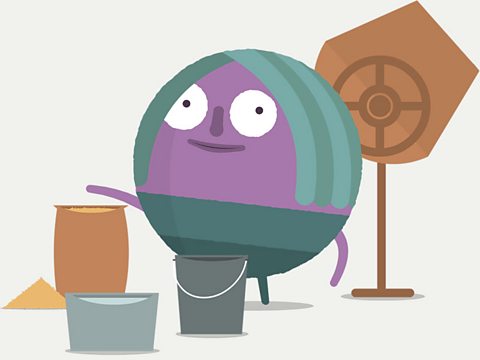
Mixtures can be separated by methods like sieving, filtering and evaporating.
Sieving
A mixture made of solid particles of different sizes, for example sand and gravel, can be separated by sieving.
Filtering
You can separate a mixture of sand and water by passing it through a piece of filter paper. The water is able to pass through the tiny gaps in the paper but the sand particles are too big and are left on the surface of the filter paper.
Evaporating
By dissolving salt in water you make a solution. You can separate the salt from the water again by boiling the solution. The water will evaporate until it is all gone. The salt will be left behind.
More on Materials
Find out more by working through a topic
- count4 of 10
- count5 of 10
- count6 of 10
- count7 of 10