What is friction?
Friction is the force between two surfaces that are sliding, or trying to slide, across each other. For example, when you try to push a book along the floor, friction makes this difficult.
Friction always works in the direction opposite to the direction in which the object is moving, or trying to move. Friction always slows a moving object down.
The amount of friction depends on the materials from which the two surfaces are made.
The rougher the surface, the more friction is produced.
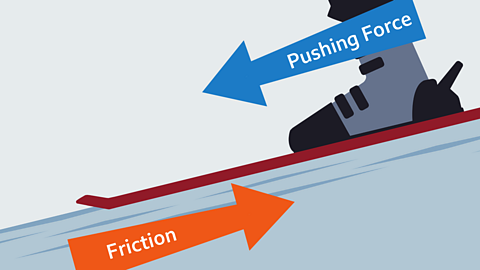
Watch: The effects of friction
Explore the effects of friction on this ski slope.
You've got the golden armadillo? Quick, go before the dragon catches you!
It could be here any minute – why aren’t you moving faster?
Friction? You mean the force between the surface of the road and the skis?
That's more like it! How come you’re going so much faster now?
There's less friction between the snow and the skis than there was between the road and the skis because snow is a smoother surface?
And the less friction there is, the easier two objects slide across each other!
So, just to be sure I’ve got this, smoother surfaces means you go faster because there’s less friction between them?
And bumpier surfaces mean you go slower because there's more friction between them?
Do you know, I'm not even sure that dragon’s coming anyway…
Fascinating facts
The laws of friction were first discovered by a scientist called Leonardo Da Vinci over 500 years ago. He used his discovery to help him understand and solve problems with mechanical systems.
We can use friction to make fire. When two pieces of flammable material, like wood are rubbed together it produces heat.
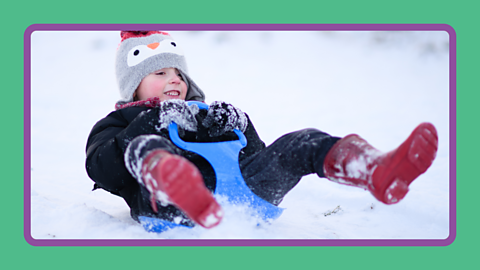
Some sports, like bobsledding, require athletes to remove friction so they can slide down an icy track as fast as possible.
Athletes, including weightlifters and gymnasts, use chalk powder on their hands in order to provide more friction, so that they have a tighter grip.
When our bodies are submerged in water for too long our fingers and toes become wrinkled. Scientists have discovered that this is our body trying to provide more grip, so we can move around more easily on wet surfaces.
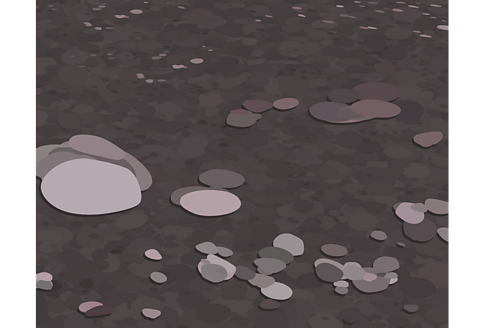
Rougher surfaces, like gravel or stones, produce more friction and were used for early roads.
Slideshow: Friction
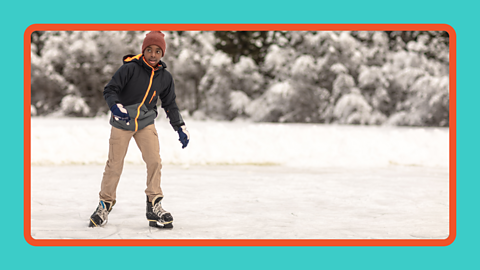
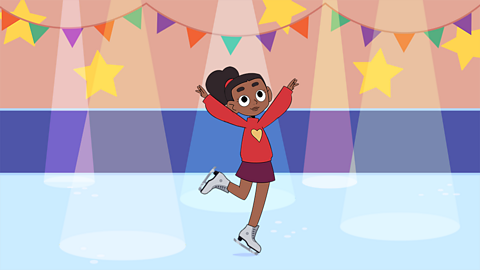
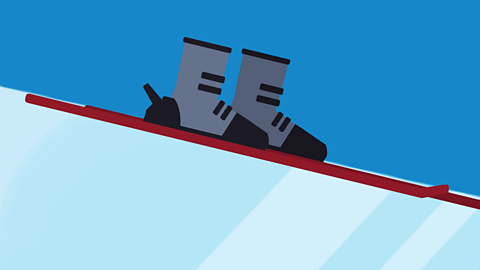
Image caption, Ice skating
Ice causes very little friction, which is why it is easy to slip over on an icy day.
1 of 4
Did you know?
When two surfaces rub together it also produces heat too.
If you rub your hands together quickly, you will feel them get warmer, and as skis slide down a snowy slope, the snow will melt a little because of the heat generated by friction.
Sometimes the generation of heat can be a problem as it can cause damage to the things that are rubbing together, such as the moving parts of a machine.
When is friction useful?
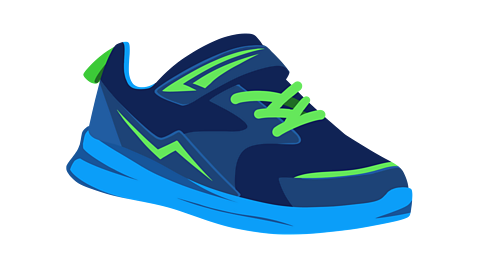
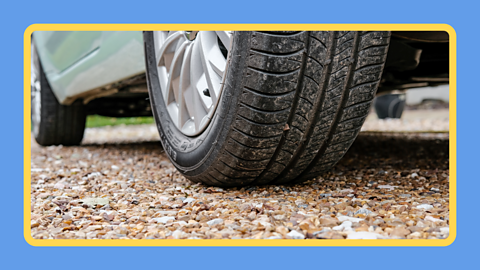
Friction can be a useful force because it prevents our shoes slipping on the pavement when we walk, and stops car tyres skidding on the road.
When you walk, friction is caused between the tread on your shoes and the ground.
This friction acts to grip the ground and prevents sliding.
It can also be useful in the winter, spreading grit on icy roads can increase the friction between the vehicle and the road.
When is friction not useful?
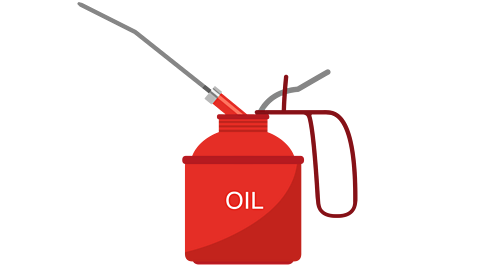
Sometimes we want to reduce friction.
For example, we use oil to reduce the friction between the moving parts inside a car engine.
The oil holds the surfaces apart and flows between them.
The reduced friction means there is less wear on the car's moving parts and less heat is produced.
Important words
Force - Forces are pushes and pulls in a particular direction.
Friction - A force between two surfaces that are sliding, or trying to slide, across each other.
Grip - To cling or have a firm hold on a surface, like the grip of a shoe.
Materials - What objects are made from.
Tread - As a noun, this word describes the rubber part of a tyre or the underside of a shoe that makes contact with the ground.
Wear - The way in which a surface or material starts to show signs of repeated use and become less like it's original form.
Activities
Activity 1 – Fill in the gaps
Activity 2 – Take the quiz
Activity 3 – Low or high friction?
New game! Horrible Science: Stinky Space. game
Join Pipette on her epic mission and learn some revolting facts about space along the way.
More on Forces
Find out more by working through a topic
- count2 of 3
- count3 of 3