Introduction to causes of World War One
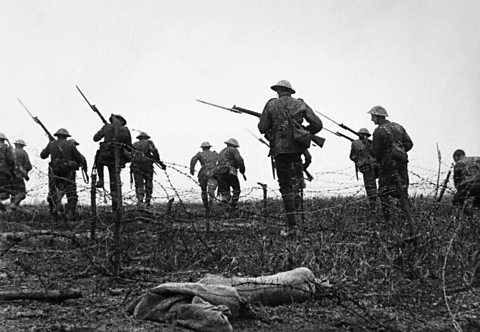
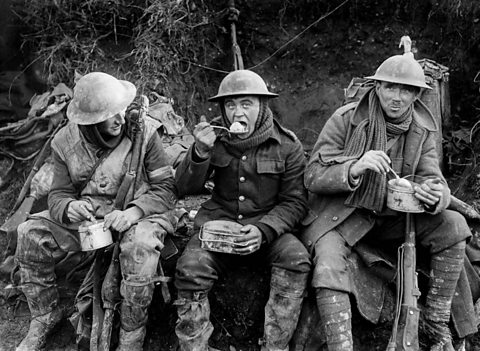
World War One lasted for four years, from 1914 – 1918, and resulted in the deaths of millions of people.
The causes for the war were far from simple and many of the reason dated back decades.
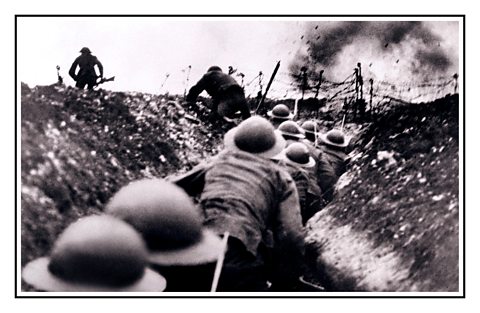 Image source, ALAMY
Background to World War One
Watch this video to find out how alliances and the assassination of Archduke Franz Ferdinand led to the outbreak of World War One.
How did a series of alliances designed to keep the peace in Europe lead to the outbreak of World War One?
- The heir to the Austro-Hungarian Empire, Archduke Franz Ferdinand, tours one of his territories; Sarajevo, in Bosnia and Herzegovina.
The empire – a mix of European nations with different languages, cultures, and identities – is in trouble. Some nations want more political representation, whilst others want to break away entirely. Sarajevo is a city experiencing unrest, not everyone welcomes the archduke, or being part of his empire. Tension hangs in the air.
All of a sudden, the crack of gunshots! Then the news – Franz Ferdinand and his wife, Duchess Sophie, are dead. Assassinated by a Serbian nationalist. Across Austria-Hungary, the streets are filled with anti-Serbian riots.
Tensions between Serbia and Austria-Hungary reach an all-time high. There are threats from both sides, and each have powerful allies that swiftly moved to the brink of action, until what’s left is a war that involves everyone the world over.
Now, let’s rewind. Before World War One broke out, alliances were made to keep the peace in Europe, stopping any one nation from becoming too powerful.
Two military alliances emerged a few years before the war: the Triple Entente, with Britain, France and Russia, and the Triple Alliance, with Germany, Austria-Hungary and Italy. They were meant to prevent conflicts, but in reality, Europe was a continent of rival powers, constantly building strength in case fighting broke out.
Now, Austria-Hungary claimed Serbia was responsible for the death of Franz Ferdinand. The assassin was Gavrilo Princip, a student of Serbian descent. Following the assassination in 1914, Serbia was given an ultimatum – accept the Austro-Hungarian inquiry into the death, or there would be consequences.
And those consequences set off quite the domino effect. Austria-Hungary invaded Serbia, and Russia, being an ally of Serbia and committed to defending them, was brought into the conflict.
On the other side, the Triple Alliance meant Germany became involved to support Austria-Hungary, whilst Italy agreed to remain neutral. The Triple Entente meant that France and Britain would support Russia. Suddenly, these peace treaties had brought Europe to the point of war.
And when Germany declared war on France and invaded Belgium, Britain and its world-wide empire entered the conflict and World War One began. The war in Europe spread to Africa, Asia, and the Middle East, as British, French, and German colonies were attacked on both sides.
And the fighting didn’t stop. It spread further until nearly everyone was involved in some way, including, crucially, the USA in 1917. It truly was a world war. These alliances brought the potential for war closer and closer, and the assassination was the spark that set it ablaze.
 Image source, ALAMY
On 28th June 1914, the heir to the powerful empire of Austria-Hungary, Archduke Franz Ferdinand, was assassinated by Serbian extremists.
By early August of 1914, many of Europe’s nations had formed themselves into political and military A union or association formed between countries or organisations. that were preparing for war.
This assassination and the international reactions to it led to the outbreak of World War One.
However, there are a number of wider causes and factors that contributed to the war. Some date back decades before the shooting started.
These causes can be summed up by the acronym MAIN.
- Militarism
- Alliances
- Imperialism
- Nationalism
Image source, ALAMYHow did militarism lead to World War One?
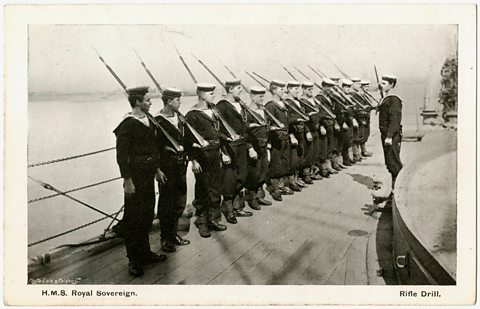 Image source, ALAMY
Through the 19th Century, the role of the military grew in importance and prestige for European countries.
For the British, militarism came in the form of the national pride in the strength of its navy – at the time, the strongest navy in the world.
The British Empire was the largest in the world and included nations and territories such as Canada, Australia, India, and parts of Africa. The navy was essential to the maintenance and defence of this empire.
For other nations, the size and strength of the army was a source of national pride - success in wars and battles provided glory and increased international status to the winning nation.
In the second half of the 19th Century, a series of wars were fought between the major European powers. Countries fought to gain more territory and political influence, or to defend the territory and influence they already had.
The strength of each nation’s military was the means to achieve these goals and bring greater glory to the nation.
- The Crimean War, 1853-1856, saw an alliance of British, French, and Ottoman forces against Russian territorial expansion.
- The Franco-Prussian War, 1870-71, was a territorial conflict fought by France and Germany.
- The Boer War, 1899-1902, saw Britain fight to maintain control of South Africa from rebellions in two South African states.
- The Russia-Japan War, 1904-1905, saw Russia defeated in an imperial clash over control of parts of China and Korea.
The increased importance of a strong military led to greater rivalry between European nations.
How did rivalry between Britain and Germany lead to World War One?
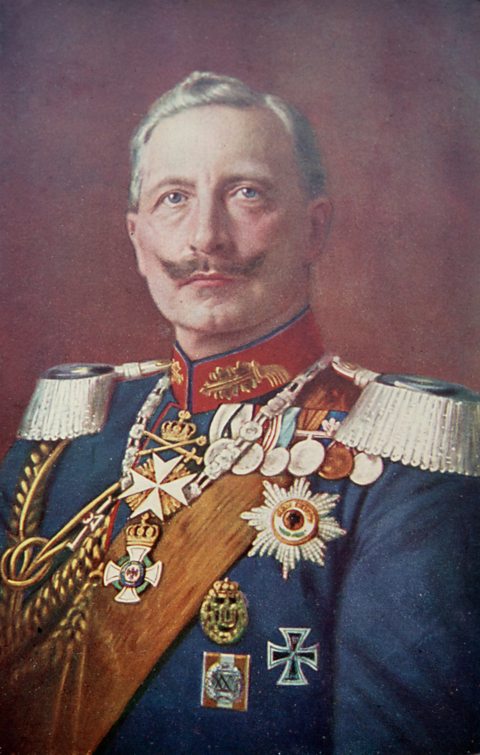 Image source, ALAMY
During the late 19th Century, Germany became an important power in European.
As a nation, Germany was relatively new - separate German-speaking states such as Prussia, and Hannover, had been unified as the German nation-state in 1871.
As well as being a power in Europe, Germany desired an overseas empire - just as Britain had.
The German Kaiser, Wilhelm II, was a grandson of the late Queen Victoria and had spent many of his summers visiting his grandmother in England. It was during these trips that he became inspired to build a new German Navy which would rival the British fleet.
In a sign of German intent, in 1887, work began on a canal that would cut across the territory of Denmark.
Called the Kaiser Wilhelm Canal (now known as the Kiel Canal), it allowed the German Baltic Fleet to move from their bases to the North Sea faster by avoiding the journey of sailing around Denmark.
The rapid expansion of the German navy, as well as the strength of the German army, was seen as a threat to other rival European powers such as Britain and France.
For these rivals, there was a dilemma. Should they allow German to get militarily stronger, or go to war and defeat it sooner before it was too late.
Image source, ALAMYHow did alliances lead to World War One?
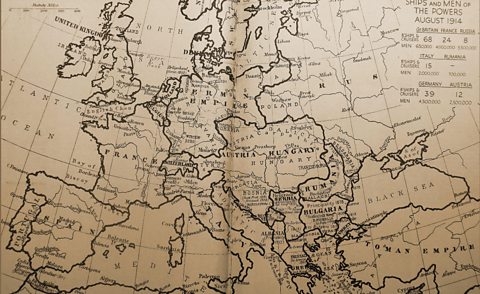 Image source, ALAMY
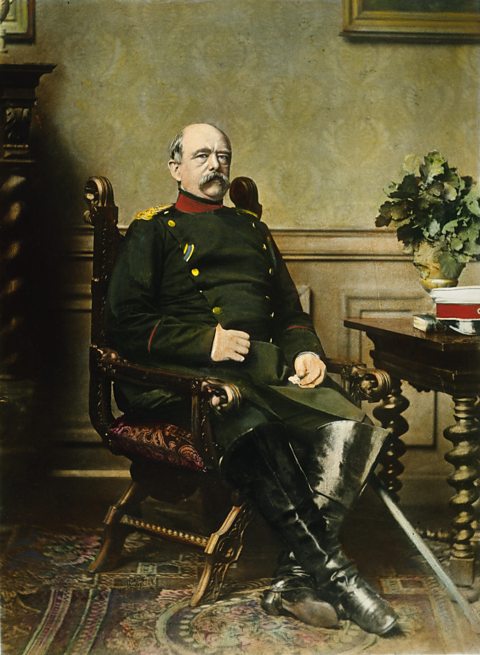 Image source, ALAMY
Before the outbreak of war, peace in Europe was guaranteed by a series of treaties between nation.
Usually these were A union or association formed between countries or organisations. of two or more nations promising aid to each other if any of them should be attacked by another country.
However in the last quarter of the 19th century (1800s), old alliances were discarded and new ones were formed, creating tension between the nations of Europe.
Of all the countries in Europe, Germany required alliances to secure their borders as they were located in the middle of Europe and surrounded by nations that were hostile to their ambitions.
Image source, ALAMYWho were Germany's allies before World War One?
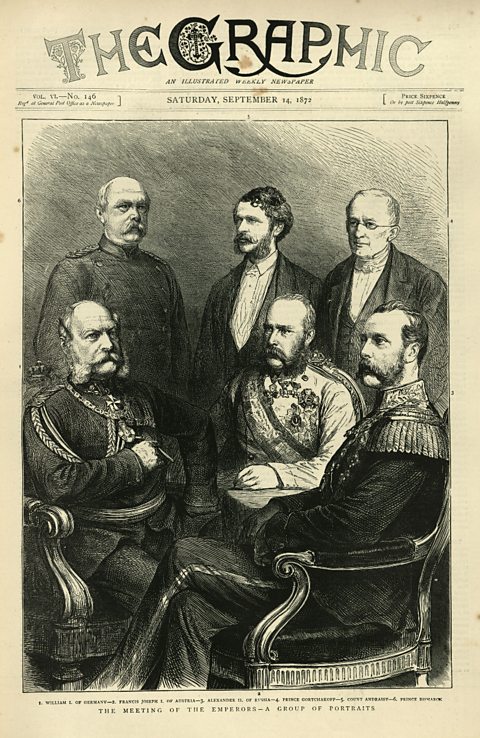 Image source, ALAMY
A unified Germany only came into existence in 1871. Before that, it had been a collection of German-speaking states.
This powerful new nation had three immediate problems:
- France – Their neighbours to the west, the French were Germany’s biggest rival for power in Europe and they had recently been at war in 1870.
- Austria-Hungary - their neighbours to the south opposed Germany’s ambition for greater power and an empire and saw them as a threat to their influence in middle European affairs.
- Russia – Germany feared that its large neighbour and rival to the east was rising in power and would soon challenge them.
Germany believed that it could defeat any one of these rivals but if two or more formed alliances against it, then they would be too powerful.
Under the leadership of the German diplomat and statesman, Otto von Bismarck, the German solution was to form alliances with these nations to stop them forming alliances with each other.
Between 1873 and 1887, Germany was in an uneasy, on-off alliance with Austria-Hungary and Russia known as the Three Emperors’ League. This was designed as a check to counter the threat of France.
When Germany’s relationship with Russia began to turn sour, Germany signed a separate alliance with Austria-Hungary in 1879 called the Dual Alliance. In 1882 this became the Triple Alliance when Italy joined.
To counter this, in 1893-4Russia and France formed an alliance that stated that each nation would come to each other’s aid if they were attacked by Germany.
This now meant that Germany’s borders were less secure as France and Russia could no longer be considered as friendly nations.
For security, Germany had to think of what would happen if it found itself at war with both of these neighbour nations at the same time.
Image source, ALAMYThe Schlieffen Plan
Watch this video to find out about the Schlieffen Plan - Germany's strategy for defeating France and Russia.
What was the Schlieffen Plan, and why did Germany need a plan to fight powerful enemies at the same time?
1905, Alfred von Schlieffen, head of the German military, has had a genius idea. One that solves a problem that has troubled German minds for a generation; how to win two wars at the same time.
Germany is surrounded by two rival powers – France and Russia – and they have an agreement between them. So if Germany went to war with one, they’d need to fight the other as well. Von Schlieffen’s plan for this double threat is to act quickly. Be aggressive, fast, because if France was to be defeated quickly, the German army would have time to move east by the time Russia was ready to fight.
But, one tiny problem. France is really well defended against a direct German attack, and moving through their defences would take too long. The solution – march through Belgium and attack the French army from the side. This, surely, was a foolproof plan. And yet, a mere nine years later when World War One broke out, it turned out to be a total failure.
So where did it all go wrong? Before Schlieffen, the most common theories were to defeat Russia first, and then focus on France. But Schlieffen was gambling on Russia’s enormous army – the ‘Russian Steamroller’ – being so slow to mobilise that Germany could defeat France first. The plan counted on beating France quickly and then moving soldiers east to fight the Russians. To do this, Germany had to bypass French defences by invading from the north – through Belgium.
Belgium was tiny and its army was no match for the Germans, but there was one problem, it had peace treaties with other nations who did have big armies – like Britain. The German army gambled on two things.
The first was that if Germany marched its army through Belgium, that the Belgians – quaking in fear at Germany’s might – would simply let them do it without fighting back. The second gamble was that the British would not come to Belgium’s aid. But, ultimately, both gambles failed. Belgium put up a strong resistance, and Britain joined the war.
What’s more, Schlieffen was no longer in charge, and the German attack was scaled back and underpowered. What a mess!
Now, German armies did eventually make it into France – almost to Paris, in fact – but it had taken far too long. Britain was now involved and sending over soldiers to fight, and Russia had readied themselves for a fight much faster than the Germans had calculated.
In response, German forces were moved from France to take on the Russian advance. Germany found itself with weaker forces on both fronts, neither strong enough to make any advance. Armies dug in from Switzerland to northern France, and as more nations and colonies joined the fight, the swift German victory that Schlieffen had planned for broke out into total, global conflict.
What was the 'Schlieffen Plan'?
With France to the west and Russia to the east, Germany needed a plan for how to fight two powerful enemies at the same time.
A German military leader and aristocrat, Field Marshal Alfred von Schlieffen, provided the plan that was to be named after him – the Schlieffen Plan.
The plan was to concentrate all available German military forces on France in order to defeat them quickly and then manoeuvre the army to prepare to defend from an attack by the larger Russian army in the east.
Schlieffen's plan was based on a set of assumptions:
- That the German army could by-pass French defences by attacking from the north via Belgium.
- That the German army could swiftly defeat the French army.
- That the Russians would be slow to organise and move their own army.
- That the British would not enter the war on the side of France, Russia, or Belgium.
Who were Britain's allies before World War One?
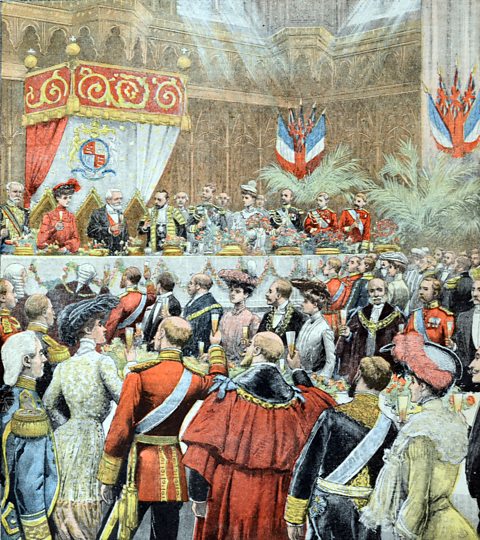 Image source, ALAMY
Britain chose a policy of isolation over alliances during the 19th Century. It tried to stay out of European conflict, but did have treaties with other nations.
In what would later become important, Britain had signed the Treaty of London in 1839 promising to defend the newly created state of Belgium. The treaty was also signed by all the other major European powers.
While the treaty guaranteed the independence and neutrality of Belgium, the agreement would be broken if Germany's Schlieffen Plan was ever to be put into use.
Over time, though, it became clear to British leaders that other alliances would be needed in order to protect the British Empire from rival countries.
In 1904, Britain and France signed an Entente Cordiale (Friendly Agreement) aimed at protecting both countries’ colonies in Africa.
They also agreed to naval spheres of influence:
- France would patrol the Mediterranean Sea.
- British would patrol the North Sea.
This understanding allowed Britain to move more of its fleet to the North Sea to counter the threat of the growing German Navy.
In 1907 a similar agreement was reached with Russia, this time focusing on the protection of Britain’s colonies in the Middle East and Asia.
These agreements forged the Triple Entente and brought Britain closer to European politics and more aligned with Germany's rivals, France and Russia.
However none of these agreements committed Britain to providing military support for either France or Russia in the event of a war breaking out.
How did imperialism lead to World War One?
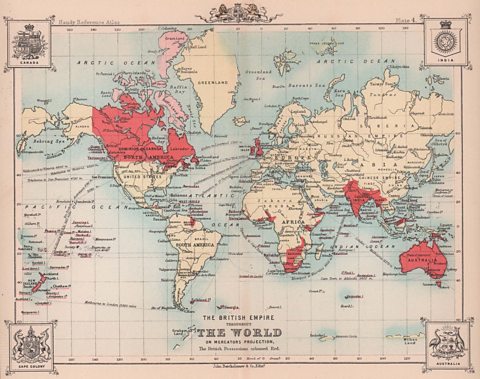 Image source, ALAMY
a system in which one country rules other countries or territories, often by invasion or exerting power. can simply be defined as extending a nation’s power or influence over other countries and in the 18th and 19th Centuries this was mainly achieved through colonisation.
At this time, the two largest colonial empires were the British Empire and the French Empire.
- The British Empire covered more than 11,400,000 square miles of territory and 390 million people
- The French Empire had amassed territory incorporating over 4,000,000 square miles and 60 million people.
To take over another country and rule over it. were a means to project a nation’s power and influence further afield in the world.
They also allowed nations to gain a lot of wealth through the exploitation of natural resources in the colonised lands and through trade.
During the 19th Century, many European powers rushed to build up overseas empires. This led to competitions and rivalries - and in some cases military conflict.
Both France and Britain had come close to war as a result of their conflicting interests in building their empires in Africa. These disputes were resolved peacefully and ultimately lead to the signing of the 1904 Entente Cordiale.
Germany's desire for empire
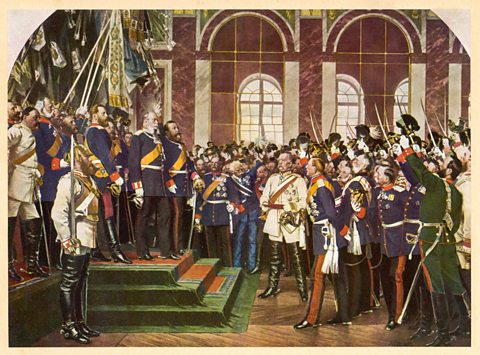 Image source, ALAMY
As a newly formed nation, Germany felt that it had missed out on building an empire.
Germany was able to establish some colonies in Africa but it found that the British and French hold on the continent was too strong to break.
Instead, Germany tried to drive a wedge between Britain and France during the Morocco Crisis of 1905.
At this time, Morocco was the only country on the northern coast of Africa that remained independent, however France had been gaining influence and control over it.
The Kaiser declared his support of Morocco’s independence and also hoped to establish a German port. This would have provided the German navy with direct access to the Mediterranean Sea.
The British and French were very unhappy at the idea of this. The French resented German interference in Morocco and the British believed that the port would have threatened the strategically important British-controlled territory of Gibraltar.
An international conference was held and Germany was forced to back down.
In 1911, Germany tried for a second time to gain influence over Morocco and for a second time was humiliated and forced to back down.
These instances further solidified the Triple Entente and isolated Germany.
Image source, ALAMYHow did nationalism lead to World War One?
A simple definition of nationalism in this period is that it was ideology that emphasized loyalty, devotion, or allegiance to the nation.
At the beginning of the 20th century, nationalist feelings were beginning to rise in Europe, especially in the Austria-Hungarian Empire.
Austria-Hungary
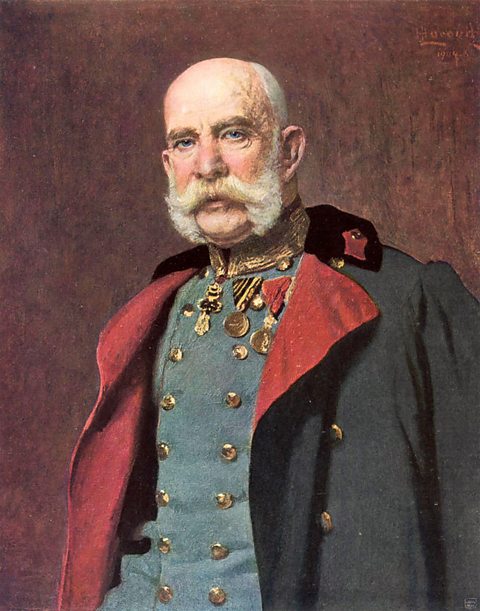 Image source, ALAMY
In 1867, Austria and the Kingdom of Hungary signed a treaty that created a formal union between the two states.
Both countries were ruled by the same royal family – the Hapsburgs.
Whilst other nations had empires consisting of overseas territories, Austro-Hungary’s empire was made up of European nations to its east, primarily in the A geographic area of Southeast Europe that includes the countries Bosnia-Herzegovina, Bulgaria, Romania, Serbia, Slovenia, Kosovo, Albania, Croatia, Montenegro, North Macedonia, and Greece..
These nations had their own languages, cultures, and traditions and, during the late 19th and early 20th century, nationalist sentiments began to grow in some of these nations.
Some, such as Bosnia, wanted independence from Austria-Hungary and were supported in their efforts by nations such as Serbia - who in turn was supported by Russia.
Image source, ALAMYConflict in the Balkans
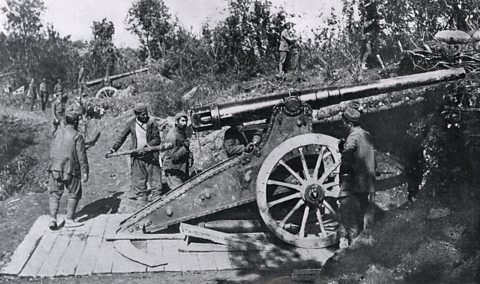 Image source, ALAMY
At the start of the 20th Century, tensions across the different territories of Austria-Hungary began to rise. A series of serious incidents threatened peace in the region:
- In 1903, the King of Serbia, his wife, and leading members of the military were assassinated. The king who replaced him was seen to be more favourable to Russia and Serbian nationalists.
- In 1908, Austria-Hungary annexed the lands of Bosnia and Herzegovina. Previously they had belonged to the Turkish Ottoman Empire.
- Between 1912 and 1913, two Balkan Wars were fought
- In the First Balkan War, Bulgaria, Greece, Montenegro and Serbia defeated the Ottoman Empire, claiming most of empire's European territory.
- In the Second Balkan War, Bulgaria fought against Greece and Serbia over how territory gained from the first war was divided up.
Image source, ALAMYArchduke Franz Ferdinand
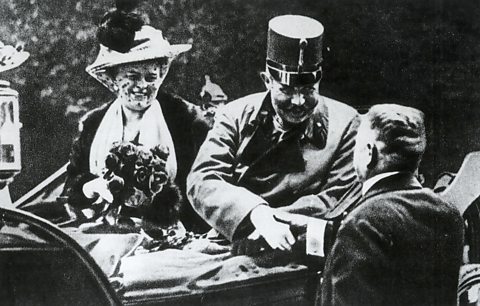 Image source, ALAMY
The tensions erupted on 28th June 1914 when a group of Serbian nationalists The murder of an individual for political or religious reasons. the heir to the Austria-Hungarian throne, Franz Ferdinand.
The Archduke and his wife, Sofie, were on a state visit to Sarajevo, the capital city of Bosnia and Herzegovina.
Unknown to them, a group of young Serb nationalists had arrived in the city with a plan to kill the Archduke. Their ultimate aim was to free Bosnia and Herzegovina from Austria-Hungarian control.
As the Archduke and his wife were being driven around the city in an open-topped car, one of the Serbs – Gavrilo Princip – stepped forward and shot them with a pistol at close range. Both were killed.
This assassination proved to be the spark that ignited the First World War
World War One breaks out
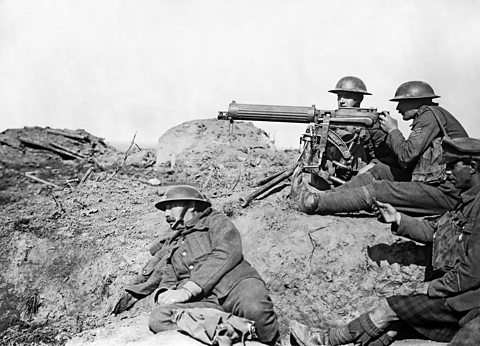 Image source, ALAMY
Following the assassination, Austria-Hungary approached Germany to see if they would support a war against Serbia.
Germany agreed and on 28th July 1914, Austria-Hungary declared war on Serbia.
As Serbia’s major ally, Russia sought to protect them and declared war on Austria-Hungary.
It was this declaration of war which triggered the alliance systems and drew Germany, France, Russia and Great Britain into a devastating conflict.
The war would last for four years and claim the lives of around forty million people.
It also led to the collapse of three empires:
- The Austria-Hungarian Empire.
- The Russian Empire.
- The Ottoman Empire.
Image source, ALAMY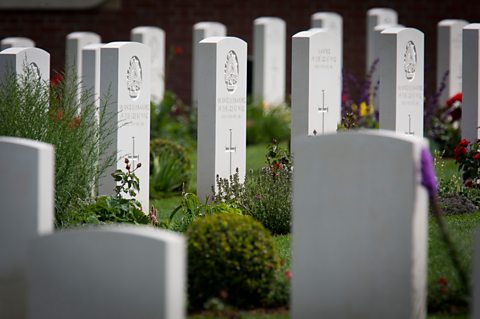 Image source, ALAMY
There is no one clear reason as to why the war began and no one clear party to blame.
Some place the blame on Serbia due to their involvement in the assassination of Franz Ferdinand.
Others set it at the feet of Germany due to their unconditional support of Austria-Hungary and argue that they could have done more to talk Austria-Hungary down.
The isolation of Germany which then led to two alliance systems emerging in Europe certainly heightened tensions rather than relieving them.
It is likely that the outbreak of WWI was not caused by a single event but rather several events which led to the building of tensions over several decades to the point that it could no longer be contained.
Image source, ALAMYMore on World War One
Find out more by working through a topic
- count4 of 9
- count5 of 9