The United Nations Convention on the Rights of the Child (UNCRC)
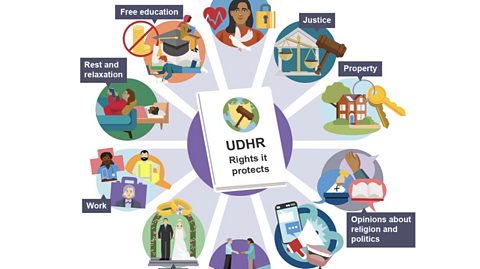
The United Nations Convention on the Rights of the Child came into force in September 1990. It sets out the rights enjoyed by people under the age of 18. These rights are very similar to those in the UDHR, but also includes children’s right to:
- life
- own name and identity
- be raised by parents in a family or cultural group
- have a relationship with both parents, even if they are separated
- have their own opinions
- live free from abuse or exploitation
- privacy
The UNCRC covers a broad range of rights, including:
Right to survival and development. This encompasses access to adequate nutrition, health care and education, as well as the ability to develop to their fullest potential.
Right to protection. It includes protection from abuse, neglect, exploitation and violence. It also covers special protection for children in vulnerable situations, such as refugees or those in conflict zones.
Right to participation. This ensures that children can express their views and participate in decisions that affect their lives. It recognizes the importance of listening to children and taking their opinions into account.
Right to education. It emphasises the right to free, compulsory primary education and encourages access to secondary and higher education, as well as the development of individual abilities and talents.
Right to a name and nationality. This ensures that every child is registered at birth and has a legal identity, which is crucial for accessing services and protection.
The UNCRC establishes standards for the treatment and care of children and outlines the responsibilities of governments to implement and uphold these rights.
UNCR and child slave labour
The UNCRC was developed to combat three big problems that face children around the world:
- child and slave labour
- the conscription of child soldiers
- sexual exploitation
The following UNCRC articles are in place to protect children from slave labour.
| UNCRC Article | Right protecting |
|---|---|
| Article 10 | The right to live with their parents. This right is abused when children are removed from their families and forced into child labour. |
| Article 11 | The right to be protected from kidnapping. This right may be abused when children are forcibly removed from their parents to be exploited by others. |
| Article 12 | The right to freedom of expression. This right may be denied when children’s voices go unheard. |
| Article 28 | The right to free education. This right is abused when children are forced to work instead of going to school. |
| Article 31 | The right to play and rest. This right is denied when children are forced to work instead of enjoying recreation. |
What is child labour?
Child labour is when a child is involved in any form of work. It negatively impacts upon their:
- health
- well-being
- education
It is time consuming and often involves children that would be deemed too young to work.
Types of child labour
- Agricultural work — 70% of child labourers work in agriculture.
- Manufacturing and industry — children often work in factories, textiles and mining.
- Domestic work — includes tasks within homes, often in exploitative conditions.
What are some causes of child labour?
- Lack of education — some people do not have access to good education and do not see the value in their children going to school. This results in many children being sent to work instead of attending school.
- Financial necessity — some families in the world have little income and as a result the children do not attend school and enter the world of work to bring in more money for the family. Globalisation has added to this problem as many factories have been built in Less Economically Developed Country – usually a poorer country found in South America, Africa or Asia. to provide goods for a global market.
- Exploitation — migrant and refugee children are prone to being exploited as they are often detached from their family and have no one looking out for them. They are extremely vulnerable and are forced into work by traffickers or people they encounter living alone on the streets.
- Tradition — in certain places in the world many children work from an early age to follow on the family tradition and working is viewed as character building and develops the skills of the child.
- Discrimination — in some countries the educational attainment of the child is affected by their sex. Education is not seen to be as important for girls as it is for boys. They are removed from school to work at home and provide for their family.
What are some of the consequences of child labour?
Child soldiers
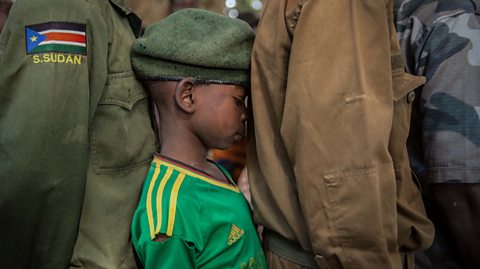
Child soldiers are children under the age of 18 who are used by armed forces or groups. They may serve as fighters, cooks, messengers or for sexual purposes. Some join willingly due to poverty or manipulation, but many are abducted and forced.
What are some of the reasons for the recruitment of child soldiers?
Some of the reasons why children throughout the world are being recruited or forced into being child soldiers are outlined below.
| War and conflict | Armed groups may forcibly recruit children |
| Poverty and lack of education | Some children join due to survival needs |
| Orphanhood or loss of family | Makes children more vulnerable |
| Lack of law enforcement | In conflict zones, child protection laws may not be enforced |
How are a child's rights abused when they become a child soldier?
| Right | Child soldiers |
|---|---|
| Education | Child soldiers involved in conflict are often denied an education. Due to their involvement in wars and conflicts, it is not possible for them to attend school and receive a free education. |
| Family life | Child soldiers are often taken forcefully from their families. These abducted children are then forced to fight in conflict zones far away from their families and homes. |
| Healthcare | Children involved in conflict, if injured or ill while fighting, are unlikely to receive an adequate standard of healthcare. |
| Protection from torture | Child soldiers are often subjected to violence as well as physical and mental torture. |
| Rest, leisure and play | Children forced to take part in military action are not afforded the right to rest, to play and have leisure time. |
Sexual exploitation
Child sexual exploitation is a form of child abuse where a young person is manipulated, forced or coerced into sexual activity in exchange for things like money, gifts, protection, drugs or affection. It can happen online or in person and often involves Grooming is process of manipulation where someone builds a relationship with a child or young person in order to exploit them, often for sexual abuse. .
What are some of the causes of child sexual exploitation?
| Poverty | Children in low-income families may be more vulnerable |
| Lack of awareness or education | Children may not realise they are being exploited |
| Online access | Social media and chat apps are used to groom and manipulate children |
| Neglect or lack of support | Children with unstable family lives are at greater risk |
| Trafficking | Some children are moved across areas or countries to be exploited |
What are the consequences of child sexual exploitation?
Some of a child's rights that are abused as a result of child sexual exploitation are:
- Article 19: protection from violence, abuse, and neglect.
- Article 34: protection from sexual exploitation.
- Article 36: protection from all forms of exploitation.
- Article 3 : adults should always act in the best interests of the child.
Some of the consequences of child sexual abuse are outlined below.
- Emotional trauma and mental health issues like A mental health condition that can develop after witnessing or experiencing a traumatic event, such as an accident, natural disaster, or violence., anxiety and depression.
- Physical harm or sexually transmitted infections (STIs).
- Loss of trust in adults and social isolation.
- Difficulty in education or maintaining relationships.
- Long-term impact on future opportunities and wellbeing.
How does Northern Ireland ensure a child's human rights are protected?
More on Rights and responsibilities
Find out more by working through a topic
- count3 of 4
- count1 of 4