Key facts about place and the marketing mix
Place: where customers buy products (stores, online, direct).
Distribution channels: traditional, modern, and direct methods.
Factors: type, value, lifespan, shipping costs, demand, competition.
Internet impact: online sales rise, but shipping and competition are challenges.
In the marking mix what does place mean?
Place refers to where the customer is able to purchase the product or service. This can include:
- a retail store
- an online store or app
- directly from the manufacturer
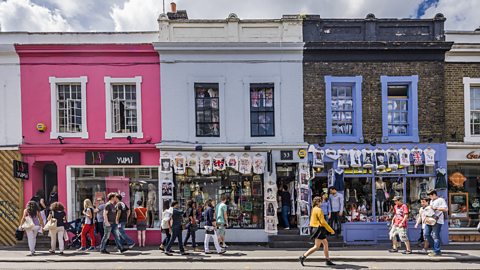
Businesses that sell A market for products and services that are aimed at large groups of customers with similar characteristics. products may use many different options to make sure that their customers can easily purchase their products.
Place can also include the The channels of distribution are the different ways in which a product gets from the producer to the end consumer. used to get the product from the manufacturer to the final customer. Types of distribution include:
- manufacturer → customer
- manufacturer → A business that buys products in bulk from the producer, who then sells smaller quantities to retailers and/or consumers. → customer
- manufacturer → wholesaler → → customer
Where to launch your business?
Distribution: What are the options?
There are 3 options for distributing products:
Traditional: manufacturer → wholesaler → retailer → customer
Modern: manufacturer → retailer → customer
Direct: manufacturer → customer
What do all of these terms mean?
Manufacturer: the business or person which makes or produces the product (goods and services).
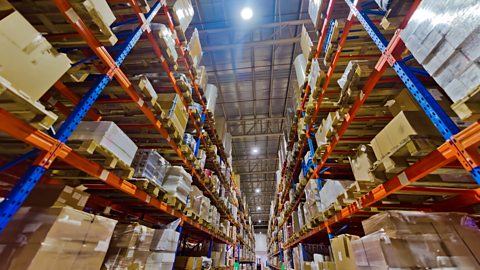
Wholesaler: a business which acts as a link between producer and the shop which sells the product to the public. The wholesaler would tend to buy large quantities of a product directly from the manufacturer then keep stock at a warehouse, which is then purchased in smaller quantities by shopkeepers (retailers). This offers a benefit to the producer, who can ship one large delivery to the wholesaler rather than lots of small deliveries to many shops. It also benefits the retailer, as they does not need to hold huge amounts of stock (which they may not have storage space for at their shop), nor do they have to spend lots of cash buying all the stock in one go. This service provided by the wholesaler is known as ‘breaking bulk’. The best known local example would be Makro.
Retailer: the final seller of the goods to the consumer. In simple terms: shops! Of all sizes, from a small corner shop to a massive supermarket.
Consumer: the final user of the product.
Traditional distribution: Manufacturer – Wholesaler – Retailer – Consumer
| Pros of traditional distribution | Cons of traditional distribution |
|---|---|
| convenient for manufacturer: more sales volume | Manufacturer has to offer a discount to wholesaler, so receives smaller profit per unit |
| convenient for manufacturer: more simple shipping | |
| convenient for manufacturer: invoicing / billing | |
| convenient for retailer: storage | |
| convenient for retailer: invoicing / billing |
Modern distribution: Manufacturer – Retailer – Consumer
| Pros of modern distribution | Cons of modern distribution |
|---|---|
| convenient for manufacturer: more simple shipping | Manufacturer has to offer a discount to retailer, so receives smaller profit per unit |
| convenient for manufacturer: invoicing / billing | |
| reduces costs for retailer: no wholesaler, so the retailer can absorb the profit margin which the wholesaler would have taken |
Manufacturer – Consumer
| Pros of direct distribution | Cons of direct distribution |
|---|---|
| no intermediaries: more profit margin per unit | more individual customers: more shipping administration |
| closer communication with customer; better customer service | more individual customers: more invoicing / billing issues |
| shorter supply chain = faster delivery | likely to reach fewer customers than through a wholesaler or large retailer, so sales volume likely to lower than through wholesaler / retailer. |
Which channel is best?
It depends on a number of factors:
The type of goods: if it is a specialised product eg a Formula 1 car, the manufacturer/engineers building the car want to make sure they clearly understand the customer’s requirements, so they will work directly with the customer.
Value of the goods: the more expensive the product, the fewer places which sell it. The producer will want to control distribution closely (maybe direct distribution, or, at most, modern distribution) so that they can maintain a luxury image for their goods. Rolex do not want their luxury; ultra-premium products being sold in discount stores or supermarkets.
Lifespan of the goods: fresh fruit has to have a short distribution channel / supply chain, or it will have gone off before the consumer gets it.

Costs of shipping: A weightlifting equipment manufacturer in the USA would not sell direct to the UK / Europe as each customer would have to pay a huge shipping charge for such a heavy product. They would be more likely to distribute through a wholesaler or retailer, so the intermediary could ‘break bulk’ for them and reduce the shipping cost per unit. The manufacturer might only agree to ship to the UK if the wholesaler agrees to buy a 40 foot shipping container-load of equipment.
Demand for the goods: if a company sells hundreds of thousands of products per month, they would need to use a wholesaler or at least a large retailer. If a drinks producer had to ship one bottle of their best selling drink to each person who wanted one, it would be massive administrative challenge for the company.
Competition: a company will want to take customers off its competitors, so will want to be sold in the same shops as similar products.
What are the changing trends in distributing goods and services?
Most products, especially groceries, used to be sold using Channel 1 (Manufacturer – Wholesaler – Retailer – Consumer).
There is still demand for small retailers due to their convenience and long opening hours, but the rise of large retailers has meant that many of these large companies now buy direct from the manufacturer rather than using a wholesaler.

The increased use of online marketplaces like Etsy, eBay and Amazon by small businesses and entrepreneurs means that Channel 3 distribution (selling direct from producer to the consumer) is increasingly popular. But again, once a single producer grows and reaches a certain level of sales, it becomes increasingly cost-effective to employ an intermediary to ‘break-bulk’, such as a wholesaler or a retailer. Otherwise, the administrative burden of organising shipping to so many individual customers becomes overwhelming.
How has the internet changed distribution?

Positives:
Potentially selling to the whole world
At any time of day, over 500 million people are online
Selling online as a small producer has never been more straightforward, with Etsy, eBay and Amazon as well as sites like Wordpress and PayPal
Small, low-priced items like books and hard-to-find items such handmade crafts sell very well for small scale producers and sellers
Negatives:
Shipping issues can make or break the business. A small item which just about fits in a padded envelope might cost 75p to ship in the UK, but if it is just a few millimetres larger and needs to be shipped as a small parcel, the cost can jump to £2.80.
Customs, currency and taxation issues can be very complex to sort out for international orders
Competition is fierce online and profit margins can be very small
Try the place quiz
Final check
What are the three types of distribution channels used to get a product from the manufacturer to the final customer?
The three types of distribution channels are:
- traditional (manufacturer → wholesaler → retailer → customer)
- modern (manufacturer → retailer → customer)
- direct (manufacturer → customer).
More on Marketing Mix
Find out more by working through a topic
- count1 of 5
- count3 of 5

- count4 of 5