Freezing and melting
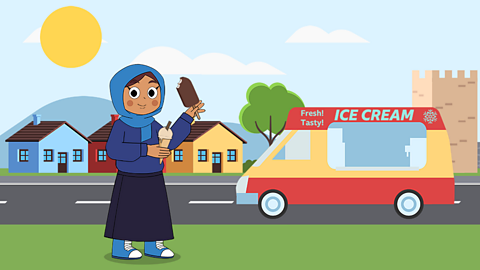
We can describe the state of an object as being a solid, a liquid or a gas. Some solids, liquids and gases can change and become a different state when they are heated or cooled.
Processes such as evaporation, boiling or freezing can change the state of substances.
For example:
- When an ice cube is heated it melts and changes from a solid (ice) to a liquid (water).
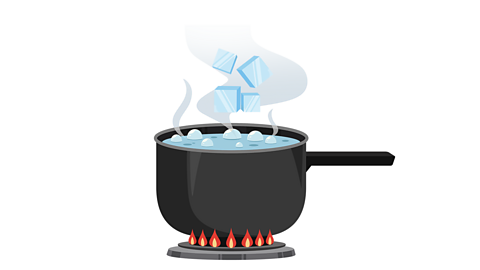
When water is cooled to a very low temperature it freezes and turns into ice. It changes from a liquid back in to a solid.
When the water is heated, it will eventually boil and evaporate, becoming a gas. Melting and boiling are changes of state, and they can occur in reverse too if a substance is cooled down.
When you cool gases, through condensation it turns back into a liquid.
Watch: The temperatures for freezing and melting
Find out about these reversible processes.
Hey there, looking sharp. You’re going to show us how to change the state of a substance by heating or cooling it, with the aid of these temperature controlled rooms.
When solids are heated they can melt into liquids. And when we freeze a liquid it becomes a solid. Hadn’t you better check on them?
Right. After being heated, the ice has melted into water. For water this melting point is zero degrees Celsius.
And it looks like love done a fair bit of melting yourself. When we freeze water it becomes ice. It’s changed from a liquid into a solid.
This happens when the temperature drops below zero degrees Celsius. Someone here’s become a big icy too.
But of course, freezing and melting are totally reversible processes.
So! Who wants another go?
Fascinating facts
Fascinating facts about changing states!
Water expands by 9% when it freezes. This is why pipes carrying water can burst in very cold weather.
In order to turn helium into a solid from a liquid, you must cool it to below -272°C.
97% of the water on Earth is salt water and 2% is stored in ice and glaciers.
Lava is molten or liquid rock that erupts from under the Earth in volcanoes. It can sometimes travel as fast as 30 mph on the slopes of steep mountains.
Glass is made from heating up sand particles to over 1000°C to make it into a liquid using a furnace.
Our water cycle can change water from a gas (water vapour) to liquid (rain) and into a solid (snow).
Most gases are invisible to the human eye, but for safety we add a smell to the gas that heats our homes.
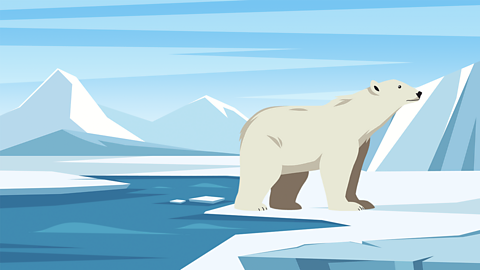
The polar ice caps have melted by over 9% in mass in the last decade.
Heating up a solid
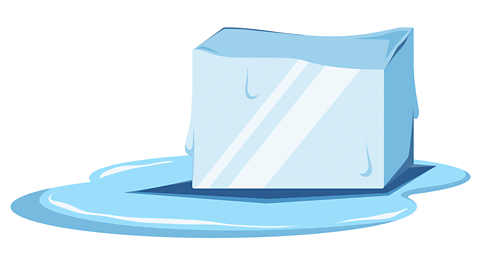
When some solids are heated, they melt and turn into a liquid.
For example, wax and ice melt when they are heated. The temperature this happens at is called the melting point, and it is measured in degrees Celsius (°C).
The melting point of ice (solid water) is 0 degrees Celsius (0°C). Different materials have different melting points. Chocolate melts at around 45°C.
Watch: Evaporation and condensation
Watch and learn about turning liquids to gasses... and turning them back again!
So, I've heard a rumour that you can change liquids to gases, and back again.
Right! Go on then. Let's see.
Nice shower Square?
Whoa! Cheeky.
When water is heated up, it changes state from a liquid to a gas, called steam. And this process is called evaporation.
When a gas cools down, it can change state back into a liquid. So when the warm steam hits the surface of, say, a cold mirror it turns back into water again.
This change is called condensation.
The process can be reversed again if we warm up the liquid.
Oh hang on. Time to get out of here I think.
You really should of locked that door.
Did you know?
The metal tungsten has the highest melting point of any elements.
Tungsten needs to be heated to over 3400 °C to reach its melting point.
Heating up a liquid
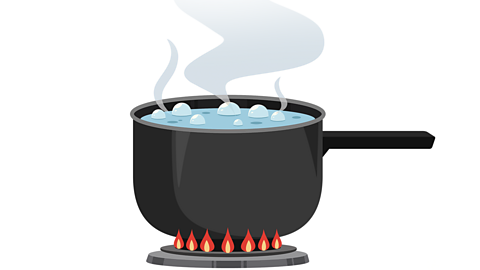
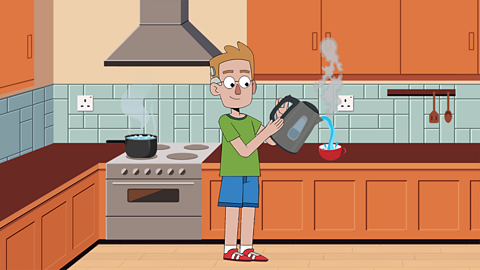
When a liquid is heated it boils and turns into a gas. For example, if water is heated in a pan or in a kettle, it boils and turns into steam.
The temperature this happens at is called the boiling point. The boiling point of water is 100°C.
If you heat water slowly at a lower temperature than boiling point, then the water on the surface will evaporate. For example the Sun may heat up water in a puddle and it will slowly evaporate. The puddle may evaporate quicker on a very hot day, if it was windy or the water was spread out thinly across the surface.
Cooling down a gas

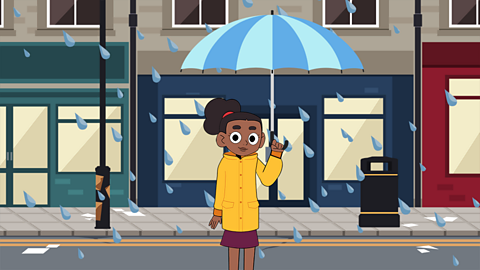
When a gas is cooled, it condenses, and changes into a liquid. For example, the steam from a boiling pan turns into condensation on a cold window in the kitchen.
We also see this in the water cycle, when water vapour cools as it rises in the air and condenses to form clouds.
Did you know?
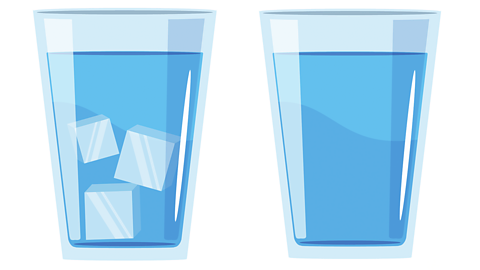
Matter changes state when its particles gain or lose energy.
When the particles in a liquid gain energy, it becomes a gas.
When the particles in a liquid lose energy, it becomes a solid.
Important words
Boiling – When a liquid turns into a gas. Water boils to become steam.
Boiling point – The temperature at which a liquid boils and turns into gas.
Condensation – When gas turns into a liquid. When you take a cold bottle out of the fridge, water vapour will cool on the bottle and form drops of water.
Evaporation – When a liquid turns into a gas. Water evaporates from puddles after rain.
Freezing – When a liquid turns into a solid. Water freezes to become ice.
Melting – When a solid turns into a liquid. Ice melts to become water.
Activities
Activity 1 – Changing states quiz
New game! Horrible Science: Stinky Space. game
Join Pipette on her epic mission and learn some revolting facts about space along the way.
More on States of matter
Find out more by working through a topic
- count3 of 3
- count1 of 3