What are metric measurements?
The metric system is used to measure the length, mass or capacity of an object.
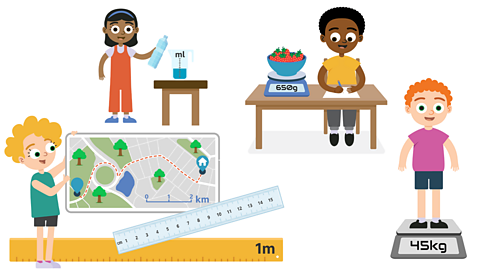
Length is measured in millimetres (mm), centimetres (cm), metres (m) or kilometres (km).
Mass or weight is measured in grams (g) and kilograms (kg).
Capacity is measured in millilitres (ml) and litres (l).
Quiz: Metric measurements
Why not see how much you know about this topic already? Then work through the page and see if you can beat your score.
Measuring length
Length is measured using different units.
For small lengths you use millimetres (mm) and centimetres (cm).
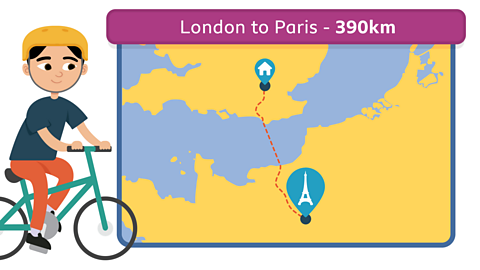
For longer lengths and distances you use metres (m) or kilometres (km).
Let's have a look at how you might measure some different lengths and distances.
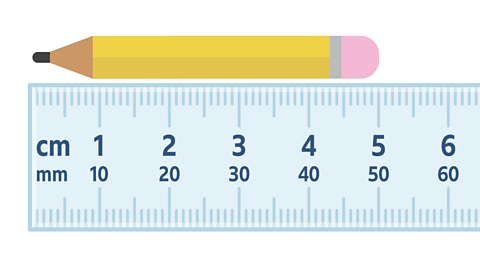
Image caption, You would use millimetres (mm) and centimetres (cm) for small lengths. Like this pencil. Can you see the pencil is 5cm or 50mm long?
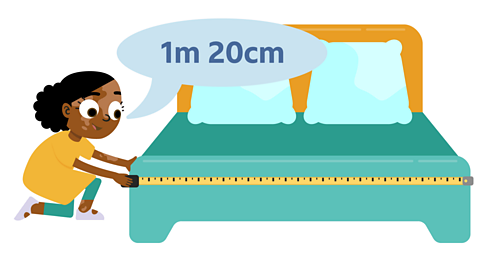

1 of 4
Here is a table that will help you convert between millimetres, centimetres, metres and kilometres.
| 1 centimetre (1cm) | 10 millimetres (10mm) |
| 1 metre (1m) | 100 centimetres (100cm) |
| 1 kilometre (1km) | 1000 metres (1000m) |
Measuring mass
Weight is measured in grams (g) and kilograms (kg).
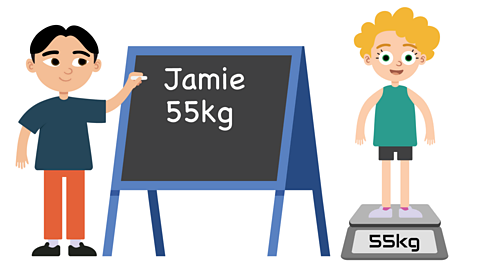
You can use grams to measure the weight of light objects and kilograms to measure the weight of heavy objects.
1 kilogram (1kg) = 1000 grams (1000g)
Let's have a look at how you might measure some different weights.
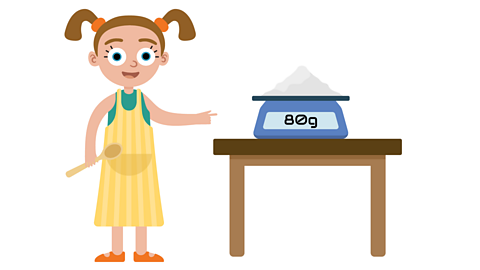
Image caption, You might use grams (g) to measure the weight of light objects, like ingredients for baking. This flour weighs 80 grams.
1 of 2
Measuring capacity
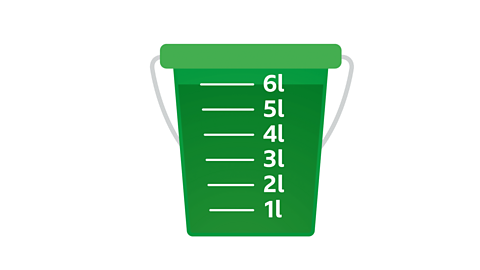
You measure the capacity of containers in millilitres (ml) and litres (l).
1 litre (1l) = 1000 millilitres (1000ml)
Let's have a look at how you might measure some different capacities.
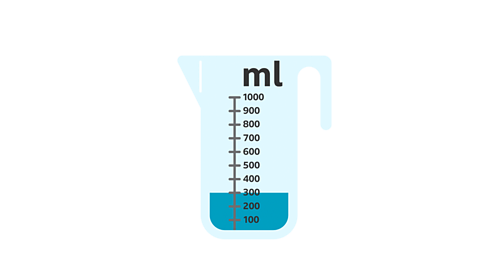
Image caption, You would use millilitres (ml) to measure the capacity of a small container, like this jug. Can you read the scale to work out the capacity?
1 of 2
Example
These two tables are 215cm and 2 metres 35cm in length.
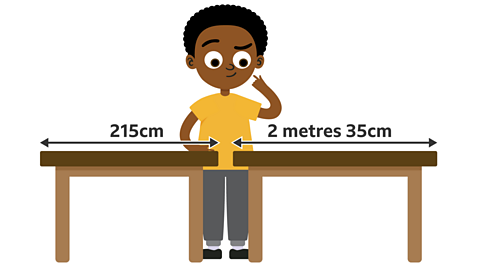
What is the difference in their length in centimetres?
✓ The difference between 235cm and 215cm is 20cm
235cm – 215cm = 20cm
When you compare measures, change them to the same units.
To change metres to centimetres:
2m 35cm = 200cm + 35cm = 235cm
More on Weight and mass
Find out more by working through a topic
- count2 of 2