What are factors?
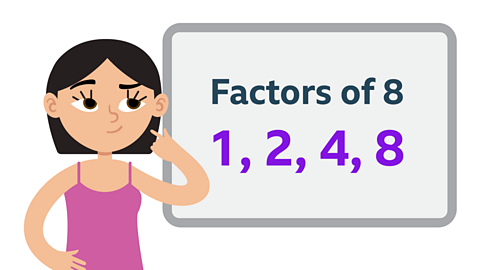
Factors are numbers which can be multiplied together to create another number.
For example, the factors of 8 are:
1, 2, 4, 8
Factors can be shown in pairs. Each pair multiplies to make 8.
The factor pairs of 8 can be shown:
1 × 8 = 8
2 × 4 = 8
What are multiples?
A multiple of a number is the result you get when you multiply that number by another number.
Multiples are like extended times tables.
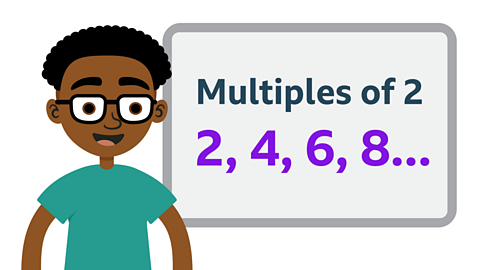
The multiples of 2 are all the numbers in the 2 times table, such as:
2, 4, 6, 8, 10…
Multiples of 2 always end with:
2, 4, 6, 8 or 0
For example, you can tell 2286 is a multiple of 2, because it ends with a 6.
Activity: Factors and multiples
Complete this interactive activity to understand factors and multiples, then put your knowledge to the test.
Factors
Factors are numbers that you can multiply together to get another number.
Factors and multiples help us understand how numbers relate to each other in multiplication and division.
To find the factors of a number, look for pairs of numbers that multiply together to make that number.
Every positive whole number has at least two factors, 1 and itself, because you can always multiply a number by 1 to get that number.
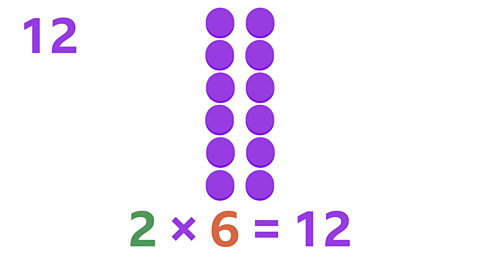
Take a look at the slideshow below to find all the factors of 12.
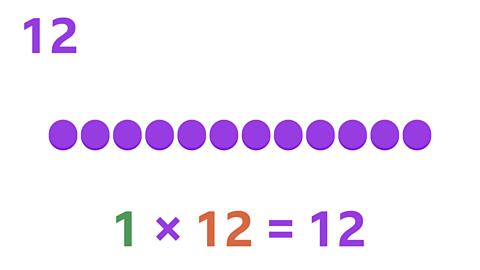
Image caption, The factors 1 and 12 are easy to find. 1 × 2 = 12 and 12 × 1 = 12. Explore the slideshow to find the rest of the factor pairs.
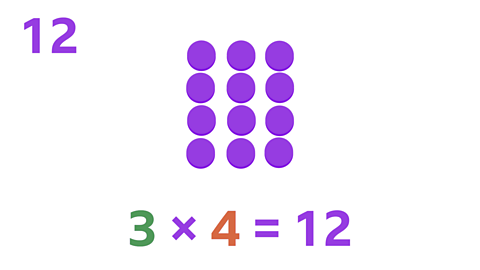
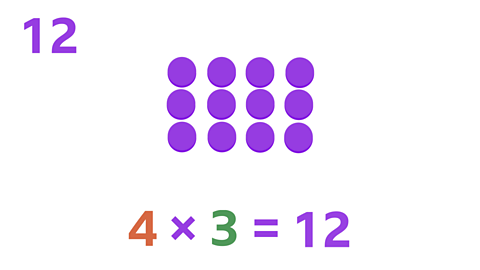
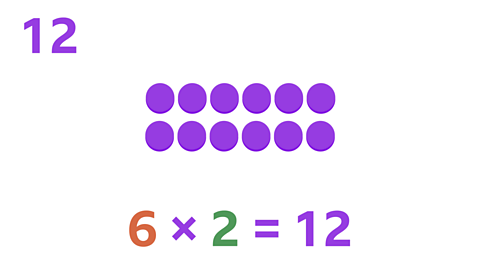
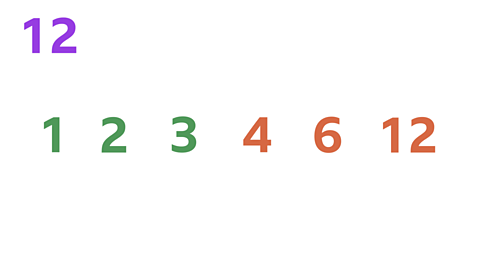
1 of 6
Multiples
Multiples are the result of multiplying a number by other numbers.
For example, the multiples of 5 include 5, 10, 15, 20, and so on - anything in the 5 times table.
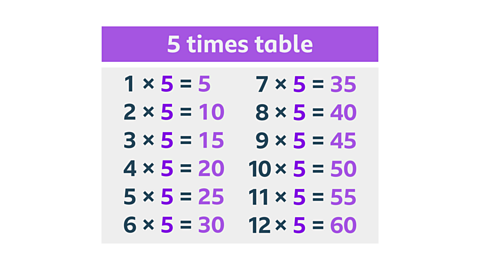
To check if a number is a multiple of another, see if it appears in that number’s times table, or if it can be divided evenly by that number with no remainder.
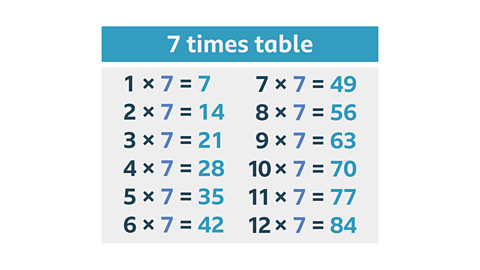
The first 12 multiples of 7 are shown below.
Can you go even further and calculate the next few multiples?
Example 1
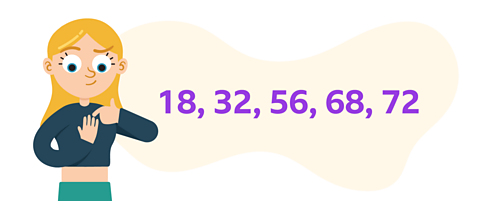
Find all the multiples of 8 in this list of numbers:
18, 32, 56, 68, 72
✓ The multiples of 8 in the list are 32, 56, and 72.
A multiple of 8 is any number that can be divided by 8 with no remainder or that appears in the 8 times table.
Check each number:
18 is not in the 8 times table and doesn’t divide evenly by 8.
32 is in the 8 times table (8 × 4), so it's a multiple of 8.
56 is in the 8 times table (8 × 7), so it's a multiple of 8.
68 is not in the 8 times table and doesn’t divide evenly by 8.
72 is in the 8 times table (8 × 9), so it's a multiple of 8.

Example 2
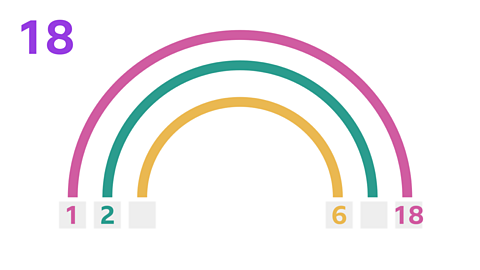
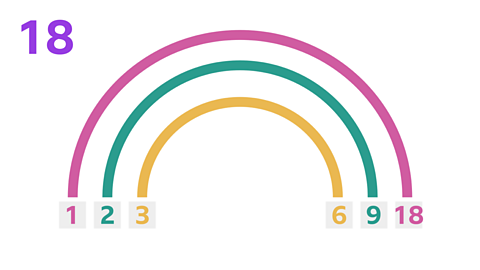
Which factors of 18 are missing from this list?
1, 2, _, 6, _, 18
✓ The missing factors are 3 and 9.
To solve this, first find all the factors of 18.
Go up number by number, starting at 1. Remember, look for a number that can be multiplied by another number to make 18.
The factor pairs of 18 are:
1 and 18
2 and 9
3 and 6
In order, the factors are:
1, 2, 3, 6, 9, 18
Example 3
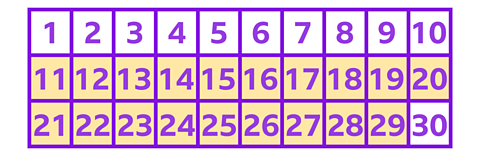
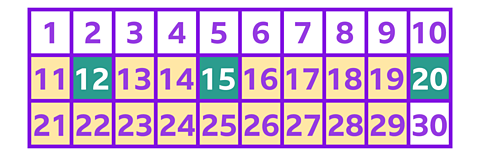
Which numbers between 10 and 30 are factors of 60?
✓ The answer is 12, 15, and 20.
To work this out first find all the factors of 60 by listing pairs of numbers that multiply together to make 60.
The factors of 60 are:
1, 2, 3, 4, 5, 6, 10, 12, 15, 20, 30, 60
Next, look for the factors that are between 10 and 30. The numbers must be greater than 10, but less than 30.
From the list, the factors of 60 that are between 10 and 30 are 12, 15 and 20.
Play our fun maths game Guardians: Defenders of Mathematica. game
Use your times tables and more maths skills to defeat monsters and reclaim the Kingdom of Mathematica

More on Factors, multiples and primes
Find out more by working through a topic
- count3 of 3
- count1 of 3