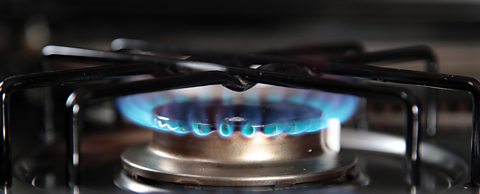
Key points
Energy can be stored and transferred. Energy is a conserved quantity. can be described as being in different ‘stores’.
Energy cannot be created or destroyed.
Energy can be transferred from one store to another.
What is energy?
Energy is a quantity that is conserved - it cannot be created or destroyed. Energy can be stored and transferred.
One way we can understand energy is to use a A simple way of showing a scientific idea or process..
Have a look at the table that uses money as a model to help us understand energy.
| Idea it is explaining | Money as a model | How the model links to energy |
| Energy’s ability to be stored | We store our money in pockets, purses and bank accounts. | Energy is stored. For example, energy is stored in the kinetic energy store in objects that move. |
| Energy can be transferred | When we pay for an item in a shop we are transferring our money from one store (pocket, purse or wallet) to another (the till). | Energy can be transferred between different stores. |
| The unit of energy | In the United Kingdom, money is measured in pounds sterling (£). | Energy is measured in The unit of measurement for energy (J). A kilojoule (kJ) is 1000 joules. (J). |
Energy stores
There are several stores of Energy can be stored and transferred. Energy is a conserved quantity..

Kinetic energy store
The runner has more energy in their kinetic energy store when they are running faster.
The amount of energy in the kinetic energy store depends on the speed of the object.

Gravitational potential energy store
The box has more energy in its gravitational potential energy store when it is placed on a higher shelf.
The amount of energy in the gravitational potential energy store depends on the height of the object.

Thermal energy
An object has more energy in its thermal energy store when it is hot than when it is cold.
The amount of energy in the thermal energy store depends on the temperature of the object.

Chemical energy
Batteries, foods and fuels store energy in their chemical energy stores. The candle wax in the picture is a type of fuel.
Transfer of energy from the chemical energy store occurs due to chemical reactions.

Elastic potential energy
A stretched or squashed object has more energy in its elastic energy store.
The amount of energy in the elastic energy store depends on the amount of extension or compression.
Conservation of energy
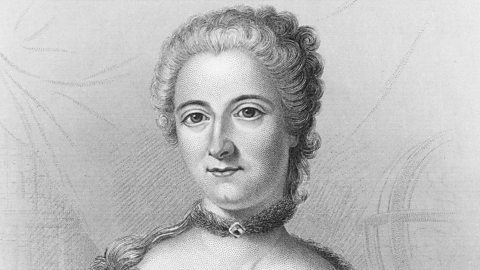
In the 18th century the French philosopher, Émilie du Châtelet, did an experiment. She dropped a number of balls from different heights then observed how they fell and their impact with the surface they landed on.
She found that the amount of Energy can be stored and transferred. Energy is a conserved quantity. the balls had when held high up was the same as the amount of energy they had when they were moving.
After analysing all of her data, du Châtelet concluded that energy cannot be created or destroyed.
This is now known as the Law of Conservation of Energy which means that energy doesn’t appear or disappear.
Energy can be transferred between different stores of energy.
When energy transfers take place in a An object or group of objects that interact.:
the total energy stored before = total energy stored after.
For example:
Video - conservation of energy
Prof Brian Cox: Energy is a concept that's central to physics, but because it's a word we use every day, its meaning has got a bit woolly. I mean, it's easy to say what it is, in a sense. Obviously this river has got energy because over the decades and centuries, it's cut this valley through solid rock.
But while this description sounds simple, in reality, things are a little more complicated. Over the years, the nature of energy has proved notoriously difficult to pin down, not least because it has the seemingly magical property that it never runs out.
It only ever changes from one form to another.
Take the water in that waterfall. At the top of the waterfall, it's got something called gravitational potential energy, which is the energy it possesses due to its height above the earth's surface. See, if I scoop some water out of the river into this beaker, then I'd have to do work to carry it up to the top of the waterfall. I'd have to expend energy to get it up there. So it would have that energy as gravitational potential.
I can even do the sums for you. Half a litre of water has a mass of half a kilogram. Multiply by the height, that's about five metres, andthe acceleration due to gravity is about ten metres per second squared. So that's half, times five, times ten, is 25 joules.
So I'd have to put in 25 joules to carry this water to the top of the waterfall.
Then if I emptied it over the top of the waterfall, then all that gravitational potential energy would be transformed into other types of energy.
Sound, which is pressure waves in the air. There's the energy of the waves in the river. And there's heat. So it'll be a bit hotter down there because the water's cascading into the pool at the bottom of the waterfall.
But a key thing is, energy is conserved, it's not created or destroyed.
So because energy is conserved, if I were to add up all the energy in the water waves, all the energy in the sound waves, all the heat energy at the bottom of the pool, then I would find that it would be precisely equal to the gravitational potential energy at the top of the falls.
What's true for the waterfall is true for everything in the universe. It's a fundamental law of nature, known as the First Law of Thermodynamics. And the fact that energy is neither created nor destroyed has a profound implication. It means energy is eternal.
Every single joule of energy in the universe today was present at the Big Bang 13.7 billion years ago. Potential energy held in primordial clouds of gas and dust was transformed into kinetic energy, as they collapsed to form stars and planetary systems just like our own solar system.
That primordial energy was trapped deep inside new planets.
Energy transfers
Energy can be transferred by:
mechanical working – when a force is applied to move an object through a distance
electrical working – when charge flows (electricity)
heating – when energy is transferred between hotter and colder regions
radiation – when energy is transferred as a wave, for example as light or sound
Representing energy transfers
We can show how energy is transferred by using a transfer diagram.

Mechanical This is done when energy is transferred.
A force is applied to move an object, for example when a person lifts a book onto a high shelf.
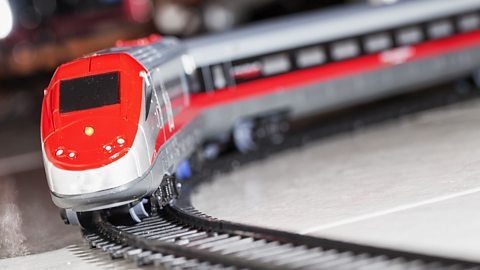
Electrical work
Charges flow in a circuit, for example in a battery powered toy train.
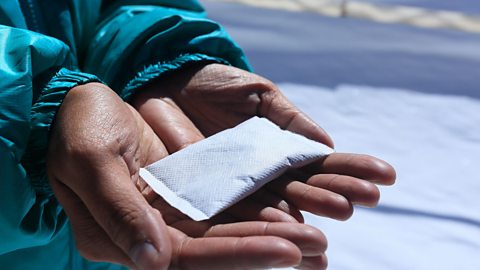
Heating
Energy moves from the thermal store of a hotter object to the thermal store of a cooler object, for example when a handwarmer is used to warm up your hands.
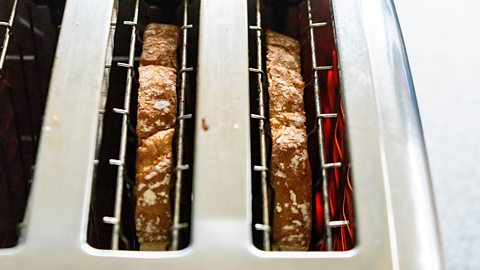
Radiation
Energy is transferred as a wave, for example infra red radiation from a toaster to a slice of bread.
Energy dissipation
When Energy can be stored and transferred. Energy is a conserved quantity. is transferred within a An object or group of objects that interact., energy can be When energy is transferred so that it is stored in less useful ways, eg by heating to the surroundings.. This is where energy is ‘wasted’ by being transferred out to the surroundings. Energy becomes stored in less useful ways.
Energy is usually dissipated to the surroundings by heating, though sometimes energy is dissipated by radiation, for example by sound waves.
The ways in which energy is dissipated depends on the system.
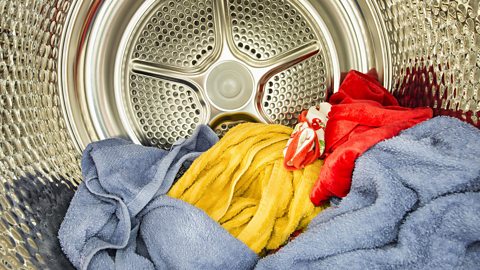
For example, in a tumble dryer:
The electrical work is done so energy is transferred usefully into the thermal energy store of the tumble dryer and the kinetic energy store of the tumble dryer. This helps to dry the clothes.
Energy is dissipated to the surroundings by sound waves and by heating. This is not useful.
Test your knowledge
Quiz
Teaching resources
Looking for more resources to inspire and engage your students? In this collection of Physics clips, Professor Brian Cox explains how our world today originated from a few fundamental scientific laws.
BBC Bitesize for Teachers has thousands of free, curriculum-linked resources to help deliver lessons - all arranged by subject and age group.
Play the Atomic Labs game! game
Try out practical experiments in this KS3 science game.
More on Energy
Find out more by working through a topic
- count4 of 7

- count5 of 7
- count6 of 7
- count7 of 7