Current accounts
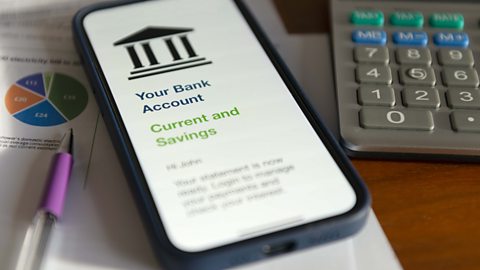
A current account is an everyday banking account.
A wage or salary are paid into this account and this is linked to a debit card for spending.
A debit card is not the same as a credit card.
When a debit card is used as a method of payment, the funds will come directly from an individual’s bank account.
If there is no money in an account then they cannot make a purchase.
A credit card is money which is borrowed and must be repaid.
Not all current accounts are equal.
Some may offer higher interest, or good deals on savings accounts and loans.
Personal loans
Taking out a personal loan can be useful if a significant purchase such as a new car, home improvement costs or overseas trip is needed but the money is not available.
Be careful though.
The money must be repaid.
Some lenders have very high interest rates and falling behind can cause big financial problems down the track.
Consider how important the purchase is and whether or not the repayments are manageable.
| Personal loan benefits | Personal loan drawbacks |
|---|---|
| Access money for expensive purchases or experiences which would otherwise take a long time to save up for | There is a fee to pay for borrowing money which means paying back more money than borrowed |
| Pay a fixed amount each month until the loan is paid off | Personal circumstances could change, making it hard to manage the payments — this could affect credit score |
| It is possible to manage the term of a loan to increase or decrease the payment amount to suit personal circumstances | It could be tempting to borrow more money than needed, which will lead to higher repayments |
Debit versus credit - which is best?
Debit
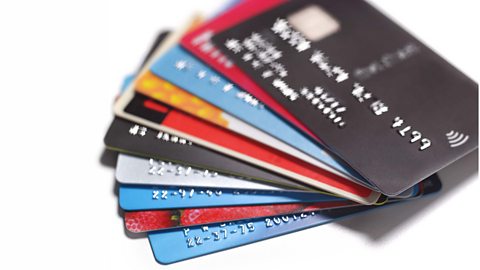
Most bank accounts come with a debit card which allows cash withdrawals from cash machines and payment for items in shops and online.
A debit card uses money that is currently in the owner’s account.
The money for any purchases made is debited (taken out of the account) immediately or on the next working day.
With a debit payment, money is not borrowed to pay for the item.
Advantages and disadvantages of debit:
| Advantages | Disadvantages |
|---|---|
| No need to carry cash | Need to have money in account |
| Shop online or on the phone | Can accidently overspend and enter into an overdraft |
| No debt | Fraudsters may steal and use the card |
Credit
Credit is a ‘buy now, pay later’ option.
A credit card allows payment for goods by borrowing money from the credit card provider.
The credit card provider will charge interest to do so.
The rate of interest is called an APR, or annual percentage rate.
If the APR is 18%, and a person spends £100 and makes the minimum payment each month for one year, they would pay back £109.26 after a year.
Therefore, they have paid an additional £9.26 to borrow £100.
The quicker they pay off their credit card, the less interest they will need to pay.
Advantages and disadvantages of credit:
| Advantages | Disadvantages |
|---|---|
| No need to carry cash so less chance of losing cash or having it stolen. | It will take time to pay off the debt if the APR is high and only minimum payments are being made. |
| In the event that fraud is detected, a credit card can be cancelled immediately — funds and spending can often be stopped or recovered by the credit card company. | It can be easy to get carried away with spending because a person can’t physically see the money and does not realise that the debts are adding up until they see their monthly statement. |
| Buying what is needed, when it's needed, instead of saving money which could take a long time. | Missing a payment may affect a credit rating and make it harder to obtain credit in the future. |
| Pay for things in instalments, rather than all at once. This is more manageable for large purchases. | Fraudsters may steal and use the card. They could spend a lot of money in the name of the cardholder, who would have to prove that they did not spend it. |
What types of savings schemes are available?
Banks offer a range of different savings accounts that offer different interest rates and benefits.
They essentially give the account holder a small amount of money for choosing to save money with them.
Some savings accounts will prevent the owner from making a withdrawal. Those that do allow withdrawals may not offer as good an interest rate than those that don't.
Other institutions, such as credit unions, may offer better deals.
Once bills are paid, it is time to think about how much can be saved each month.
It’s important to have a financial safety net in case of emergencies.
For example, what would happen if the boiler broke down?
Saving a little each month helps deal with emergencies like this.
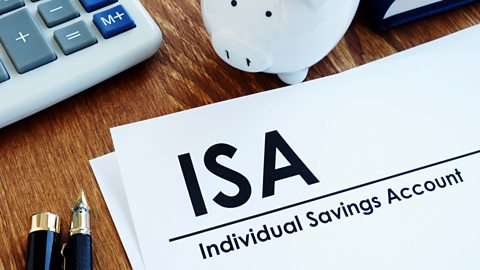
Individual savings accounts (ISAs)
Individual savings accounts have become popular in recent years because they allow ordinary people to invest their money in the stock market.
Official interest rates are low, so savings accounts may not earn much interest. ISAs base their returns on the performance of the economy and can therefore outperform regular savings accounts.
Like other savings accounts, ISAs may not allow the account holder to withdraw money easily, so research is advised when considering an ISA.
Additionally, there is a limit to how much can be invested in an ISA each year. This amount changes annually.
What are the advantages and disadvantages of contactless?
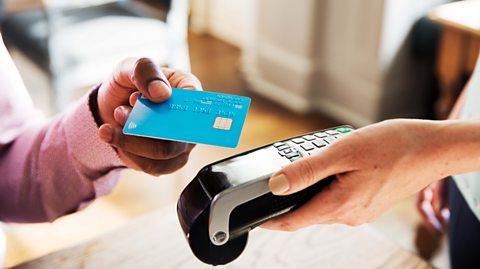
Contactless payment is a way to pay for purchases using a debit or credit card, smartcard, or another payment device. To use the system, a consumer taps the payment card or device near a point-of-sale terminal equipped with the technology.
Advantages of using contactless
- Making a payment will be quick — less time standing in the checkout queue.
- No hassle — no need to input a PIN.
- Tap-to-pay technology is more reliable and secure than other forms of payment.
Disadvantages of using contactless
- Although contactless payments are considered secure, unauthorised transactions could still happen if the owner has not yet had a chance to report a card or phone as lost or stolen.
- There is sometimes a limit to how much can be spent using contactless technology.
Managing and spending money online
What are the advantages and disadvantages of online shopping?
| Online shopping benefits | Online shopping drawbacks |
|---|---|
| Can compare the prices of items from different sites. | Delivery charges make your items more expensive. |
| Access to discount codes to get money off. | Images/quality online may be very different to the real thing. |
| No need to leave home to shop, which is convenient. | Social and communication skills could suffer if there is less interaction with real people. |
What website red flags should people look out for when shopping online?
What are the benefits and drawbacks of internet banking?
Internet banking is an effective way of managing finances provided that all passwords are closely guarded.
The table below compares the benefits with the drawbacks of internet banking:
| Internet banking benefits | Internet banking drawbacks |
|---|---|
| Can access accounts at any time of day or night to keep track of transactions. | Technology is not always reliable and the account could be hacked. |
| If any suspicious payments are identified the bank can put a stop to these and secure the account immediately. | When contacting the bank, there might not be an option to speak to a real person or there may be a long wait to have a concern dealt with. |
| Many online accounts offer incentives and money back offers. | A lack of ICT skills might make using online banking difficult. |
Be aware of emails and text messages claiming to be from the bank. No bank will request personal details over the phone, in a text, or in an email.
In the case of a data security breach, criminals could gain access to account details and could steal personal information such as an individual’s name, date of birth, current or previous addresses.
This information could be used to steal money from accounts or take out credit (credit cards or loans).
Many people will never locate how identity fraud happened or where their personal information was obtained so it is important to take caution when selecting and using passwords, disposing of confidential paperwork like bank statements or replying to emails or text messages claiming to be from your bank.
What are the advantages and disadvantages of comparison websites?
Price comparison websites provide details about a range of financial services, energy companies and insurance providers - people can compare prices for mobile phones, car insurance and many other products.
This provides a range of deals and offers currently on the market and can help save a lot of money.
Before agreeing to any financial agreement, it is advised that people check out price comparison websites in case another provider could offer them the service for a lower price.
Some advantages of using a price comparison website:
- saves time as the searching is already done
- all information about a range of suppliers is in one place and easily comparable
- they are convenient as any quote can be saved and acted upon at a time which suits the buyer
- the buyer will receive information about suppliers they had no previous knowledge of
- policy features can be prioritised by filtering results so that only information relevant to you is shown
Some disadvantages of using a price comparison website
- not all providers are on price comparison websites
- not all companies will apply the same fees or tariffs to Northern Ireland
- cheaper prices can be misleading and won’t provide all information
Making financial decisions
What are the advantages and disadvantages of buying a new car?
Buying a car is a large purchase, but it does not have to be a new car.
Buying a second-hand car will be considerably cheaper. Below the advantages of buying a new car or a second-hand one are weighed up.
Buying a new car
| Advantages | Disadvantages |
|---|---|
| Excellent condition. As the first and only owner of the car, it will be pristine. | Costs more than a second-hand car. |
| Warranty or guarantee. If there is any problem with the car, the warranty or guarantee will cover the repairs for free. This is usually for a term of one year. | Can depreciate in value quickly. If the buyer decides than they do not like the car, they will not be able to sell it for the same price they bought it for. |
| More reliable. As the car is new and has had all security checks carried out, it is highly unlikely that the car will break down. | Insurance will generally cost more on a new car as there is a higher value. |
Buying a second-hand car
| Advantages | Disadvantages |
|---|---|
| Cheaper than a new car. Even if a car only has 1000 miles on it and looks new, it is still considered second hand and will therefore be cheaper than buying new. | The older the car, the more likely it is to have issues and need repairs which could be costly. |
| Some second-hand cars will still be under warranty or guarantee so any repairs needed will be covered by the company. | If the car is particularly old, any parts needed for repairs may not be available anymore as it is an out-of-date model. |
| A second-hand car depreciates slowly in price. | The buyer may not have all of the historical information on the car if it has previously belonged to several different owners; the car could have been involved in an accident and they may not be aware. |
What are the advantages and disadvantages of buying or renting?
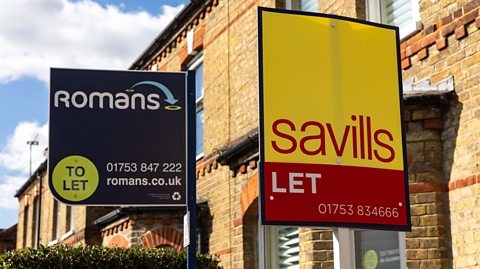
The decision to buy or rent a home is one which most people will consider in their lifetime.
Buying a home with a mortgage is not an option available to everyone as they may not find a bank willing to lend them the money for their mortgage.
Other people may not be ready to buy a home or could have circumstances which change regularly and so a permanent home address is not practical.
Before making a decision about a home, consider the following.
Advantages and disadvantages of buying (with a mortgage):
| Advantages | Disadvantages |
|---|---|
| A mortgage term is typically 25 years. After making regular payments for this period of time, the house will belong to the mortgage payer. | Most people will need to be approved for a mortgage from a bank which means that there will be repayment fees as well as APR. A mortgage of £100000 could mean paying back £150000. |
| It’s an investment for the future. Many people will pass their home onto their children when they pass away, giving their children the option to keep or sell the home. | A large deposit will be required before a bank will approve a mortgage. Many people struggle to save approximately £20000. |
| Home improvement such as renovating a garage or converting a roof space will mean that a house is worth more money than it was when it was first purchased. | If a person decides that they would like to sell their home, the value might not be worth as much as it was when it was first purchased. The owner could lose money by selling their home. |
| A home could also become an income if deciding to rent out a room or even turning a home into a B&B. | Any repairs or maintenance must be taken care of by the owner. This could be expensive. |
Advantages and disadvantages of renting:
| Advantages | Disadvantages |
|---|---|
| The landlord must pay for maintenance. For example, if there is a leak or a broken boiler, it is the responsibility of the owner to repair this. | Any changes made by the occupant such as redecorating must be done with prior permission from the landlord. If permission to redecorate is given, it is at the occupant's expense. |
| Most leases are for 6 months which means that a person does not have to commit to renting a home for any longer than that. This is ideal for someone who moves around a lot. | Even after renting the same home for 20 years, it will still belong to the landlord. |
| Unlike a mortgage, a deposit for a rental property is usually a security deposit and one month’s rental fee at the start of the agreement. | The landlord may decide to sell the house and can ask the tenants to leave the property with notice. This means that the occupants might have to find somewhere else to live in a short space of time or could even end up homeless. |
More on Making informed financial decisions
Find out more by working through a topic
- count3 of 4
- count4 of 4
- count1 of 4