What is net zero?
Net zero means finding a balance between the greenhouse gases released into the atmosphere and those we remove from it. The goal is to ensure that our planet remains at a comfortable temperature so that all living things, from plants to animals, can grow and survive.
When we use things like cars or when we make electricity, we create greenhouse gases that make the Earth too warm. Greenhouse gases are gases in the Earth's atmosphere that trap heat from the sun, like a blanket. They help keep the Earth warm enough to support life, which is a good thing. However, when there are too many greenhouse gases in the atmosphere, they can cause the Earth's temperature to rise too much, leading to climate change. Some common greenhouse gases include carbon dioxide (CO₂), methane (CH₄), and nitrous oxide (N₂O).
Net zero is a plan to balance things out. In Wales and around the world, we're working on using less of these gases and finding ways to take them back out of the air.
Video: Net zero
You may hear the phrases net zero and carbon neutral a lot, but what do they actually mean, and how are they different?
To understand these, we first need to know what greenhouse gases are.
Over many centuries, human activities, such as burning fossil fuels like oil, gas, and coal for energy have filled the Earth’s atmosphere with greenhouse gases.
Greenhouse gases trap the sun’s thermal energy, or heat, from escaping.
This has warmed the Earth, leading to climate change.
So if we want to reverse climate change we need to cut down on greenhouse gases going into the atmosphere. And that is what net zero is all about.
Countries trying to be net zero have promised to add zero greenhouse gas emissions to the atmosphere by a certain date.
For Wales it is 2050.
The net in net zero means the goal is for emissions to be zero in total. Making no greenhouse gas emissions at all is really hard.
So governments will try and balance things out by using something called carbon offsetting.
Carbon offsetting means taking greenhouse gases out of the atmosphere.
One natural way to do this is to plant trees which absorb carbon dioxide.
Another is carbon capture and storage technology, which takes carbon dioxide directly from the air and locks it safely away.
Sometimes we hear the phrase carbon neutral, which means that something has no impact on total emissions. In other words, a neutral effect.
Companies and other organisations use this term, but not always in the same way. Which can be confusing and even misleading.
The term is sometimes used to refer to all greenhouse gases, and other times only carbon dioxide.
Another way the term is used differently is when it describes an entire company, or one specific product they make.
Sometimes this confusion can lead to greenwashing which means deliberately or accidentally making a company, or the things it makes, seem more environmentally friendly than they actually are.
So countries focus on net zero rather than carbon neutral.
For us to reach net zero in Wales, we’ll have to do things differently.
We may need to fly less, eat less meat or stick to sustainably farmed meat.
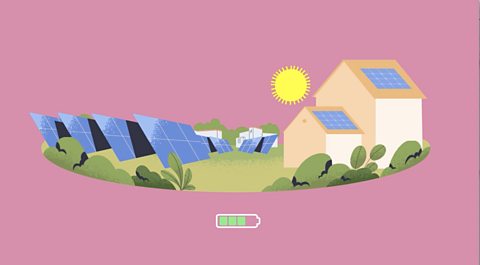
We could also use less energy and change the way we create energy by using renewable sources like wind, water, tidal or solar, which Wales has already started using.
The way we make our energy is actually a huge factor, because fossil fuels are one of the main contributors to greenhouse gas emissions.
Changing how we work and live can be a big challenge, but we can create a more climate friendly world by working together.
Everyone has a part to play, and the quicker we act, the quicker we will reduce the effects of climate change.
It will also lead to cleaner air, nicer public spaces and healthier ways of travelling and eating.
Moving to net zero should also lead to tens of thousands of new jobs in Wales.
We’ll need energy engineers, machine operators, recycling managers, and more.
Lots of people are working on this challenge and they're making good progress.
For example, Wales no longer has any coal-fired power plants.
We need to keep going with work like this so that we achieve net zero and slow down climate change.
Contributors to greenhouse gas emissions
Electricity generation, heating, and fuel production
Electricity generation, heating, and fuel production are the largest contributors to greenhouse gas emissions. These emissions primarily come from the This is the scientific word for burning. It is where a substance reacts with oxygen from the air and transfers energy to the surroundings by heating and light. of fossil fuels like coal, oil, and natural gas.
Transportation
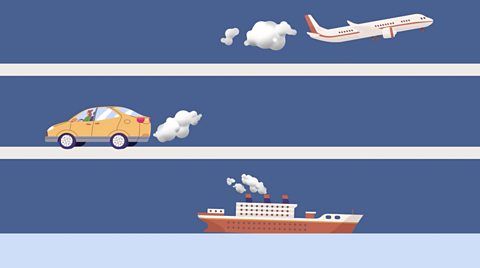
Emissions from transportation include those from vehicles like cars, buses, and trucks, as well as from aviation and shipping.
Agriculture
Farming practices in Wales can sometimes contribute to greenhouse gases because of the use of fertilisers, managing animal waste, and cutting down trees. These actions release gases that can worsen global warming. But Wales is trying to fix this by promoting other ways of farming, like organic farming and managing waste.
Why is reaching net zero important?
Tackling climate change
Becoming net zero would help us fight climate change by reducing the gases that warm up the Earth, preventing extreme weather such as Fast rotating winds that can cause a lot of damage., A long period of low rainfall. and A large tropical storm system with high-powered circular winds.. It would also slow down rising sea levels.
Protecting nature
It helps us preserve nature and wildlife by reducing pollution and keeping A community of animals, plants and microorganisms, together with the habitat where they live. healthy.
Keeping people healthy
Net zero means cleaner air and water, which improves public health and makes communities safer.
Creating jobs and opportunities
Transitioning to net zero creates new jobs in renewable energy, such as constructing wind turbines, maintaining them and designing them. Positions can also be created in other sustainable industries. For example, jobs in waste reduction, recycling, and composting programme can boost the economy.
Fulfilling international agreements
In December 2015, many countries signed the Paris Agreement. This means they promised to work together to protect the planet and meet global goals for reducing greenhouse gases.
Video: Net zero in action
Net zero and carbon neutral are important goals if we want to reverse climate change.
But what can we do to help reach these goals?
With a growing population around the world, greenhouse gases have increased too.
Remember them?
The gases that trap heat in the earth’s atmosphere, which leads to climate change.
Like many countries around the world, Wales is trying to reach net zero.
That means releasing fewer greenhouse gas emissions than what can be offset or absorbed.
Carbon neutral means not making climate change any worse.
From musical festivals to clothing designers, many businesses are trying to make products and services carbon neutral.
A lot of people think governments and companies should do most of the work to achieve these goals, but there’s still plenty that you and I can do to help.
For example, you could reduce, reuse and recycle more or take steps to avoid wasting food.
Also, eating less meat or eating sustainably farmed meat.
Travelling on public transport or using self-powered methods like cycling when possible, can help.
So can buying things from zero waste shops which are popping up all across Wales.
You may be able to do some of those things on your own, but by working together with other people, you can have an even bigger impact.
How about working in your own community by asking schools or businesses to go carbon neutral?
Could you petition your local government to act on the issue?
Doing these things locally is a great way to make a difference and it can even help you feel less worried about climate change.
Looking at what’s already been done can also make you feel hopeful.
For example, Carmarthenshire County Council were the first local authority in Wales to publish a plan to become net zero.
More and more businesses in Wales and around the world are also promising to become carbon neutral.
Why is reaching net zero a challenge?
Reliance on fossil fuels
Many of the biggest greenhouse gas-emitting sector, such as industry and transportation, heavily rely on fossil fuels. Switching from energy sources that produce a lot of carbon, like coal and oil, to cleaner energy sources like wind and solar power, needs a lot of money, new technology, and updates to our power systems.
Greenwashing
Greenwashing is when companies promote their products as eco-friendly to attract customers. Sometimes they accidentally or deliberately make their products seem more environmentally friendly than they actually are. It is therefore possible to suggest that this can trick people into thinking they're helping towards achieving net zero, when they’re not.
Money
Switching to cleaner energy and more sustainable ways of living can sometimes, although not always, cost more money. It is therefore possible to suggest that some households would not be able to purchase sustainable or eco-friendly products within their budget.
Changing habits
In order for Wales to reach net zero, it is possible to propose that we need to change our daily habits. For example, how we travel, or what we eat. This could be perceived as challenging.
Activity: What changes can you make to reach net zero?
Reaching net zero in Wales
Wales is working hard to reduce its greenhouse gas emissions by embracing cleaner energy sources such as wind and solar power, as well as promoting electric cars and enhancing public transport. These changes aim to balance out its carbon emissions, move towards a net-zero future, protect the planet, and create a better future for generations to come.
Renewable energy sources in Wales
Wales is focusing on using renewable energy sources like wind, water, and solar power instead of fossil fuels such as coal, oil, and natural gas. Renewable sources don't produce harmful greenhouse gases, and they are cleaner and better for the environment.
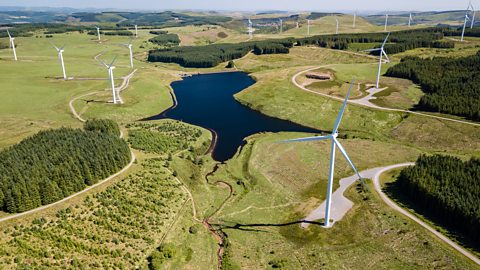
Pen y Cymoedd Wind Energy Project is located in south Wales and is one of the largest onshore wind farms in the UK. It consists of a large number of wind turbines, harnessing wind energy to generate electricity. The project contributes to Wales' renewable energy goals and plays a crucial role in reducing Wales’ reliance on fossil fuels for energy production.

Sustainable travel in Wales
Sustainable travel in Wales is essential for reducing carbon emissions and aligning with the nation's goal of achieving net zero. This approach emphasises eco-friendly ways of travelling such as cycling, walking, and public transport to minimise environmental impact. By prioritising sustainable travel, Wales aims to reduce greenhouse gas emissions and promote greener tourism. This directly contributes to its net zero ambitions by lowering the overall carbon footprints associated with transportation.
The South Wales Metro project is all about making train and bus services better across South Wales. It includes improving railways, stations, and bus routes to give people easier and more efficient ways to get around. The goal is to reduce traffic and offer greener travel options for everyone in the area. Other services across Wales including Traws Cymru buses offer a fully electric and zero-emission service.
Funding initiatives
Businesses and communities in Wales are sometimes given money to help them make their buildings more energy efficient or to better reuse, recycle, and repurpose their resources.
Farming practices and tree planting
Sustainable farming means farming in a way that's environmentally friendly, saves natural resources, and helps wildlife. Some examples are changing crops each season, managing pests without chemicals, and planting extra crops to protect the soil.
Organic farming refers to practices such as reducing the use of Chemicals used to kill pests. and fertilisers.
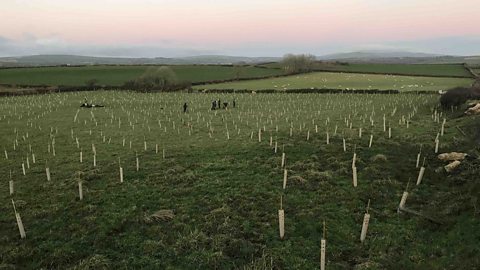
Benefits of planting trees
Capture carbon dioxide - trees in Wales are planted to absorb carbon dioxide from the air, helping to reduce the amount of this greenhouse gas in the atmosphere.
Reduce air pollution - trees can help improve air quality by releasing oxygen.
Increase biodiversity - trees can support The variety of different plants and animals in an area.. They provide habitat for birds, insects, and other small mammals such as squirrels, but also different types of bark and lichens can grow on their bark.
Quiz
More on Energy and transport
Find out more by working through a topic
- count2 of 3
- count3 of 3