Getting around
People have always ventured from one place to another for various reasons. It could be to:
- buy and sell goods
- visit loved ones
- commute to work
- go on holiday
However, the mode of transport individuals choose can have significant consequences for the planet. Transportation options such as cars, boats, or planes burn fossil fuels like oil, gas, and coal. This releases greenhouse gases into the atmosphere and consequently affects our carbon footprint.
Video: Sustainable travel
We are natural-born explorers. Humans have always travelled from one place to another to buy, sell, visit friends, go to work, or just for the fun of it.
Because who doesn’t love going on holiday?
But, the way we travel has a big impact on our planet.
Most forms of travel, such as cars, boats or planes, burn fossil fuels like oil, gas, and coal.
This adds greenhouse gases to the Earth’s atmosphere.
Greenhouse gases trap the Sun’s thermal energy, or heat, and stop it from escaping.
This leads to global warming and climate change.
As a result, travel contributes a lot to the world’s greenhouse gas emissions.
Our contribution to these emissions is called our ‘carbon footprint’, and it’s something we can measure.
Let’s imagine you need to travel from Cardiff to Bangor, a distance of about 180 miles.
In 2018, if you flew 180 miles, you would produce roughly 73,000g of CO₂.
If you travelled this distance by car, you would produce around 56,000g, which is better – but it’s still more than taking the bus to travel that distance, which would produce around 30,000g of CO₂.
Taking the journey by train would have the least impact on the environment.
This would produce around 12,000g of CO₂.
Forms of travel that carry more people tend to be greener than travelling individually.
When more people travel together, you can divide the total emissions by the number of people, which makes each person’s carbon footprint smaller.
Whereas if everyone travels separately, overall emissions go up.
The best forms of travel are ones that don’t rely on engines at all because they don’t produce any greenhouse gases.
These modes of transport are also called “active transport” because you power them yourself, so you also get the benefits you get from exercise, of feeling healthier.
There is work being done to develop greener transport by many councils and governments.
The Welsh Government, for example, has made a commitment to switch all of its long-distance buses to zero emissions.
During the last few years in Europe, more electric cars were sold than diesel cars.
Which is great, because electric cars produce far fewer emissions than diesel cars, and fewer than petrol cars too.
At the same time, those in power are creating more liveable city centres, replacing spaces that were previously only for cars and turning them into green spaces made for people on foot.
So, next time you go somewhere, whether it’s to school, to see friends or on holiday with your family, why not think about how you could travel in a sustainable way?
And in future, there could be many more ways that we can travel from one place to another.
What is a carbon footprint?
A carbon footprint is the trail of carbon dioxide (CO₂) that we leave behind as we go about our daily lives. It's the total amount of greenhouse gases, mainly carbon dioxide, that are emitted into the atmosphere because of our activities, like driving cars, using electricity, or even eating certain foods.
When we use things that produce CO₂, we're leaving a carbon footprint behind, and this contributes to climate change. The bigger our carbon footprint, the more impact we have on the environment
The following factors can contribute to your carbon footprint:
- The amount of electricity and gas you use at home. This includes things like your heating and other appliances.
- The number of miles you travel via car, aeroplane or public transport.
- The type of food you eat and where it comes from.
- The amount of waste you produce and how you get rid of it.
- The products you buy and where they come from.
Travel and greenhouse gases
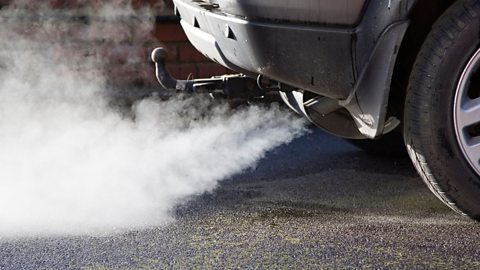
Travelling in vehicles such as cars or planes burns fuels like gas or diesel, releasing greenhouse gases into the air.
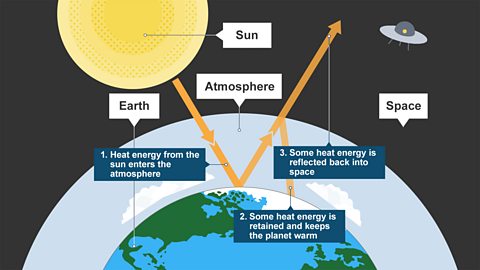
These gases trap heat from the sun, causing temperatures to rise and the climate to change. This impacts our A community of living things that are all connected to one another, and depend on one another. and their surroundings, leading to the following possible outcomes:
- Extreme weather events become more frequent and severe, for example, storms and hurricanes.
- The ice caps at the north and south poles continue to melt, and as a result, sea levels continue to rise.
- Habitats continue to be destroyed during the extraction of fossil fuels. Coal, oil and gas extraction often requires land clearance which can lead to Deforestation is the cutting down of large areas of forest so the land can be used for farming, housing or industry. and a loss of The variety of different plants and animals in an area..
- As temperatures rise, regions such as the Sahel, which already experience hot climates due to their proximity to the equator, become even warmer. This can result in the expansion of desert areas like the Sahara into the Sahel, a process known as When fertile land becomes desert..
Activity: How does travel contribute to a changing climate?
Video: Sustainable travel in action
Did you know that in 2020, around 20% of all worldwide greenhouse emissions were caused by travel.
There are over eight billion people in the world and most of us travel at least once every day.
So, how can we get to where we need to be while still looking after the planet?
Some forms of travel are carbon neutral, and some create greenhouse gas emissions.
This contributes to making climate change worse.
Any means of travel you power yourself is carbon neutral.
So, if you walk, cycle or skateboard to school, perhaps, this is called active transport and it’s a great way to stay healthy.
But most kinds of travel that rely on an engine, add greenhouse gases to the atmosphere.
Greenhouse gases trap the sun’s heat, which leads to climate change.
The pollution caused by air travel is responsible for a lot of the greenhouse gases we release globally.
So, if you’re thinking about going somewhere by plane, could there be another way for you to travel?
It’s also more sustainable to travel with others.
Go by bus or train, or organise lifts with people you know.
In Wales, one of the most sustainable ways to travel is by bus.
The environmental impact is low and they carry a lot of people at once, reducing everyone’s carbon footprint.
Maybe next time you are planning a trip with a group, you can talk about sustainable options.
Local tourism, which means staying near to where you live, is more sustainable and it helps support local businesses and people.
You can always contact your local leaders and ask them to make travel in your area more sustainable.
With your friends, why not think about ways of encouraging more people to choose sustainable travel?
Could you encourage your school to make it easier for people to choose active transport, by having better bike storage areas or places to store waterproof gear?
So, have a think, talk about it and then get involved.
Travelling more sustainably
Travelling more sustainably means engaging in active travel or choosing Designed to have little or no damaging effect on the environment. modes of transport.
Active travel
Moving from one place to another using physical activity, like walking, cycling, or scooting, instead of using vehicles like cars or buses.
Eco-friendly transport
This can include a variety of practices and technologies aimed at reducing environmental impact, such as using public transport, car sharing or using electric vehicles. Eco-friendly transport does not specifically refer to travel methods powered by human effort.
Electric vehicles and e-bikes
Electric or hybrid vehicles run on electricity, which is sometimes sourced from renewable sources like solar or wind power. This makes them better for the environment as it reduces harmful greenhouse gas emissions and air pollution. Hybrid cars which combine electric motors with petrol engines, use less fuel and release fewer pollutants. Buses and trains can also be powered by electricity or other cleaner fuels.
E-bikes are sustainable because they use electricity, which is cleaner than petrol or diesel. They produce fewer emissions, helping to reduce air pollution and greenhouse gases.
Activity: Sustainable travel options
Sustainable holidays
Every year, many people choose to go on holiday, and there are ways to make a trip away from home more sustainable. For example:
Using sustainable modes of transportation to get to a destination. For example, trains, buses, or other forms of public transport.
When flying becomes necessary, opting for direct flights, if possible, can release fewer greenhouse gases per mile.
Going on holiday to local destinations or nearby regions instead of travelling long distances.
Practicing water and energy conservation by reusing towels and linens and turning off lights and electronics when not in use.
Reducing the weight of luggage by packing only the essentials can decrease fuel consumption and emissions, especially during long-distance flights or drives.
Engaging in low-environmental-impact outdoor activities like walking, biking, or wildlife watching.
Quiz
More on Energy and transport
Find out more by working through a topic
- count1 of 3

- count2 of 3