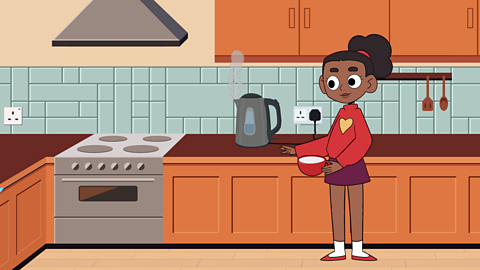
Conductors and insulators

Conductors and insulators are important when we are thinking about different types of materials and their properties.
A conductor is an object or type of material that allows heat or electricity to move through it easily.
An insulator does the opposite. They stop or slow down heat or electricity trying to move through them.
Watch: What are conductors and Insulators?
Learn about the types of materials that make good conductors and insulators of electricity.
Fran: You might be thinking that a conductor stands at the front of an orchestra waving their arms around, and they do.
But we're talking about a different kind of conductor.
A conductor of electricity.
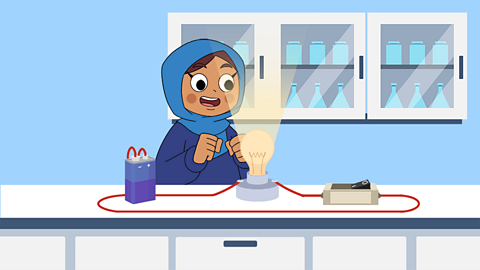
Electricity flows around a circuit to power our gadgets, appliances and even our lightbulbs, making them all work.
And electricity travels more easily through materials called conductors.
So, a conductor is a material that will allow electricity to flow through it, like these metal wires.
Most metals are great conductors, but it doesn't just work with metal wires.
Other types of metal are conductors too, like this aluminium foil.
See, the light comes on.
How about this copper coin?
Yay!
This plastic tube?
Hmm.
Rubber band?
Not so good.
And that's because this plastic and rubber band are insulators; they don't allow the electricity to flow easily through them.
So, over here I have a metal wire.
But it's surrounded by a plastic insulator.
And that prevents us from touching the wire and getting a shock, and so it keeps us all safe.
Over to my investigator to find out more.
Child: My tablet needs charge.
I hadn't noticed before, but the end of the cable is metal and so is the portal inside the device.
When the metal conductor on the end of this plug is plugged in to the power source it connects with the metal conductor inside thatpower source and completes a circuit, which allows the electricity to flow through my device and charge it up.
I wonder what other conductors we can find.
It looks like when you find a conductor, you also find an insulator.
Fran: Yes you are right, conductors and insulators are usually found together to keep us safe.
Watch: The importance of conductors and insulators
Learn why it is important to have conductors and insulators.
Narrator: Problems with your fan Frank? Fixing this will be a breeze! Huh-huh. This is e-e-a-sy, for electricity to flow you need a conductor.
That plastic bottle - that’s an insulator - they don’t let electricity pass through.
No, not that either, woods an insulator too.
We’ve got to think of conductors man - like things made from metal!
Copper wire - awesome.
Oh wait there! Conductors can be dangerous!
Frank: AAAAArghh-gg-hh!
Narrator: That’s it man - your wire not has a plastic coasting - which is an insulator. Try that!
Looking good Frank!
Fascinating facts

Electrical conductors can be made safer by surrounding it with a material that is an insulator. That is why metal wires have a plastic or rubber coating around them. It allows the electrical current to only travel through the wire and not to anywhere else
Most electrical conductors are also good conductors of heat.
Copper is an extremely good conductor and is a better conductor than aluminium.
Water is also a conductor despite not being a metal.
Some materials, such as wooden corks are good electrical and thermal (heat)insulators.
Gases are generally poor electrical conductors.
Electrical currents can pass through the air in certain conditions, such as lightning during a thunderstorm.
Electric eels can generate electricity to stun and catch their prey just using their bodies!
Where are conductors and insulators used?
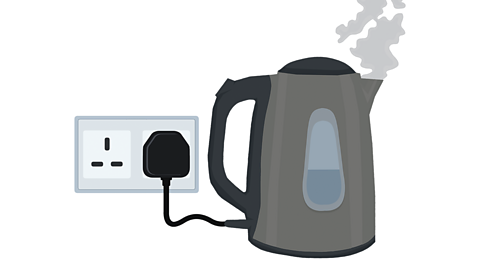
We use electricity all around us, such as in our homes and schools, to make electrical appliances work.
To make something work there needs to be an electrical circuit. The electricity moves from the power source (the battery or the mains electricity) to the electrical appliance and back again.
If the circuit is broken (the appliance is taken out of the circuit, or the electricity supply is switched off) then the appliance will not work.
The circuit has to be made up of electrical conductors to allow the electrical current to move around the circuit. Wherever there are insulators the electrical current will not flow easily.
Conductors
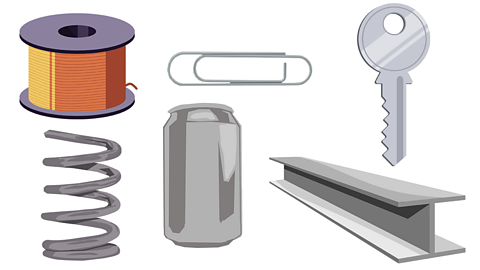
Some materials let electricity pass through them easily. These materials are known as electrical conductors.
Many metals, such as copper, iron and steel, are good electrical conductors. That is why the parts of electrical objects that need to let electricity pass through are always made of metal.
Metal is used in plugs to allow electricity to transfer from the wall socket, through the plug, and into a device such as a radio or TV.
In a light bulb, the metal filament conducts electricity and causes the light bulb to light up.
Insulators
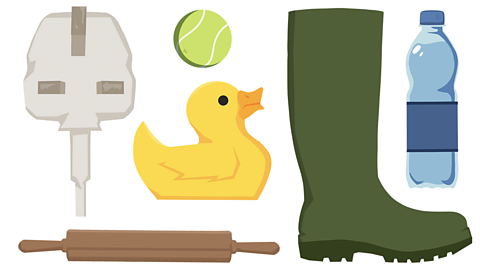
Some materials do not allow electricity to pass through them. These materials are known as electrical insulators.
Plastic, wood, glass and rubber are good electrical insulators. That is why they are used to cover materials that carry electricity.
The plastic covering, that surrounds wires, is an electrical insulator. It stops you from getting an electrical shock.
Conductors and insulators
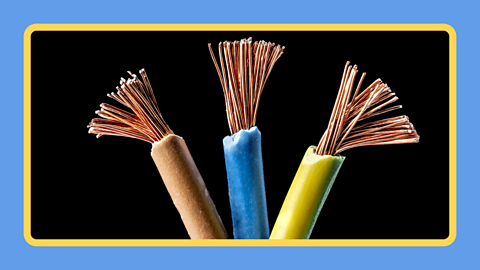
Image caption, Copper wire
Many metals, such as copper, iron and steel, are good electrical conductors.
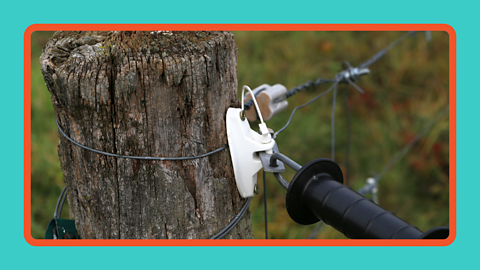
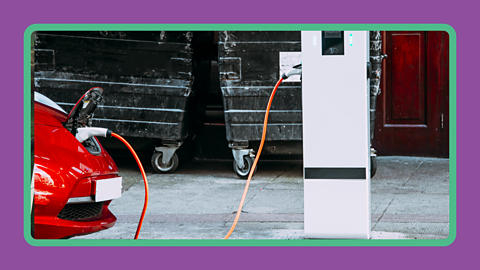

1 of 4

Did you know?
The best electrical conductors are usually made of metal, but water is also a good electrical conductor.
This is one of the reasons why electrical appliances should not be used near water and why you should make sure your hands aren’t wet when using electricity.
Important words
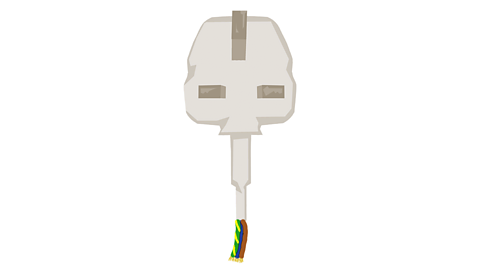
Important words you need to know about conductors and insulators.
Circuit - An electric circuit contains a power source and components, which are connected together in a loop using wires.
Conductors - Allow electrical and thermal energy to flow through them easily.
Electrical appliances - A device or piece of equipment designed to perform a specific task, such as light bulbs, a fridge or a toaster.
Electricity - Is the flow of tiny particles called electrons and protons. It is created by generators which can be powered by gas, coal, oil, wind or solar.
Filament - A thin, high resistance wire that gets hot and glows when a current flows through it causing it to emit heat and light. They are used in some types of bulb and electrical heaters.
Insulators - Do not allow electrical and thermal energy to flow through them easily.
Materials - What an object is made from.
Properties - The strengths and weaknesses of a material.
Activities
Activity 1 – Quiz
Activity 2 – Identifying conductors and insulators

- Make a list of all of the objects that you can see in a room.
- Separate these objects into conductors and insulators.
- How many of each are there? How many are used on an electrical appliance?
- Explain how you know if a material is a conductor or an insulator.
Why are conductors often surrounded by an insulator for safety purposes?
To stop people from getting an electric shock.
Activity 3 – Sort the conductors and insulators

New game! Horrible Science: Stinky Space. game
Join Pipette on her epic mission and learn some revolting facts about space along the way.

More on Electricity
Find out more by working through a topic
- count4 of 4
- count1 of 4

- count2 of 4