Key Terms
The Moon does not produce its own light. We can see the Moon because it reflects light from the Sun.
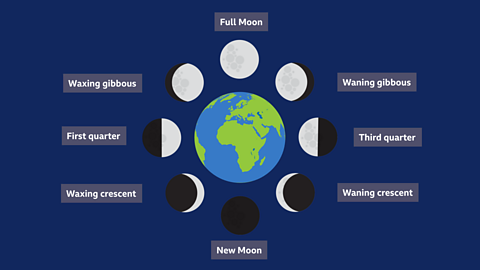
The Moon orbits the Earth, and as this happens the Moon’s appearance when viewed from the Earth changes because different parts of the Moon are illuminated at different times. This means we see the Moon’s phases from Earth as different shapes.
Phases of the Moon
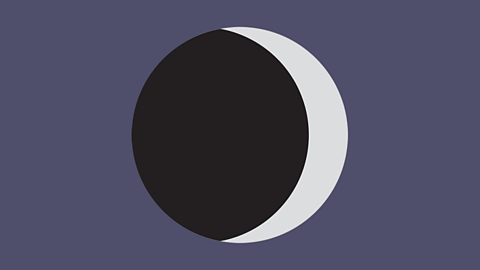
The Moon’s appearance changes over time when viewed from Earth. Sometimes, the Moon is not easily seen in the sky and at other times it can appear as a thin Less than half of the illuminated part of the moon is visible., a full circle – or somewhere in between.
A Moon phase is the shape of the visible part of the Moon, and this changes gradually over the course of a The time between a new moon and the next new moon – approximately 29½ days..
A lunar month
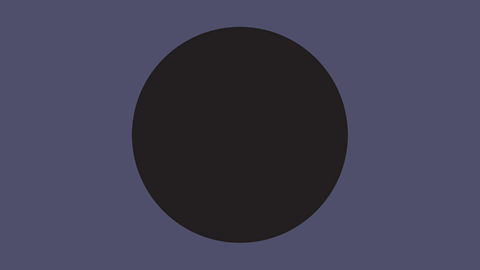
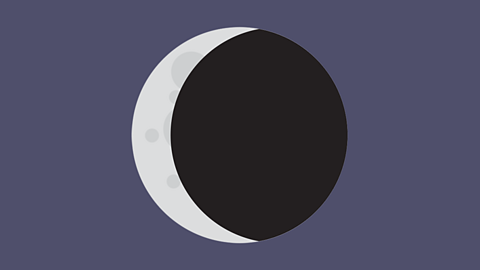
Image caption, New Moon
New Moon – the illuminated part is not visible at all.
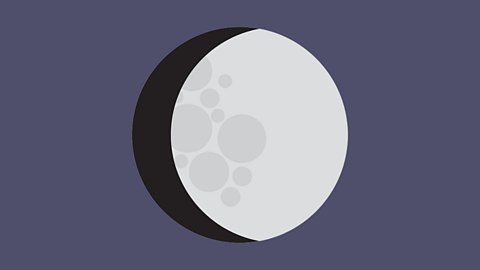
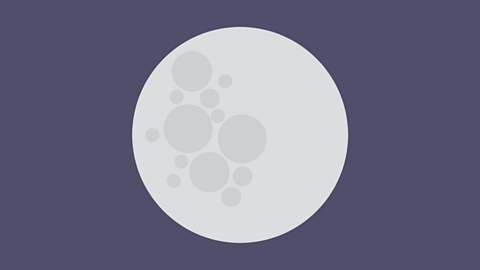
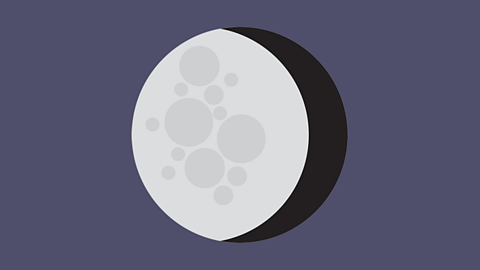
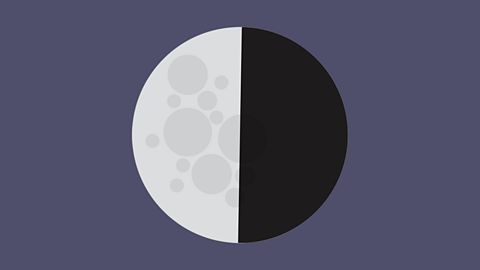
1 of 8
A The time between a new moon and the next new moon – approximately 29½ days. lasts around 29.5 days and starts with a The illuminated part of the moon is not visible at all. – when the Moon is not easily seen in the sky because the light from the Sun lands on the side of the Moon which is facing away from Earth.
As the Moon moves around Earth, the illuminated section of the Moon’s surface starts to face towards the Earth, and we see a thin Less than half of the illuminated part of the moon is visible. appear.
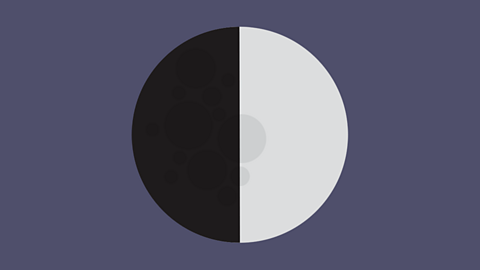
Over the course of a lunar month, the Moon goes through the following phases:
Did you know?
Earth's only natural satellite is simply called ‘the Moon’ because people didn't know that other moons existed until 1610 when Galileo discovered the four largest moons orbiting Jupiter: Io, Europa, Ganymede, and Callisto.
What causes lunar phases?
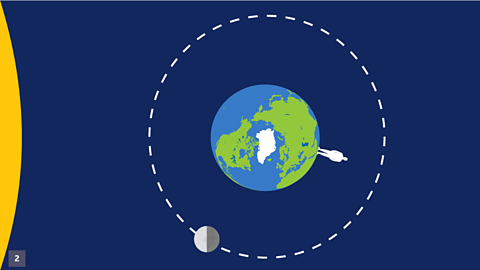
The Moon is non-luminous, meaning that it does not produce light. We see the Moon because it reflects light from the Sun, and half of the Moon’s surface is always illuminated. The amount of this illuminated portion that we can see from Earth varies, depending on the angle that we are viewing from. This changes as the Moon orbits Earth, and Earth orbits around the Sun.
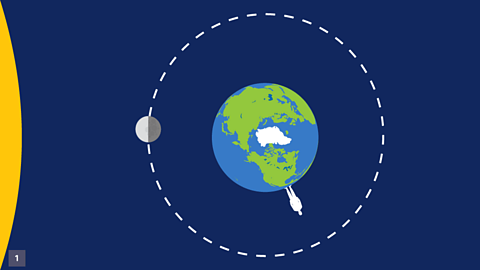
Image caption, When the moon is between Earth and the Sun, the illuminated part of the Moon is facing away from Earth so we cannot see it at all – this is a new Moon.
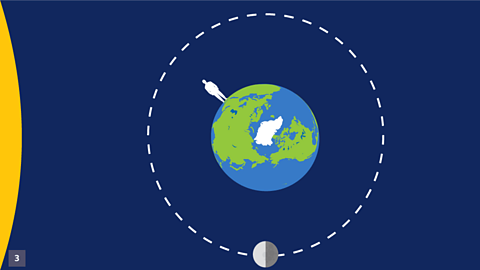
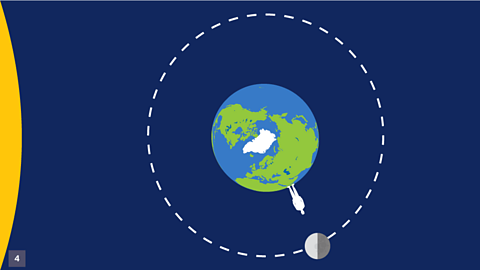
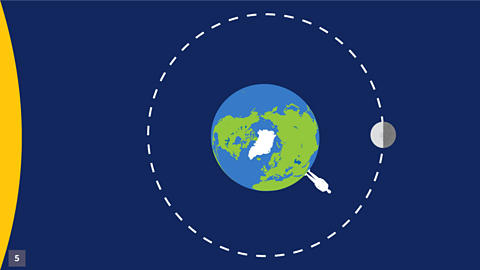
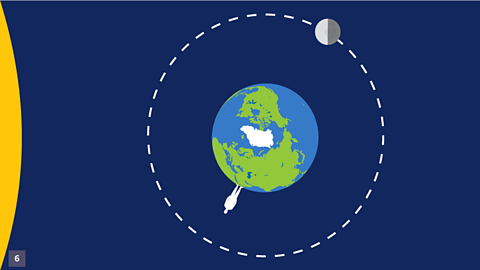
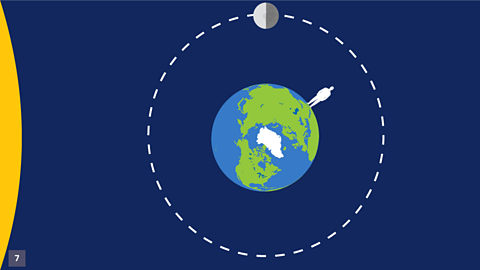
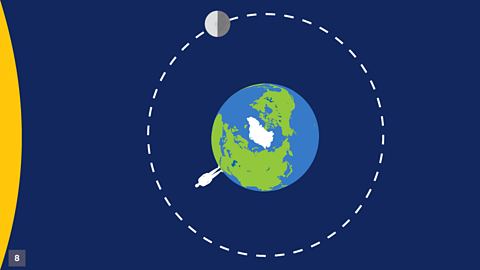
1 of 8
Test your knowledge
Play the Atomic Labs game! game
Try out practical experiments in this KS3 science game.

More on Space
Find out more by working through a topic
- count5 of 9
- count6 of 9
- count8 of 9