How to measure the strength of the Sun
A short video showing how to measure the strength of the Sun with a toilet roll.
You’ll need:
- A large pad of paper
- A pen
- A ruler
- A toilet roll tube
- Some clear skies
Step 1: Preparation
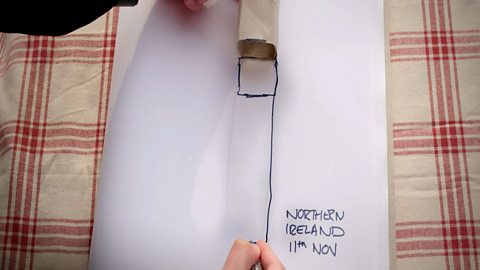
Make a note of where you are and what the date is. Shape the toilet roll tube into a square. Make sure you’ve got sharp corners.Place the squared-off tube on your paper so the sunshine casts a shadow down the middle of the page. Trace around the square bottom of the toilet roll tube.
Step 2: First Reading (Morning)
Line up the end of the tube with the edges of the square you have traced. Turn the page if needed so the sunshine casts a shadow down the centre of the page. Angle the tube so the shadow cast is the thinnest possible line. Trace around the shadow that’s cast.
Step 3: Calculating Sun Strength
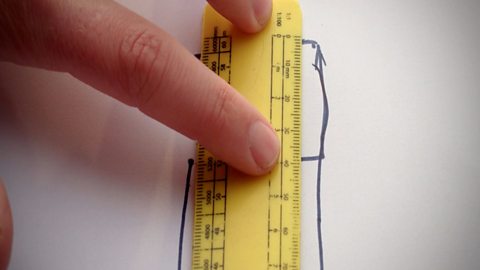
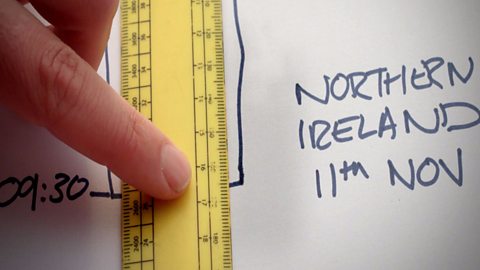
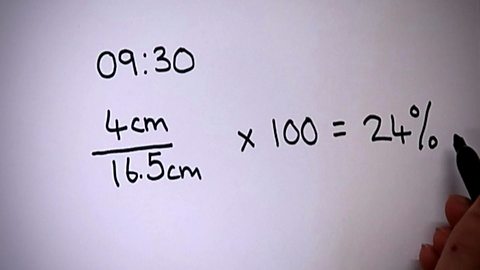
Measure the length of the original square you traced. Divide it by the length of the sunlit shadow that was cast. Multiply the result by 100 to give a percentage. This percentage represents the current strength of the sun compared with when it's directly overhead.
Step 4: Second Reading (Midday)
Wait until later in the day when the sun is higher in the sky. Take your second reading. You should notice a difference in the length of the shadow cast and therefore the percentage strength of the sunlight.
Step 5: Final Reading (Evening)
Take a final reading when the sun is nearly setting. The shadow might be so long you’ll need another page.
Step 6: Analysis
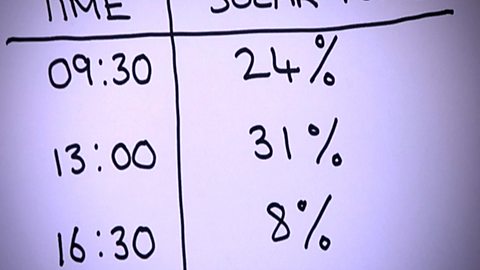
Put all these results together on a page. You’ll see how the percentage strength of the sun changes over the course of the day as the angle of the sun changes in the sky.
Have a go
Slideshow on how to measure strength of sun.
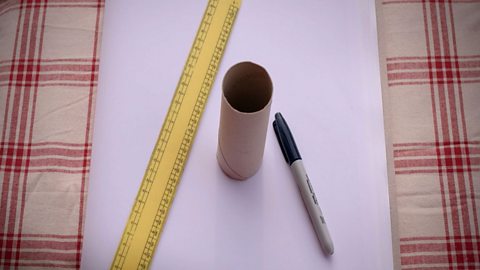
Image caption, WHAT YOU NEED: A large pad of paper, a pen, a ruler, a toilet roll tube and a sunny day. Don't forget your sunhat!
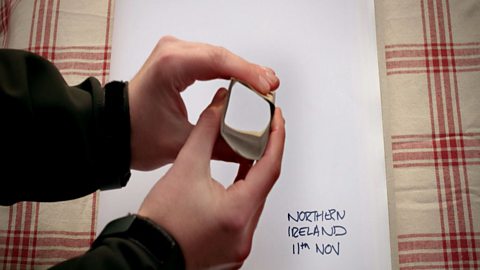
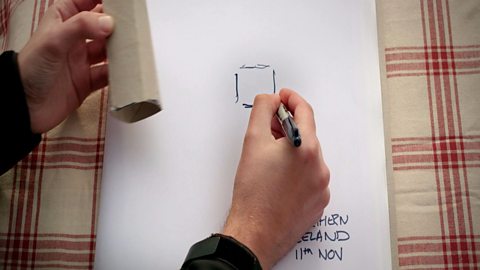
1 of 8
How to measure solar energy on Earth
BOY: So you need to put the square in the middle of the page, as middle as possible, and then draw around it.
GIRL: You have to make sure the shadow is as thin as it can possibly be. Once you have done that, you have to draw around it.
BOY: So first, we will have to measure the distance that is inside of the square. So we will start from the middle, and right now for me, it's around 4.4 or 4.5 cm. So we're going to write the location, which would be London. It's 10 am.
BOY 2: And now we need to measure the entire length of the shape, so I'll go from the bottom flat end here to the top — so that's 16.5. And if I currently look at the measurement, it is around about 18.6 or 18.5 cm.
BOY 1: So now we need to calculate the percentage of the sunlight during the day. And that is the percentage of the power of the sun, isn't it?
GIRL: At this time it's 27.3 per cent. So we need to come back and do this again. Lunchtime would be a good time?
BOY: So shall we do another reading?
GIRL: First we have to make sure it's facing the sun.
BOY: 14.5 cm… so 4.5 divided by 14.5, times that by 100 equals 31 per cent.
GIRL: Stronger than last time, because towards the middle of the day the sun is higher up in the sky. Meaning that the concentration is gonna be much more.
Play the Atomic Labs game! game
Try out practical experiments in this KS3 science game.

More on Space
Find out more by working through a topic
- count9 of 9

- count1 of 9
- count2 of 9
- count3 of 9