What is a biome?
Biomes are areas of the Earth where the climate, landscape, animals and plants are similar.
What lives and grows in a biome depends on things like:
- how hot or cold it is
- how dry or wet it is
- how well things grow in the soil
Animals and plants depend on one another to stay alive. The animals need plants as food. The plants depend on animals to spread pollen and seeds so that new plants may grow.
Video - Biomes
Do you ever wonder why you don’t see penguins and parakeets together? Tigers and turkeys? Gorillas and gerbils? Actually, I’d like to see that. It's because plants and animals only live in environments that suit them, which brings us to biomes.
Biomes are large areas of the Earth with similar climates, landscapes, animals and plants. Like the rainforest biome. The climate… well, the clue’s in the name. It's wet. And as for the things that live there it's the most diverse biome on Earth, home to half of all the different types of plants and animals on the planet.
The tundra is the coldest biome. It's found near the Arctic where the winters are long, and the summers are short. The mammals that live there grow thick fur to cope with the winter cold, while birds, well… birds just leave. Nice for some.
Desert biomes are very dry which makes it difficult for living things to survive. They've had to adapt to cope with the harsh conditions. In hot deserts, plants like cacti are great at storing water and some animals are nocturnal, only coming out at night when it’s slightly less warm.
It all works. There’s only one problem. Us. Things like deforestation are changing some biomes beyond all recognition, and the only hope may well be, yup… us again.
We've tried different ideas for saving fragile biomes like the rainforest - such as only cutting down certain trees, setting up national parks, or simply replanting the forest. Which of these will be the most effective, and how can we persuade everyone that it's important? After all, each biome is unique, and we wouldn't want to lose any of them.
Types of biomes
Here are some of the planet's main biomes.
Desert
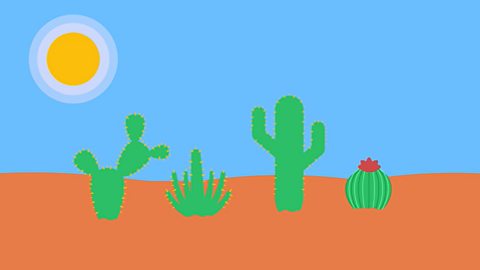
Deserts are very dry because they don't get much rain. Some of them are very hot but some, like Antarctica are extremely cold.
Living things have had to adapt to live in deserts. Some animals that live in hot deserts sleep in burrows underground during the day in order to stay cool.
Only certain types of plants can survive the harsh environment of a hot desert. They include cacti and small shrubs that can live in shallow and rocky soil.
Some plants and animals are able to store water in order to survive.
Tundra
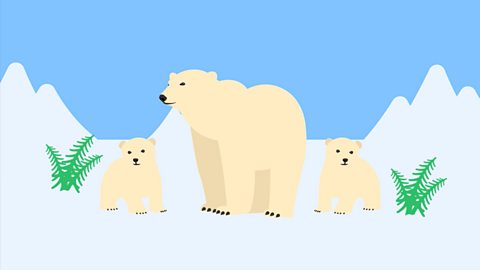
The tundra is found in the Arctic and on the tops of high mountains. It is dry, windy and cold. The land is covered with snow for much of the year, and summers are very short.
The conditions are very harsh so not many species of plants and animals can survive there.
Rainforest
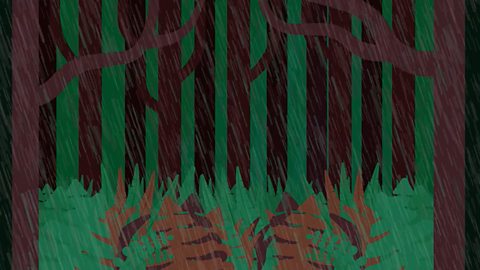
A rainforest is an area that has very tall trees, which are usually evergreen, and gets a lot of rain. Rainforests can be found on every continent except Antarctica.
They are very important biomes because they are home to half of all the different types of plants and animals on the planet.
Savannah
A savannah is grassland where shrubs and a few trees grow.
Different types of savannah can be found around the world. The East African savannahs are home to animals like lions, zebras, elephants and giraffes.
Lots of herbivores - animals that eat plants - live here because there's plenty of grass. These animals are hunted by carnivores - animals that eat meat. Some animals in the savannah, like vultures and hyenas, are scavengers which eat things that other animals have killed.
Biomes in danger
Unfortunately, many biomes are in danger of being destroyed, and humans are responsible for much of this damage.
More and more of the trees in rainforests are being cut down. Some of this The removal of trees. This is sometimes done so the land can be used for something else. occurs because the trees are used for timber. It's also happening because people are looking for resources like oil and minerals in the ground. Trees are even cleared to make room to graze cattle and grow food.
This is having an impact on the animals that live in the rainforests. Some like the orangutan are facing extinction because their habitat is being destroyed.
But it isn’t too late - there are plenty of things that we can do to help protect our rainforests.
Education
We can teach everyone about the importance of the rainforests to the environment and the creatures that live there.
Creating national parks
National parks are protected by strict rules to preserve the forests and prevent damage and destruction.
Logging and replanting
If you control how many trees are cut down as well as replant the forests with young trees, you can keep the rainforest and the things that live and grow there safe.
Activities
1. Think and research
Why are rainforests so important?
Answer the question in the form of a mind map. You should research and gather information about rainforests and present ideas suggesting why they are so important.
Think about:
- where are the world's rainforests?
- what living things can be found in the biome?
- how do we as people use rainforests?
- what is deforestation and why it happens?
2. Create a fact file
In your own words, present facts and information about the biomes that you have learnt about.
In your work, you should:
- describe the biome and its conditions and climate
- say what plants and animals live, grow and survive there
- give examples of where in the world these biomes can be found
3. Quiz - Biomes
More on Geography
Find out more by working through a topic
- count5 of 6
- count6 of 6

- count1 of 6

- count2 of 6