Friction is a force caused when one surface rubs against another. It can make things harder to move.
Let's find out more about friction and how it affects moving objects.
Watch and learn
Watch this video to learn more about friction. Find out about different types of friction and how we can increase or reduce it.
Video
Find out more about friction.
Title: Friction
Friction is a force between two surfaces rubbing against each other.
If the surfaces are smooth, there is less friction. If the surfaces are rough, there is more friction.
If you rub your hands together quickly, you can feel them heat up. That’s caused by friction.
Ice is a slippery, smooth surface. It has less friction with your shoes, so it is easier to slide.
Friction is good at slowing down and stopping things. The brakes on this bike apply friction by gripping the side of the bike wheel, slowing the bike to a stop.
Over time, friction can wear things out. Worn brake pads won’t be as good at stopping the bike.
We can feel friction against the air, too. Especially on a windy day. This is commonly known as air resistance.
Sometimes, we think the air around us is empty, but air is full of tiny molecules.
The large surface areas of this parachute creates a lot of friction with the air. This is air resistance being used very effectively.
A cyclist can tuck up tightly to reduce the amount of surface rubbing against the air. This reduces friction so they can go faster.
Here are two identical toy cars. Both ramps are the same height, but have different surfaces – smooth plastic, bumpy fabric. Which car do you think will reach the bottom first?
Did you predict right? The plastic ramp is smoother than the fabric ramp. The car travelled quicker over the plastic ramp as there was less friction. Success!
What is friction?
When two surfaces rub against each other, they create Check your connection, refresh the page and try again..
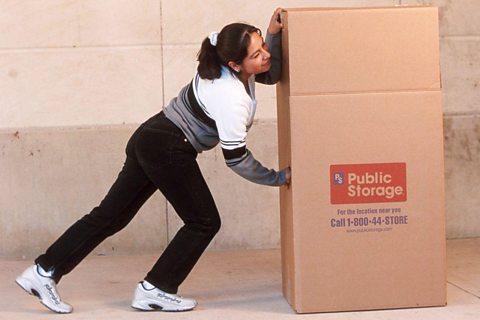
For example, when you try to push a box along the floor, friction makes it difficult.
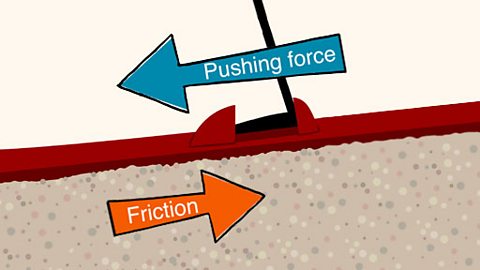
Friction is a force that resists the movement of objects past each other.
Friction always works in the opposite direction to the direction the object is moving.
Friction always slows or stops a moving object. It can also prevent objects from moving.
The amount of friction depends on the materials from which the two surfaces are made. The rougher the surface, the more friction is produced.
What is friction. revision-guide
Find out more about friction.
What is a force? revision-guide
What is a force?
Different types of friction
Air resistance
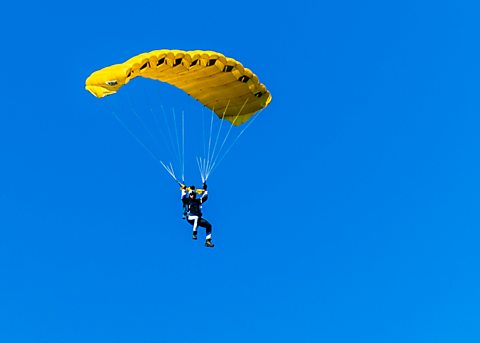
Check your connection, refresh the page and try again. is one kind of friction.
Air resistance is a force that occurs between a moving object and the air that surrounds it.
Like all friction, it always slows the rate at which the object moves or falls.
Air resistance increases with surface area, so the more surface area, the more air resistance.
This is how parachutes allow people to safely jump out of planes. The large surface area of the parachute produces lots of air resistance. This slows down their fall.
Water resistance
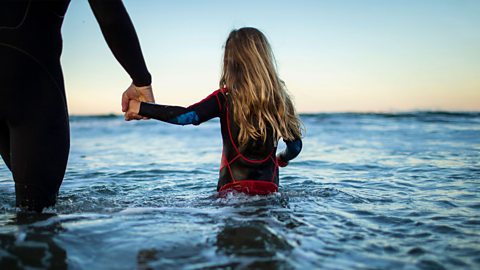
Check your connection, refresh the page and try again. is another kind of friction.
Water resistance is a force that occurs between an object in the water and the water that surrounds it.
It always works to slow things down, too.
When you walk through water you can feel the force of the water resistance making it difficult for you to move.
Helpful and unhelpful friction
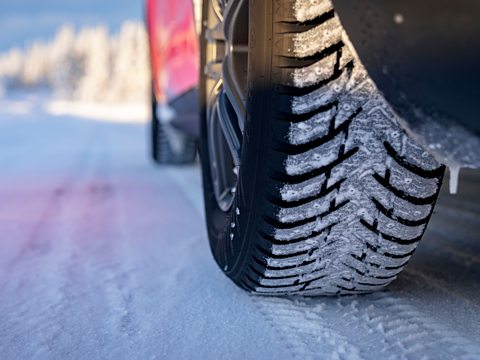
Friction can be both a helpful and unhelpful force.
Helpful friction
- Friction between our shoes and the floor stop us from slipping.
- Friction between tyres and the road stop cars from skidding.
- Friction between brake blocks and a wheel lets a cyclist stop their bike.
Think of what happens when you rub your hands together quickly – they warm up. The friction force generated by rubbing your hands becomes heat energy.
Unhelpful friction
- If you are trying to swim quickly, then water resistance can slow you down.
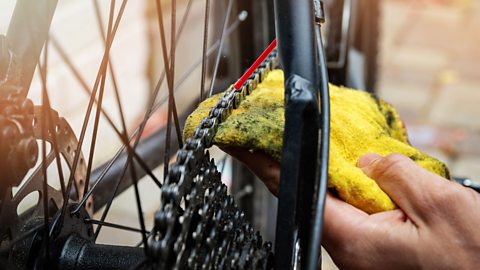
- If a bike chain isn't To make something move more smoothly, for example by adding oil or grease to part of a machine., friction makes it more difficult to turn the pedals.
- If shoes rub against your feet the friction might cause a blister. Ouch!
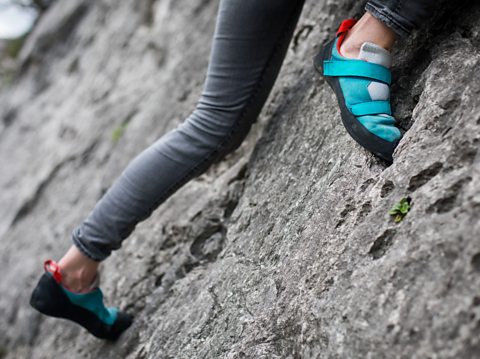
Helpful or unhelpful friction?
This woman is rock climbing. Would friction make this easier or harder?
Answer
This would be helpful friction. The friction would help the climber grip the rock so she could climb more easily.
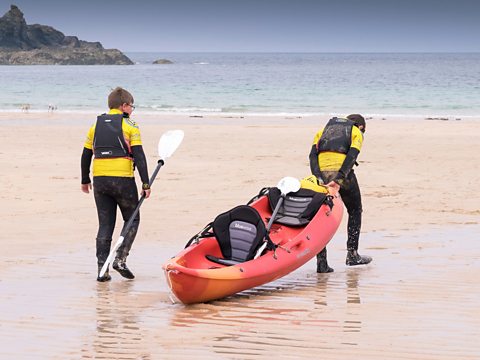
Helpful or unhelpful friction?
These boys are dragging a canoe to the sea. Would friction make this easier or harder?
Answer
This would be unhelpful friction. Friction would make it harder for the boys to drag the canoe over the sand.
Reducing friction
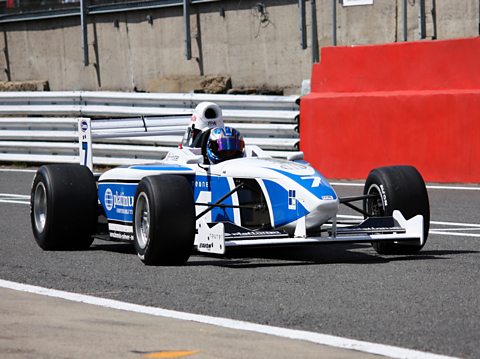
In racing sports it is better to be as fast as possible to win. In these sports reducing the force of friction is important.
Less friction means more efficient movement as less energy is lost to friction forces.
In motor sports, the shape of the racing car is very important. They are designed to be as Check your connection, refresh the page and try again. as possible.
This means that the shape of the car allows air to flow over the surface of the car more easily. This reduces air resistance and leads to less friction acting on the car. As a result, the car can move faster.
Key words

Check your connection, refresh the page and try again. – objects designed to reduce air resistance.
Check your connection, refresh the page and try again. – a form of friction caused by air.
Check your connection, refresh the page and try again. – a force that acts on moving objects.
Check your connection, refresh the page and try again. – a form of friction caused by water.
Activity
Try this friction experiment!
How does friction affect how fast a toy car can travel? Let's find out!
You will need:
A toy car
A ramp
Some surfaces to test:
- A smooth surface
- A rough surface such as sandpaper
- A soft surface such as a tea towel
Watch the video to find out more.
Video
Watch this video to find out what to do!
Quiz
Think you've got to grips with friction? Find out in our fun quiz!
More on Forces
Find out more by working through a topic
- count3 of 11
- count4 of 11
- count5 of 11
- count6 of 11