NARRATOR: You’ve got the golden armadillo go, quick, before the dragon catches you! It could be here any minute, why aren’t you moving faster?
Friction? You mean the force between the surface of the road and the skis?
Oh that’s more like it! How come you are going so much faster now?
CIRCLE: ANOTHER LANGUAGE
NARRATOR: There’s less friction between the snow and the skis than there was between the road and the skis because snow is a smoother surface?
And the less friction there is the easier two objects slide across each other?
So, just to be sure I’ve got this…
Smoother surfaces means you go faster because there’s less friction between them and bumpier surfaces means you go slower because there is MORE friction between them? Um…
CIRCLE: ARGH!
NARRATOR: Do you know I’m not even sure this dragon’s coming anyway…
BANG
CIRCLE: Ouch.
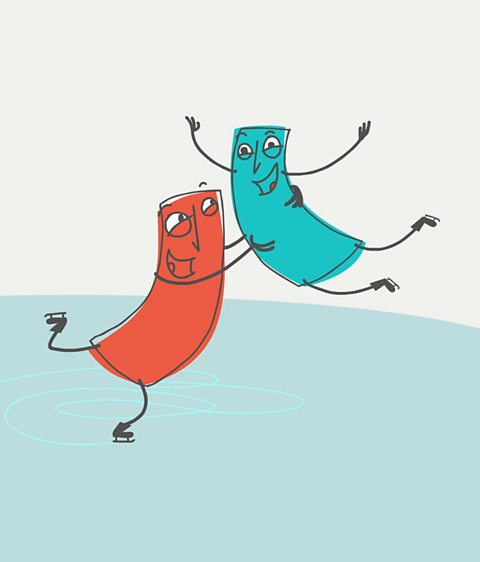
Friction
Friction is a force between two surfaces that are sliding, or trying to slide, across each other. For example, when you try to push a book along the floor, friction makes this difficult.
Friction always works in the direction opposite to the direction in which the object is moving, or trying to move. Friction always slows a moving object down.
The amount of friction depends on the materials from which the two surfaces are made. The rougher the surface, the more friction is produced. Friction also produces heat. If you rub your hands together quickly, you will feel them get warmer.
Friction can be a useful force because it prevents our shoes slipping on the pavement when we walk and stops car tyres skidding on the road. When you walk, friction is caused between the tread on shoes and the ground. This friction acts to grip the ground and prevent sliding.
Sometimes we want to reduce friction. For example, we use oil to reduce the friction between the moving parts inside a car engine. The oil holds the surfaces apart and can flow between them. The reduced friction means there is less wear on the car's moving parts and less heat produced.
Play Bitesize games
Level up now! Take on the latest primary games on Bitesize.
More on Forces
Find out more by working through a topic
- count4 of 11
- count5 of 11
- count6 of 11
- count7 of 11