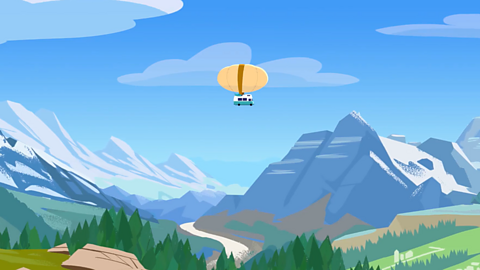
Watch: Introduction to the Alps
The Alps are Europe’s biggest mountain range and lie right at the heart of the continent. They stretch across eight countries: France, Switzerland, Italy, Monaco, Liechtenstein, Austria, Germany and Slovenia.
The mountains were formed millions of years ago as two giant tectonic plates collided, creating some of the highest mountains in Europe, like the Matterhorn, Mont Blanc, and the Eiger.
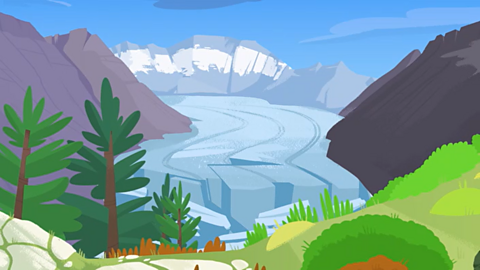
There are many glaciers here, these are massive blocks of ice that form high in the mountains.
Water from alpine glaciers and lakes provide most of Europe’s lowland water and is the source of some its main rivers, like the Rhine, the Rhone and the Po.
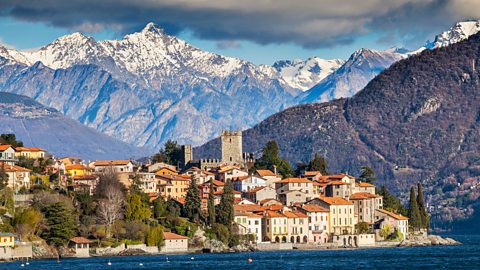
Lakes, like Geneva and Zurich in Switzerland, Como in Italy and Constance in Germany are renowned for their beauty. But not all the lakes here are natural. Some are man-made reservoirs for dams that provide hydroelectric power to towns and cities.
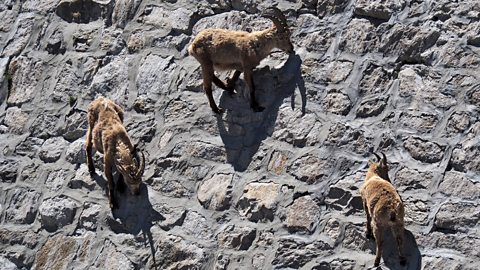
Although the electricity they generate is vital for people, the dams have an impact on wildlife. The ibex, a type of mountain goat, climb up them to find food! There are many rare animals and plants here that are adapted to living at high altitude and are found nowhere else in the world.
People have traditionally used the land here to make a living, with grassland in the valleys and hills perfect for farming and forests providing trees for woodworking. But these days a lot more money is made from tourists coming to sightsee, ski, walk and do other sports such as mountain biking and paragliding.
30 million visitors come to the Alps every year including meeee!
What are the Alps?
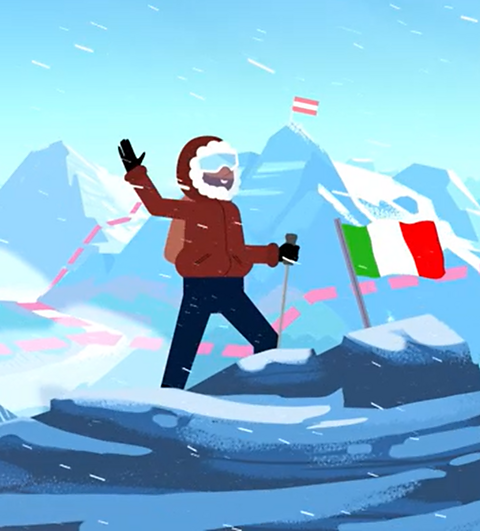
The Alps are a large mountain range in the middle of Europe. They are spread over eight countries:
- France
- Monaco
- Italy
- Switzerland
- Liechtenstein
- Austria
- Germany
- Slovenia
The highest mountain in the Alps is Mont Blanc.
What are the Alps like?
- The weather in the Alps is affected by different temperatures of air coming from the north, west and south. This creates five different types of climate, depending on height. The higher up you are in the mountains, the colder it gets.
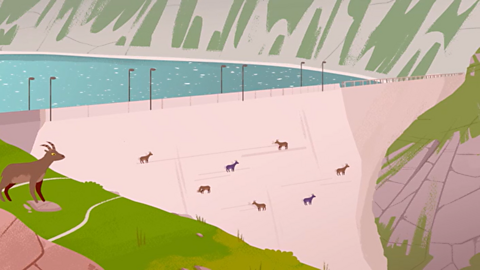
- Different types of animals and plants live in the different climate zones. The animals include ibex, a type of mountain goat.
- The tops of the mountains are covered in snow and glaciers, which are large blocks of ice. Melting snow and ice fill the rivers and lakes at the bottom of the mountain.
- Dams have been built to hold this water in order to create hydroelectric power for nearby towns and cities.
Why do people visit the Alps?
Tourism is very important in the Alps. Around 30 million people visit the Alps each year.
They enjoy activities such as:
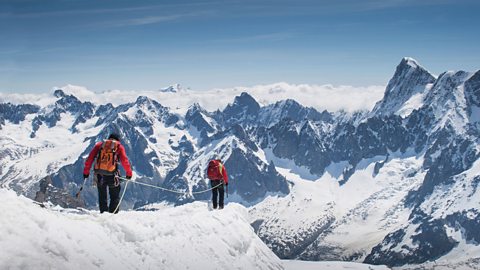
- skiing and snowboarding
- walking
- sightseeing
- trail running
- mountain biking
- paragliding
What do the Alps look like?
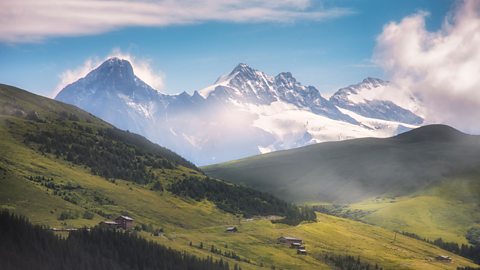
Image caption, The Alps are made up of lower grassland hills and higher snow-capped mountains.
1 of 4
Watch: Take a tour of the Alps
Activity: Quiz – The Alps
Race Across the Continents game - new update! game
Help this team of adventurers race their way to victory. Explore the globe in this exciting game update to discover new audio voiced by Ade Adepitan and fun animations. Challenge yourself with brand-new achievements and become a high-flyer!

More on People and places
Find out more by working through a topic
- count7 of 8

- count8 of 8
- count1 of 8
- count2 of 8