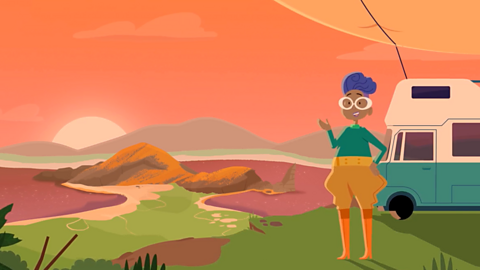
Watch: Introduction to the Galápagos Islands
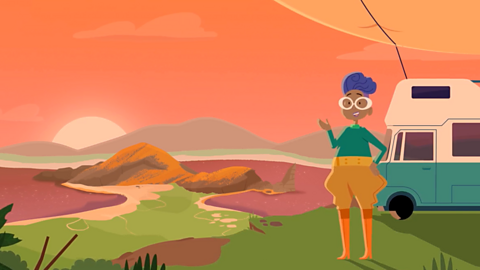
My great, great, great uncle Edwin was part of an expedition that changed the way we think about the world.
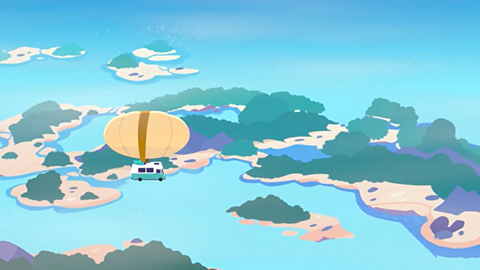
And I’m returning to the place he explored nearly 200 years ago, the Galápagos Islands! The Galápagos are an archipelago, or group of islands, off the coast of Ecuador in the Pacific Ocean.
The islands are quite close together and they have similar landscapes, plants and animals. But if you look carefully, you can see that they’re not exactly the same.
For example, the finches on one island have pointy beaks for catching insects. But a similar finch on another island has a big, thick beak for eating seeds.
The tortoises on some islands have shells that are dome shaped because they eat plants that are low down.
But similar tortoises on the other islands have shells that rise up at the front, which allow them to eat plants that are high up. These little differences have been caused by the way the animals have adapted to live on the islands over many years.
This was something that Charles Darwin noticed on his famous expedition to the Galápagos Islands in 1835.
It led him to come up with his scientific theory of natural selection, which explains how living things evolve over time.
The Galápagos Islands are a protected area because of their unique wildlife, including marine iguanas, tortoises, green turtles, sea cucumbers, flightless cormorants, and the Galápagos penguin, the world’s only tropical penguin.
The Galápagos islands are a perfect example of evolution. It’s amazing that such a small group of islands have had such a large impact on our understanding of the world.
Where are the Galápagos Islands?
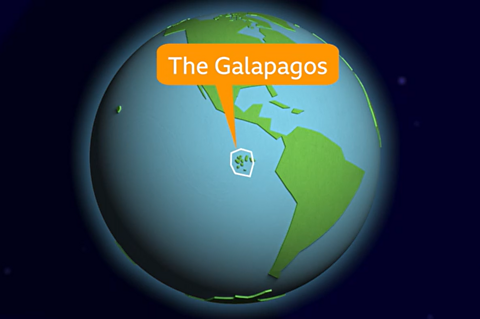
- The Galápagos Islands are a group of islands created by volcanoes.
- They are in the Pacific Ocean, almost 1,000 km from the coast of Ecuador in South America.
- The islands are on either side of the Equator. This means they are in both the Southern and the Northern Hemisphere.
What are the Galápagos Islands like?
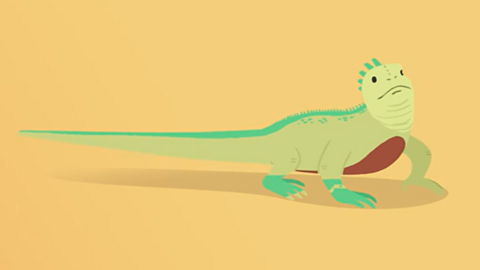
The Galápagos Islands are home to some of the most unusual animals on the planet.
For example:
- giant tortoises
- marine iguanas
- the Galápagos penguin
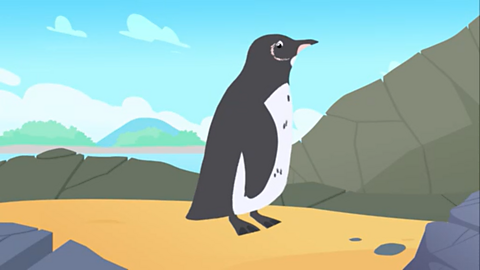
Today, tourists visit the islands to see the dramatic landscapes:
- volcanoes
- beautiful coastlines
- coral reefs
- the wildlife and plants
Do people live there?
- People live in small areas of the islands because the wildlife and plants are protected. This is part of the conservation plan for the islands and the ocean around them.
Laws stop things such as too much fishing, too many people living there and too many visitors.
It is hoped this will protect the variety of plants and animals and the beauty of the islands for the future.
Watch: What do the Galápagos Islands look like?
Activity: Quiz – Galápagos Islands
Race Across the Continents game - new update! game
Help this team of adventurers race their way to victory. Explore the globe in this exciting game update to discover new audio voiced by Ade Adepitan and fun animations. Challenge yourself with brand-new achievements and become a high-flyer!

More on People and places
Find out more by working through a topic
- count1 of 8
- count2 of 8
- count3 of 8

- count4 of 8