Key points about describing countries and their features

Different A preposition is a word such as 'at', 'for', 'with', 'into' or 'from' which is usually followed by a noun or pronoun. They are used to show where something is in place or time. are used to mean ‘to’ and ‘in’ when used with countries, continents, cities/towns and other geographical features.
Use Used to communicate that something must be done without specifying who should do it, where there is no natural subject (I, you, he, etc.). to describe the weather.
Vocabulary - Countries
Useful vocabulary to talk about countries and continents include:
| French | English | French | English |
|---|---|---|---|
| L’Afrique (f) | Africa | L’Europe (f) | Europe |
| L’Algérie (f) | Algeria | La France | France |
| L’Angleterre (f) | England | La France d’Outre-mer | overseas France |
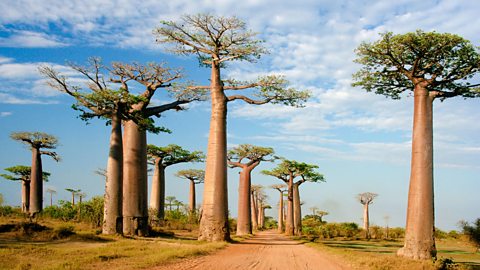
| L’Amérique (f) | America | Le Madagascar | Madagascar |
| L’Asie (f) | Asia | La Martinique | Martinique |
| Le Canada | Canada | Le Royaume-Uni | United Kingdom |
For example:
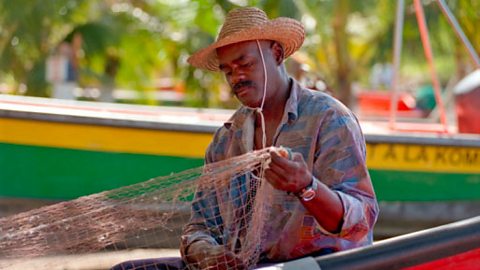
La France est un pays européen. - France is a European country.
Ma famille vient de la Martinique. - My family comes from Martinique.
Vocabulary – Geographical features
Common geographical features include:
| French | English |
|---|---|
| les bois (m. pl.) | woods |
| la campagne | the countryside |
| la capitale | capital city |
| la côte | the coast |
| la forêt | forest |
| l’île (f.) | island |
| le lac | lake |
| la mer | sea |
| la montagne | the mountains |
For example:
Il y a beaucoup de lacs dans les montagnes. - There are lots of lakes in the mountains.
La Madagascar est une île près de l’Afrique. - Madagascar is an island near Africa.
Grammar – Prepositions of place
Different prepositions are used to mean ‘to’ and ‘in’ when used with countries, continents, cities/town and other geographical features.
En with feminine countries and continents
Use en (without an article) to mean ‘to’ and ‘in’ feminine countries, such as France, and continents such as Europe.
For example:
Je vais en France. – I’m going to France.
Je suis en France. – I’m in France.
Je vais en Europe. – I’m going to Europe.
Je suis en Europe. – I’m in Europe.
An exception to this rule is the island of Madagascar:
Je vais à Madagascar. – I’m going to Madagascar.
Je suis à Madagascar. – I’m in Madagascar.
Note that in French all continents are feminine.
For example:
Je voudrais travailler en Asie et en Afrique. – I would like to work in Asia and Africa.
À with masculine and plural countries
Use à with the definite article (le or les) to mean ‘to’ and ‘in’ with All nouns in French are either masculine or feminine. countries, such as Canada, and plural countries, such as the USA.
Remember that à followed by le is contracted to au and à followed by les is contracted to aux.
For example:
Je vais au Canada. – I’m going to Canada.
Je suis au Canada. – I’m in Canada.
Je vais aux États Unis. – I’m going to the USA.
Je suis aux États Unis. – I’m in the USA
À with cities and towns
Use à without an article to mean ‘to’ or ‘in’ a city or town.
For example:
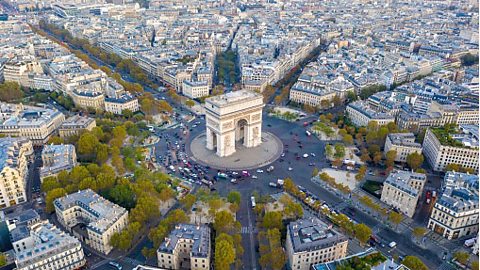
Je vais à Paris. – I’m going to Paris.
Je suis à Paris. – I’m in Paris.
À with mountains and countryside
Use à with la mean ‘to’ or ‘in’ the mountains or the countryside.
For example:
Je vais à la campagne. – I’m going to the countryside.
Je suis à la montagne. – I’m in the mountains.
Dans with points of the compass
| French | English |
|---|---|
| dans le nord | in the north |
| dans le sud | in the south |
| dans l’est | in the east |
| dans l’ouest | in the west |

Remember
The points of the compass can combine, like they do in English.
For example:
J’habite dans le nord-est de l’Angleterre. I live in north-east England.
Je vais visiter le sud-ouest de la France. I am going to visit south-west France.
Other prepositions with geographical features
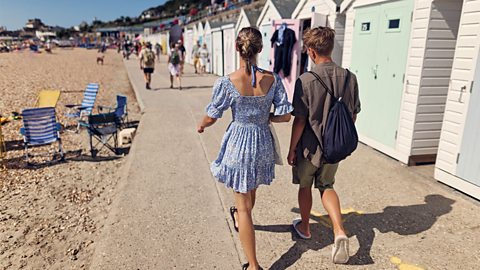
Other prepositions used with geographical features include sur (on) and au bord de (by).
For example:
Je vais rester sur une île. – I’m going to stay on an island.
Je suis au bord de la mer. – I am by the sea / at the seaside.
Prepositions of place – Mini quiz
Choose the correct word(s) to complete the following sentences.
Find out more about using prepositions when talking about countries and continents in the Prepositions of place in French guide.
Reading practice
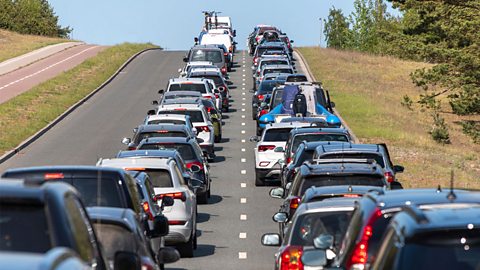
Read the holiday reviews below and note the advantages and disadvantages of each destination.
- Je suis allé à Paris avec mon collège en juin. C’était amusant de voyager avec mes amis. Malheureusement, on a visité trop de musées.
Advantage - Fun to travel with friends
Disadvantage - Visited too many museums
Translation
I went to Paris with my school in June. It was fun to travel with my friends. Unfortunately, we visited too many museums.
- Nous sommes restés sur la côte en Italie. L’hôtel était trop cher mais j’ai beaucoup aimé les petits magasins.
Advantage - Liked the little shops
Disadvantage - Hotel was too expensive
Translation
We stayed on the coast in Italy. The hotel was too expensive but I liked all the little shops.
- On a fait un voyage terrible en voiture pour aller au bord de la mer. J’étais très content de me relaxer sur la plage.
Advantage - Relaxing on the beach
Disadvantage - Terrible car journey
Translation
We had a terrible car journey to get to the seaside. I was very happy to relax on the beach.
- L’année dernière, on a fait du vélo dans les Alpes françaises. Les belles vues à la montagne étaient étonnantes. Par contre, j’étais très fatiguée à la fin.
Advantage - Beautiful views
Disadvantage - Very tired
Translation
Last year we went cycling in the French Alps. The beautiful views of the mountains were amazing. On the other hand, I was very tired at the end.
Vocabulary - How to talk about the weather
To describe what the weather is like now or what it is normally like, use these weather expressions in the present tense:
| French | English | French | English |
|---|---|---|---|
| il y a du brouillard | it’s foggy | il fait froid | it’s cold |
| il y a du soleil | it’s sunny | il fait mauvais | it’s bad weather |
| il y a du vent | it’s windy | il pleut | it’s raining |
| il fait beau | it’s nice weather | il neige | it’s snowing |
| il fait chaud | it’s hot |
For example:
En Angleterre, il pleut assez souvent. - In England, it rains quite often.
Aujourd’hui, il fait beau mais il fait froid. - Today, the weather is fine but it’s cold.
Remember
Le temps can mean weather as well as time.
Quel temps fait-il? - What’s the weather like?
Le temps est très humide aujourd’hui. - The weather is very humid today.
All Foundation Tier vocabulary listed in this guide can be found on the vocabulary sheet below.
Grammar - Using impersonal verbs to describe weather
Use the following impersonal verbs with weather phrases:
| French | English | |
|---|---|---|
| Il fait + | beau | It’s nice weather |
| chaud | It’s hot | |
| froid | It’s cold | |
| mauvais | It’s bad weather | |
| Il y a + | du vent | It’s windy |
| du soleil | It’s sunny | |
| du brouillard | It’s foggy | |
| Il + | neige | It’s snowing |
| pleut | It’s raining |

Use the third person (il form) when using these weather phrases in the different The tense of a verb shows when the action took place. Present, future and perfect are all tenses.:
For example:
Il fait beau. - It’s nice weather.
Il faisait beau. - It was nice weather.
Il va faire beau demain. - It is going to be nice weather tomorrow.
Il y a du vent. - It’s windy.
Il y avait du vent. - It was windy.
Il y aura du vent demain. - It will be windy tomorrow.
Il pleut. - It’s raining.
Il pleuvait. - It was raining.
Il va pleuvoir demain. - It’s going to rain tomorrow.
Impersonal verbs - Mini quiz
Press Start to choose the correct translation for the weather phrases in this activity.
Listening practice
Press Start to listen to the weather forecast and choose the correct weather for each region.
Vocabulary sheet
Click or tap on the image below for a list of useful vocabulary to use when describing countries and their features.

Higher Tier – Vocabulary – Countries and their features
Useful vocabulary includes:
| French | English |
|---|---|
| le paysage | landscape |
| la rivière | river |
All vocabulary listed in this guide can found on the vocabulary sheet below.
Higher Tier - Vocabulary sheet
Click or tap on the image below for a list of useful Higher Tier vocabulary to use when describing countries and their features.
Now you have revised describing countries in French, have a look at the Talking about future opportunities guide.
More on Travel and tourism
Find out more by working through a topic
- count2 of 4

- count3 of 4