Stage types
Think about the experience you want your audience to have. Do you want them to feel part of the drama and in the midst of the action, or do you want them distant and observing? Where the audience sit in relation to one another is very important. Being able to make eye contact with other audience members creates a sense of shared experience.
The type of stage you choose for your work is vitally important as it will affect the way you use the space available to you in performance. The National Theatre’s Olivier Theatre has a giant drum A large, circular piece of staging that can rotate and is useful for revealing different locations or to show journeying or a passage of time.. It’s five storeys high, containing several elevators with effects like towers or boats rising out of the stage or objects suddenly disappearing from view! How would the audience feel watching this elaborate staging?
Remember you can also have ‘informal’ stages outside the theatre and set your scene in an unusual location such as a forest or a car park. How would this make the audience feel?
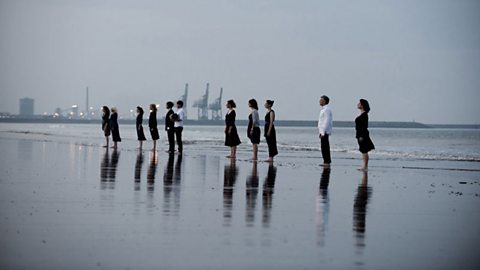

Simple staging
You can also have a simple staging effect which can be highly effective. Without the distractions of an elaborate set and props, the actor’s performance takes centre stage which can be challenging for the performer. This clip of actor Colin Firth performing a monologue from Harold Pinter’s play, The Caretaker, shows how simple staging can focus the audience’s attention completely on the performance.
