The elements of drama
These are the ingredients that give work its shape and character. When devising work, whatever your An inspiration for creative work. You can find a stimulus in an experience, image, emotion, object, text or a combination of stimuli. or theme, you should consider the following elements:
Plot
This is the story, or through-line of your piece. A storyline is often called a narrative. Without any narrative the work might be on one level, failing to keep the interest of the audience. The sequence of the plot is something that can be explored once you have brainstormed and improvised your narrative.
Most stories have a beginning, middle and an end. However, your drama doesn’t have to run in this linear order. Some work is non-linear in structure. This means that it doesn’t follow a chronological sequence but moves about in time. This can be an excellent device for building tension and keeping the audience engaged as the story unravels bit by bit. The play, Betrayal by Harold Pinter is an excellent example of this. It begins at the end of the plot and then moves backwards in time scene by scene to how it all began.
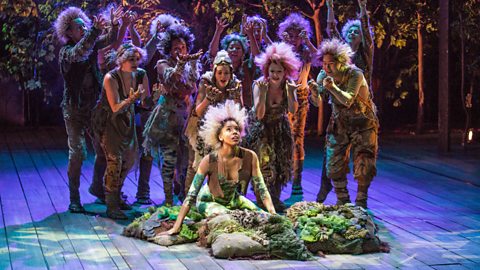
A play may contain more than one plot. A separate storyline running parallel to the main story is called a subplot. In Shakespeare’s play, A Midsummer Night’s Dream, the main story is about four young would-be lovers lost in a wood. A comic story about ‘rude mechanicals’ who are rehearsing a play for the Duke Theseus’s wedding runs parallel to it.