Employment and opportunity
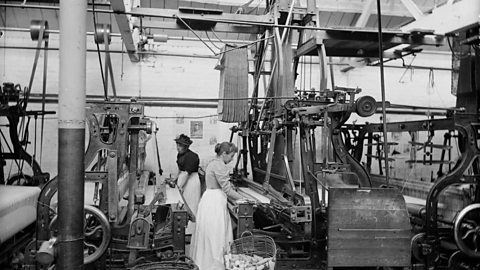
The main 'pull' causing people to come to Britain was factory work. The The process that transformed manufacturing from handmade to machine-made, mass-produced goods using water, steam and coal power transported by canal, rail and steamship. Britain was the first country to have an Industrial Revolution. had created a huge supply of jobs but there were not enough people to fill all the vacancies. The country needed migrant labour and the promise of employment meant that people were drawn to travel to Britain in hope of work and a better life. The main areas of employment were:
- the mills and factories of the industrial North and Midlands
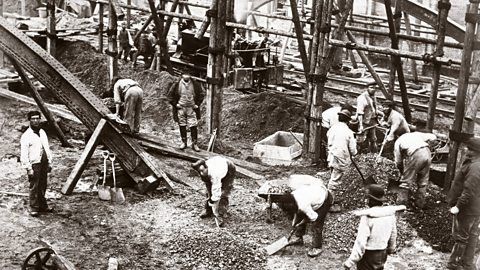
- the transport network; first of canals and then later roads and railways
Meanwhile merchant shipping lines were hiring men to work on board, picking them up at their ports of call. Captains often preferred 'coloured seamen' (the term used at the time) because they were more comfortable in hotter climates, often did not drink alcohol (many were Muslim) and, most importantly, because they could pay them less than white sailors. Chinese, Malay, Indian, Somali and Yemeni seamen worked on ships trading with Asia. West Africans and West Indians were hired on the Atlantic routes. Greek crews were picked up in the Mediterranean. Norwegians worked on the North Sea and Baltic routes.
Many of these merchant seamen settled in Britain’s ports such as Liverpool, Cardiff, Hull, London and South Shields. Some chose to live there after jumping ship due to poor treatment and conditions onboard. Others were abandoned by their employers when they landed at port, either because they were not needed or because of opposition from white seamen.
A very different group of A person who arrives from another country. were the young A calculated risk-taker who sets up a business in return for financial gain. who came to study and work. Unlike many countries in 19th century Europe, Britain was at peace and its economy favoured new ideas and enterprise. Among those who arrived and stayed, many of whom were German, were the founders of major businesses such as Reuters, as well as banks such as Baring and Rothschild.
More guides on this topic
- Migration to Britain c1000 to c2010 overview - OCR A
- Medieval 1000-1500 overview - OCR A
- Reasons for immigration in the Medieval era - OCR A
- Experiences of immigrants in the Medieval era - OCR A
- Impact of immigration in the Medieval era - OCR A
- Immigration in the Early Modern era, 1500-1750 overview - OCR A
- Reasons for immigration in the Early Modern era, 1500-1750 - OCR A
- Experiences of immigrants in the Early Modern era, 1500-1750 - OCR A
- Impact of immigration in the Early Modern era, 1500-1750 - OCR A
- Immigration in the Industrial era, 1750-1900 overview - OCR A
- Experiences of immigrants in the Industrial era 1750-1900 - OCR A
- Impact of immigration in the Industrial era 1750-1900 - OCR A
- Immigration in the Modern era 1900 - present overview - OCR A
- Reasons for immigration in the Modern Era 1900 - present - OCR A
- Experiences of immigrants in the Modern era, 1900 - present - OCR A
- Impact of immigration in the Modern Era 1900 - present - OCR A
- Migration to Britain c1000 to c2010 - exam preparation - OCR A
