Impact of Protestant refugees
The French Protestants, many of whom came to England as refugees in the 16th and 17th centuries. had a huge economic impact on Britain. They revitalised the silk weaving trade, kick-started various manufacturing industries, such as cutlery making in Sheffield, and invested heavily in growing businesses. The skills and energies of Huguenot A person who arrives from another country. played an important part in the transformation of Britain into Europe’s major industrial power. Many Huguenots joined the armed forces, with some even rising to the highest officer positions.
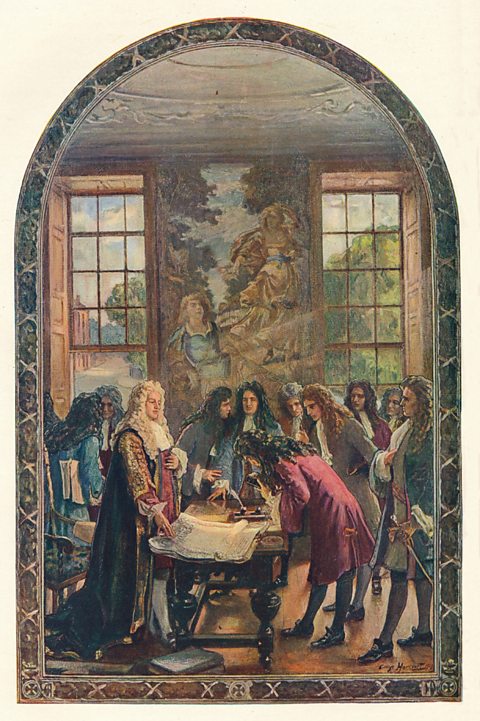
Huguenots were key investors in the Bank of England and its first Governor was descended from Huguenot immigrants. They were also at the heart of the growth of An economic system based on privately owned, as opposed to state-controlled, businesses and the creation of profit.. The Bank - and the creation of the National Debt - meant that the government could borrow money to fight wars that enabled the All the territory across the world that was ruled by Britain. At its height in the 1920s it covered near a quarter of the world's land and included one fifth of the world's population. to grow and protected the Atlantic for slave ships and the plantation system.
French speaking people in a region that is now part of Belgium. In the 16th century Protestant Walloons came to England as refugees., Huguenots and later Jews were allowed to have their own places of worship. At that time the same freedom was not allowed to English A Protestant who does not conform to the established Church of England. or Christians whose religious leader is the Pope.. However, the allowances given to Christians who broke away from the Roman Catholic Church during the Reformation. They believe in the teachings of the Bible but reject the authority of the Pope. and Jewish A person living outside their own homeland as a result of war, famine or persecution. paved the way to similar freedoms for other groups and helped make British society more open to religious differences.
Over a few generations, Huguenots integrated well into British society. Up to a quarter of Londoners may have some Huguenot ancestry. Huguenot fashions and styles, influenced by their own craftspeople, became fashionable.
More guides on this topic
- Migration to Britain c1000 to c2010 overview - OCR A
- Medieval 1000-1500 overview - OCR A
- Reasons for immigration in the Medieval era - OCR A
- Experiences of immigrants in the Medieval era - OCR A
- Impact of immigration in the Medieval era - OCR A
- Immigration in the Early Modern era, 1500-1750 overview - OCR A
- Reasons for immigration in the Early Modern era, 1500-1750 - OCR A
- Experiences of immigrants in the Early Modern era, 1500-1750 - OCR A
- Immigration in the Industrial era, 1750-1900 overview - OCR A
- Reasons for immigration in the Industrial era, 1750-1900 - OCR A
- Experiences of immigrants in the Industrial era 1750-1900 - OCR A
- Impact of immigration in the Industrial era 1750-1900 - OCR A
- Immigration in the Modern era 1900 - present overview - OCR A
- Reasons for immigration in the Modern Era 1900 - present - OCR A
- Experiences of immigrants in the Modern era, 1900 - present - OCR A
- Impact of immigration in the Modern Era 1900 - present - OCR A
- Migration to Britain c1000 to c2010 - exam preparation - OCR A
