Sir Francis Drake, Sir John Hawkins and Sir Walter Raleigh
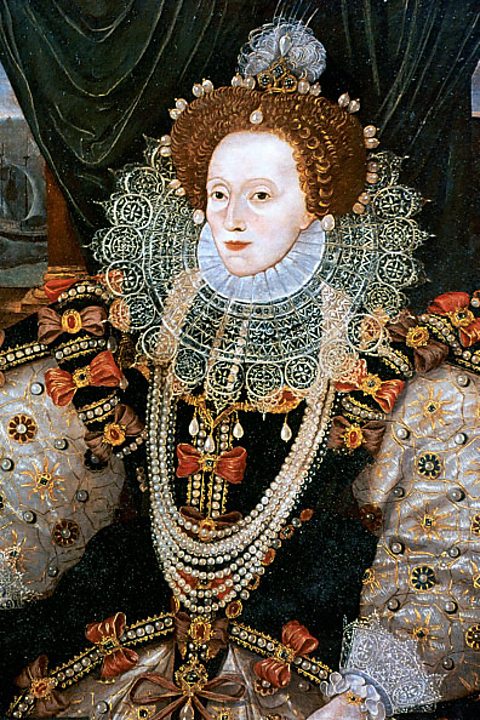
Under the rule of Queen Elizabeth I, English sailors were encouraged and funded to find countries to colonise.
Elizabeth I's enemy was Spain, who had built its empire in the 1500s. Spain controlled 80 per cent of the world’s silver because it conquered several countries in Latin America, such as Peru and Mexico. England used violence and force to compete with the Spanish for money and power.
Sir John Hawkins and Sir Francis Drake were privateers and the first English traders in enslaved people. They were sent to raid Spanish ships and colonies in the Americas on behalf of Elizabeth.
Sir Francis Drake
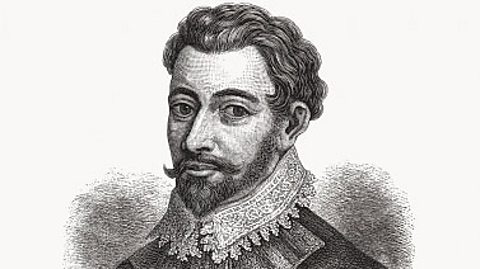
Sir Francis Drake was the first Englishman to sail around the world, To travel all the way around the circumference, of the world. the globe between 1577 and 1580. He went on to play a role in the Spanish Armada by attacking Cadiz in 1587 and delaying preparations. He was also Vice-Admiral of the Navy during the Armada.
As a result of his travels, Drake launched successful attacks on the Spanish Empire, bringing back gold, silver and jewels, making a huge profit.
Sir John Hawkins
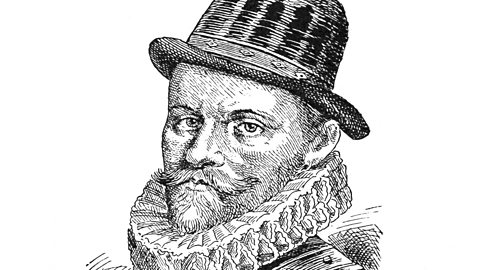
Sir John Hawkins was a navigator and trader of enslaved people. He was Sir Francis Drake’s cousin.
In 1564, Hawkins seized 300 people from the coast of West Africa, close to modern day Sierra Leone, and sold them into enslavement in Hispaniola, an island in the West Indies.
Between 1564 and 1569, Hawkins was involved in four voyages transporting and selling around twelve hundred people into enslavement. After this, he returned to England and designed and built ships for the Navy. He developed a new type of fighting galleon which was faster, lighter and better able to withstand harsh weather conditions than ships in the Spanish fleet. Elizabeth appointed him as a Vice-Admiral fighting against the Spanish Armada and his innovative designs were important in helping England defeat the Spanish Armada.
Sir Walter Raleigh
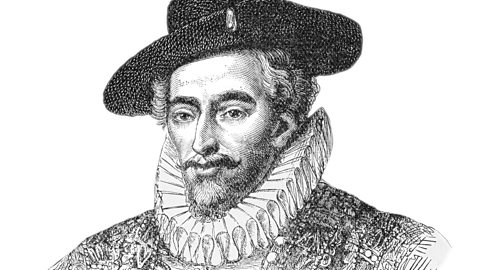
In 1585, Elizabeth gave Sir Walter Raleigh permission to set up a colony on Roanoke Island, now part of modern-day USA.
However, life wasn't always easy for migrants when they got there. The early years in the American colonies were marked by famine and disease.
But the colony's fortunes changed with the cultivation of crops such as sugar, tobacco and cotton, that made Jamestown and Virginia economically profitable. In fact, the colony grew but eventually the chosen way to meet this demand was to exploit the labour of enslaved Africans who continued to be transported from West Africa.
More guides on this topic
- The Elizabethans overview - AQA
- The early rule of Queen Elizabeth I - AQA
- QUIZ: Elizabeth's court and parliament
- Elizabethan Religious Settlement - AQA
- Challenges to the rule of Queen Elizabeth I - AQA
- QUIZ: Troubles at home and abroad
- QUIZ: Life in Elizabethan times
- The Elizabethans - exam preparation - AQA
