Posters and visual displays
Before a poster or a visual display can be designed, carefully consider the following questions.
- Who is the intended audience?
- Where should the poster be displayed in order to reach the intended audience?
- What message needs to be conveyed?
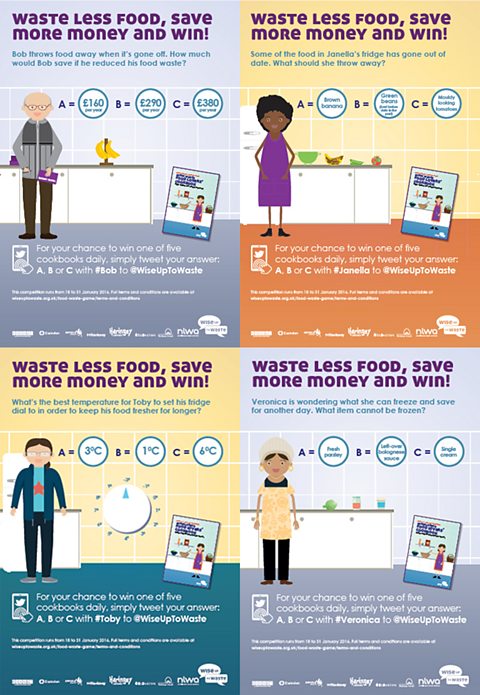
Campaigns will often use a variety of poster designs. This helps the campaign organisers target different audiences, and means that different designs can be used in different forms of media.
Although the campaign message will be the same, the images and the amount of text may differ slightly, eg a poster on the back of a bus is likely to have less text than a poster in a magazine.
This is because people will have more time to read information in a magazine. A message on a bus, however, needs to be understood quickly, as the poster will soon be out of sight once the vehicle is in transit and has passed by.
Real-life example
In January 2016, North London Waste Authority (NLWA) launched a food waste awareness campaign called Wise Up To Waste to help reduce and prevent food waste. They used a variety of billboard posters to encourage people to think about how to plan, shop and cook efficiently in their everyday lives.