Crimes and criminals - changes in crime by c.1500
The period between c.1250 and c.1500 saw changes in attitudes, fears and circumstances. These resulted in the emergence of new crimes.
Vagrancy and labour
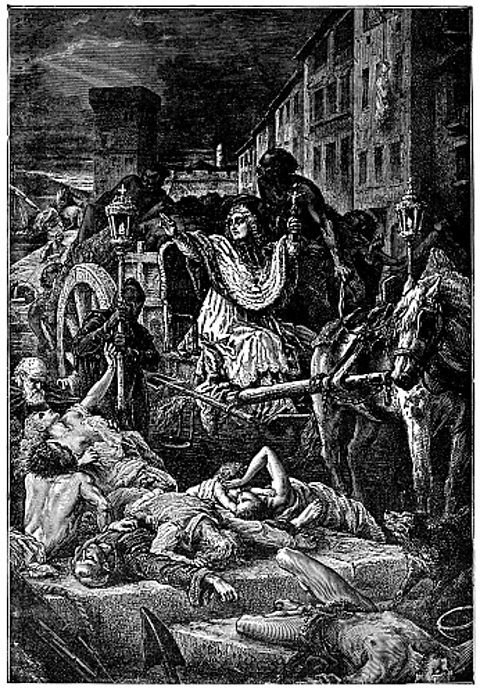
Historians estimate that when the A disease that spread across Europe killing up to half of the population. arrived in England and spread through Britain during 1348-1350 that somewhere between 35 and 60 per cent of the population died. This meant that workers were in demand. Many labourers and Someone who worked without pay for their lord in return for land. left their own village in search of better pay elsewhere. In response, Parliament, under Edward III, passed a law in 1351 to try to keep labour costs and price levels under control.
Because of the shortage of labourers, the law imposed harsh penalties on people who remained idle and didn’t work (known as Homeless, unemployed person who wandered the streets. ). The law also said that all able-bodied men had to stay and work in their home village rather than wander further afield in search of higher wages.
This law was followed by another law in 1388 saying that labourers needed written permission to leave their local area. If villeins were caught wandering the countryside trying to sell their labour, they could be taken back to their village for punishment.
Scolding
After 1350, scolding started to be considered a crime by many manors, which were free to make their own local laws. Scolding was the offence of using abusive speech in public. It tended to be women who were accused of this crime.
Historians are not sure why so many manors began to treat scolding as a crime at this particular time. One theory is that there were increased attempts after the Black Death to control the behaviour of peasants, whose labour was suddenly in higher demand. Accusing someone of scolding was a way to do that.
Heresy
As well as dealing with petty crimes such as gambling with dice, the Church dealt with the crime of A belief or opinion which disagrees with the teachings of the Church. Towards the end of the 14th century, a group called the A follower of John Wycliff. Wycliff believed that churchmen should lead simple lives and that the Bible should be translated into English. started to challenge Christians who accept the Pope in Rome as the head of their church. teachings. For example, they questioned the belief that the bread and wine become the body and blood of Christ during Central liturgical service observed by most Churches, recalling the last meal of Jesus. They also wanted ordinary people to be able read the Bible in English. By the end of the Middle Ages, heresy had become a major crime.
