Metals
Metals are a natural resource. They are mined out of the earth and processed to create materials with specific properties.
The wide range of metals and the complexity of parts and components it can be used to produce, makes metal an ideal material for manufacturing.
| Advantages | Disadvantages |
| Many are good at conducting heat and electricity | They are not sustainable and cannot be replaced |
| They can be moulded and formed to different shapes | Some metals are impacted by the environment and can corrode or rust |
| They have variety of different mechanical properties | Some metals need to undergo numerous processes before they can be used to create manufactured goods |
| They can be easily recycled |
| Advantages | Many are good at conducting heat and electricity |
|---|---|
| Disadvantages | They are not sustainable and cannot be replaced |
| Advantages | They can be moulded and formed to different shapes |
|---|---|
| Disadvantages | Some metals are impacted by the environment and can corrode or rust |
| Advantages | They have variety of different mechanical properties |
|---|---|
| Disadvantages | Some metals need to undergo numerous processes before they can be used to create manufactured goods |
| Advantages | They can be easily recycled |
|---|---|
| Disadvantages |
Non-ferrous metals
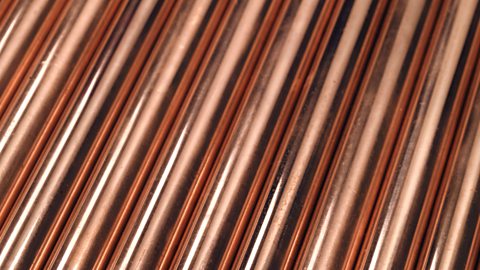
Non-ferrous metals have properties that make them ideal for use in manufacturing. They have low melting points meaning that they are ideal for casting. Some, such as copper, are good conductors of electricity and heat.
Since they contain no iron, non-ferrous metals are less prone to rust and The destruction of a metal by oxidation or chemical action, eg rusting.. They are also A ductile material is capable of being drawn into thin sheets or wires without breaking. and Capable of being hammered or pressed into a new shape without being likely to break or return to the original shape. and non-magnetic.
These qualities mean that non-ferrous metals are in great demand. High demand raises the price and, as a result, they can be expensive as a raw material. As a result these types of metals are usually recycled and reused.
Types of non-ferrous metals include:-
- aluminium
- copper
- gold
Ferrous metals
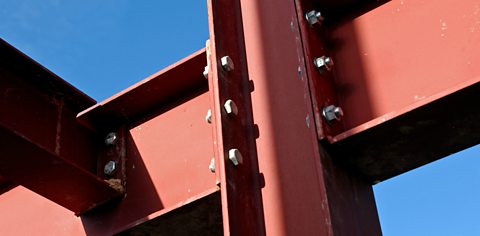
Ferrous metals contain iron. The iron content means that these metals can be prone to rust and corrosion and that they are magnetic.
Iron on its own can be hard and brittle. Adding carbon produces steel. This is a harder, tougher product that is used in construction.
Other elements such as chromium and nickel can be added to ferrous metals to create new types of metal with specific properties. For example stainless steel contains chromium which is resistant to rust and can produce a shiny finish.
Types of ferrous metals include:-
- mild steel
- stainless steel
- wrought iron
- cast iron
Alloys
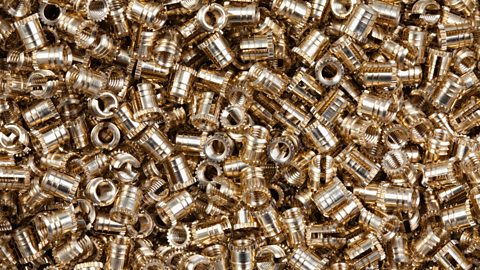
Alloys are created when metals, or a metal and other elements, are combined.
Alloys are usually created in order to improve specific properties. For example, some alloys are better at resisting heat, or conducting electricity, or are stronger than the metal they contain.
When added to expensive metals, alloys can be created to produce a cheaper alternative with many of the same properties as the original metal.
Types of alloy metals include:-
- brass
- pewter
- Duralumin
