How TIE is used
Theatre in education can be used to create different kinds of productions:
- Performances designed to stimulate reaction and participation from its small audience, perhaps through To take on the role of a different character usually as part of an improvisation to explore an idea. and debate. The work could be supported by resource materials.
- As above but specifically targeting an area for a particular year group in a school’s PSHE (Personal, Social and Health Education) curriculum.
- Plays designed for a young audience, that could be based on a traditional story, and allowing a range of follow-up activities if desired.
- Activities for very young children, linked by a story with the opportunities for involvement.
- Dramatised activities for an adult age group with specific needs, eg preparing for employment or learning parenting skills.
- A play designed for an elderly audience, eg in a care home, perhaps drawing on memories and engaging active participation in this way.
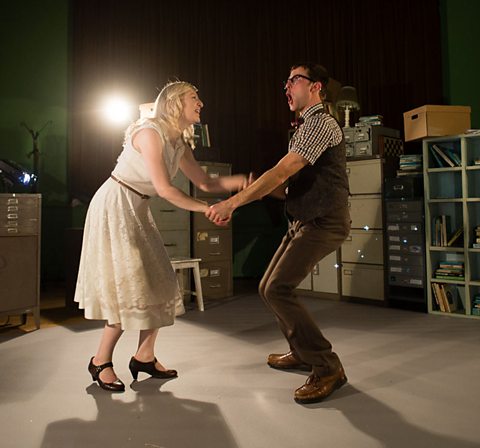
Dim Diolch by Cwmni'r Frân Wen is about the life of George Price who created the equation that measures our ability to show kindness to others Credit: Keith Morris
