Stock forms, types and sizes
A polymer is a large molecule formed from many identical smaller molecules (monomers). Polymers can be natural or synthetic. Plastics are long chains of polymers. are available in many Standard sizes for a material, component or product.. The table below identifies some of these stock forms and their uses alongside polymers commonly available in that stock form, although they can also be available in other forms:
| Common stock form | Polymer | Common use |
| Sheet | Acrylic | Menu holders in bars and restaurants |
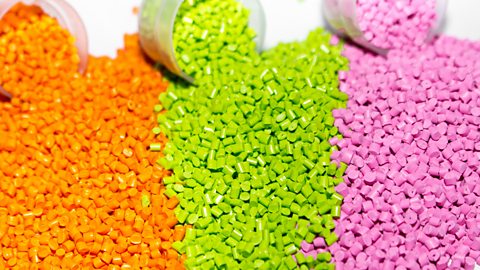
| Granules | Polypropylene | Pen lids and bottle tops |
| Powder | Polythene | Dip coating metal objects such as coat hooks |
| Foams | Plastazote | Swimming pool floats |
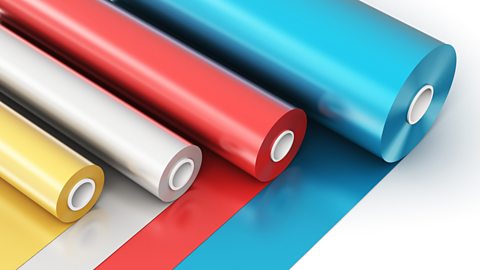
| Film | PVC | Food wrapping |
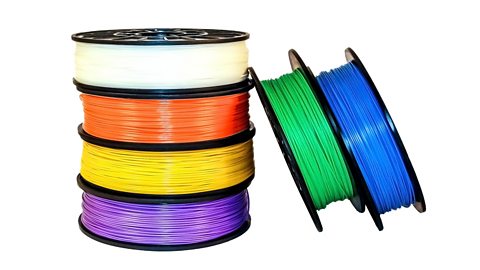
| Filament | PLA/ABS | 3D prints |
| Common stock form | Sheet |
|---|---|
| Polymer | Acrylic |
| Common use | Menu holders in bars and restaurants |
| Common stock form | Granules |
|---|---|
| Polymer | Polypropylene |
| Common use | Pen lids and bottle tops |
| Common stock form | Powder |
|---|---|
| Polymer | Polythene |
| Common use | Dip coating metal objects such as coat hooks |
| Common stock form | Foams |
|---|---|
| Polymer | Plastazote |
| Common use | Swimming pool floats |
| Common stock form | Film |
|---|---|
| Polymer | PVC |
| Common use | Food wrapping |
| Common stock form | Filament |
|---|---|
| Polymer | PLA/ABS |
| Common use | 3D prints |
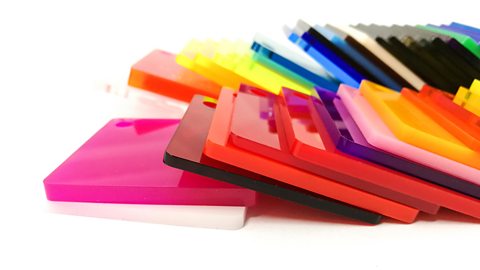
Image caption, Acrylic sheets
1 of 4
End of image gallery
Polymers can be fixed with nuts and bolts, screws and rivets. In most cases fixing a polymer is similar to fixing a metal. Some fixings are made from polymers such as nylon nuts and bolts and hinges.
