Reactions
Fawlty Towers had a central thread of the master-servant relationship between Basil Fawlty, the hotel owner and the Spanish waiter-cum-porter, Manuel. Their comedy depended on the plot, which always involved things going disastrously wrong, but their interactions were usually physical and violent.
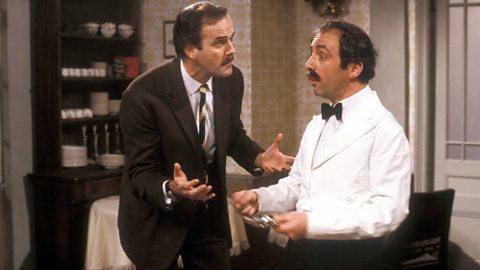
Think about reactions. In stage fighting, the audience is persuaded to believe that the victim is really hurt, by his reaction to the supposed injury. In a similar way, if something comic has happened on stage, remember that the physical reactions of others can define the moment for the audience. Sometimes, of course, subtle reactions are needed but if you’re playing big and bold comedy, use big and bold reactions!
Moving in relation to others
When you’re onstage, you’ll mostly move in response to the movement or at least the presence of others. Therefore, it’s vital that you’re able to communicate well and have a rapport with other performers.
In Physical theatre in particular, you're likely to be working with others in a very deliberate, possibly synchronised way. You might be working in a group to represent a barrier that has to be overcome. You could be joining with others to represent the furniture in a room that another character enters.
One of the most extreme examples of moving in relation to others is stage fighting, where it's the ‘victim’ who makes the punch or kick look real, by their reaction, even though the attacker won’t have actually touched them.
