Dance and mime
Dance has many different styles such as ballet, tap, modern, jazz, ballroom and Latin. Mime can be a developed art form in its own right.
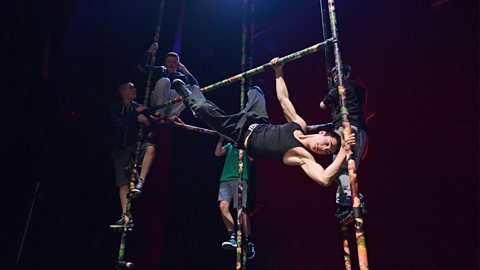
If you use dance in your production, it doesn’t have to be elaborate or complicated. For example, if you’re devising a play that uses childhood recollections, like My Mother Said I Never Should by Charlotte Keatley, you'd want to show playground games such as the simple routines that accompany chanting rhymes, to reinforce the concept. This could readily be rehearsed by non-dancers, if kept simple and based around a simple rhythm.
If you need to feature a polished dance routine, you’d obviously use trained and experienced dancers, but it’s important to have the rest of the cast involved. It’s not impossible to learn a basic step that can be repeated by all in the background while the principals move through a stylish routine. Some good acting can make the simplest of dance steps look more convincing.
Mime
If you watch a mime artist, you'll understand the separateness of the art form but there are times when detailed mime will be part of more 'mainstream' work. Physical theatre is one example of this. Mime can be used when you're portraying emotions through action or playing inanimate objects to change the relationship between character and setting in the piece.
Performers such as silent movie star, Charlie Chaplin or more recently, Rowan Atkinson as the comic character, Mr Bean, show that you can also use mime to build a character if the style of the performance allows. For instance, if you set up the convention that tasks like teeth cleaning and preparing a packed lunch are mimed because the piece makes a point about the drudgery of daily routines, the audience will accept this.
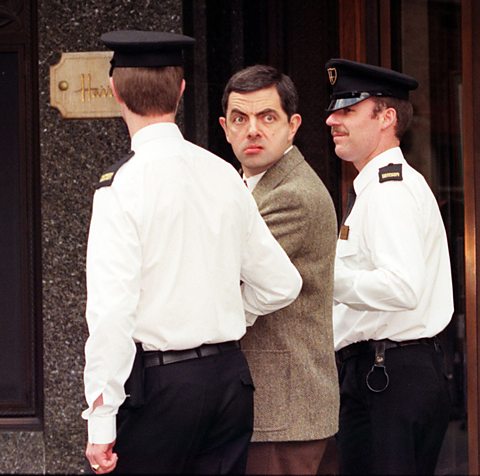
The important thing with mime is precision, so that any imaginary article is clearly demonstrated by your attention to detail. Look at Drama medium to learn more about the art of mime.
The same is true of all movement. Always analyse what your body is ‘saying’ and know what you’re doing. Don’t let your own habits interfere with successful characterisation. Record work and watch it back if it helps. So much of the statement we make onstage is visual so using your body effectively is vital for a successful performance.
