Camera operator
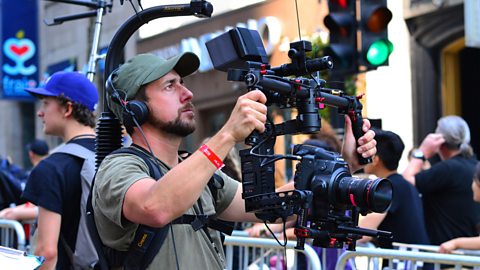
The camera operator works for the director of photography and during a film shoot will follow the DoP and the director’s instructions. Because they must always look through the camera’s viewfinder during every take they are often the first to judge how well a shot or performance is going. If there are any technical flaws with a take they must inform the director and DoP.
Roles and responsibilities:
During pre-production the camera operator must help the DoP with their camera tests and location visits.
During production itself the camera operator is responsible for:
- Preparing and operating the camera and related equipment such as camera monitors and lenses
- Working with the director and DoP to achieve the visual style of the film
- Managing other camera department staff such as camera assistants
Sound designer

The sound designer is responsible for providing the sound for action on screen. On big budget films their work might begin whilst the film is still shooting but they are usually not hired until a film enters post-production.
Roles and responsibilities:
The sound designer must identify the types of sound effects needed for the entire film. These may include everything and anything from everyday sounds like a cuckoo clock chiming to more fantastical sounds like dinosaurs roaring or alien spaceships landing.
The sound designer must then source sound effects. Sound designers maintain their own detailed sound effects libraries and will have multiple recordings of everyday sounds like clocks ticking and dogs barking.
Some sounds will, however, have to be especially created for the film. The sound designer might have to create those special sounds by combining a number of different elements. The light sabre sound effect in the Star Wars films was created by combining the noises made by an old TV set with recordings of an old film projector.
When a sound designer has sourced or created all the necessary sound effects these can then be added to the The finished edit of a film that has been approved by the producer and director. of the film.
