Origins of hip-hop
Hip-hop originated in the Bronx area of New York in the 1970s.
Its vocal origins lie in the Jamaican 'toasting' tradition. Toasting is a cross between talking and rhythmic chanting which was originally practised by Jamaican MCs.
African-American DJs, such as Grandmaster Flash and the Jamaican-born 'father of hip-hop' Kool Herc, extended the instrumental sections (or 'breaks') from records by mixing between two identical copies of the same record.
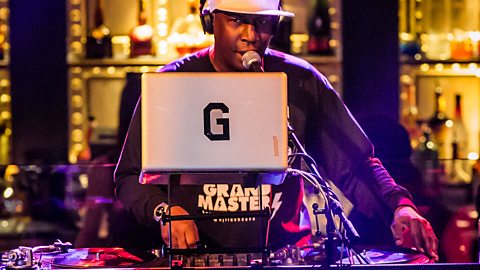
Some of the DJs (or MCs) rapped over the top of the ‘breaks’ in a style called MCing (or emceeing) - where words and rhymes were spoken in order to encourage the audience to dance.
Dancers would get up during the breaks and perform a highly gymnastic style of dance using head and back-spinning. They became known as breakdancers.
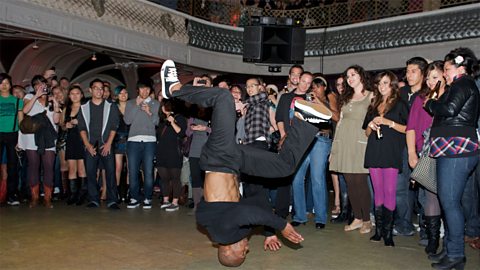
Early hip-hop was performed live, usually at parties. The first hip-hop record is widely thought to be Rapper’s Delight by The Sugarhill Gang, which was recorded in 1979.
A selection of hip-hop tracks from 1981, including Grandmaster Flash
In the 1970s and 80s, lyrics often focused on social issues, giving young African Americans a platform to have their voices heard. The beat was almost always in 4/4 time, and the music often included drum machines and synthesizers.
In the 1980s, artists began to use the human body in order to create rhythms, using the mouth, lips, tongue and other body parts to create beats. This vocal percussion technique is called A form of vocal percussion where the mouth, lips, tongue and voice are used to mimic a drum machine.. The first performers to use this technique included Biz Markie and Doug E. Fresh.
