Places of worship
Puja in the home
For daily devotion, many Hindu families have a home Tomb or monument to a saint or other holy person., often in a corner of the best room in the house. It is a way of honouring the gods and goddesses. Worship at the shrine may involve the whole family, or sometimes it is done alone. A daily The word most Hindus use for an act of daily worship. ceremony uses all the five senses. For this a Hindu needs the following:
| Objects | Use in worship | Sensations |
| Bell | To awaken the god or goddess and symbolise the beginning of the worship. | Hearing |
| Food | To make a gift, fruit or other food is placed in the shrine as an offering to the deity. | Tasting |
| Murti | Viewing an image of the god or goddess being worshipped. | Seeing |
| Incense and flowers | Burning incense sticks fill the room with scent, symbolising the presence of the deity. Flowers are often placed in the shrine to honour the deity. | Smelling |
| Kum-kum powder | Making a coloured mark on the worshipper’s forehead shows honour to the deity and reminds the worshipper of their devotion throughout the day. | Touching |
| Objects | Bell |
|---|---|
| Use in worship | To awaken the god or goddess and symbolise the beginning of the worship. |
| Sensations | Hearing |
| Objects | Food |
|---|---|
| Use in worship | To make a gift, fruit or other food is placed in the shrine as an offering to the deity. |
| Sensations | Tasting |
| Objects | Murti |
|---|---|
| Use in worship | Viewing an image of the god or goddess being worshipped. |
| Sensations | Seeing |
| Objects | Incense and flowers |
|---|---|
| Use in worship | Burning incense sticks fill the room with scent, symbolising the presence of the deity. Flowers are often placed in the shrine to honour the deity. |
| Sensations | Smelling |
| Objects | Kum-kum powder |
|---|---|
| Use in worship | Making a coloured mark on the worshipper’s forehead shows honour to the deity and reminds the worshipper of their devotion throughout the day. |
| Sensations | Touching |
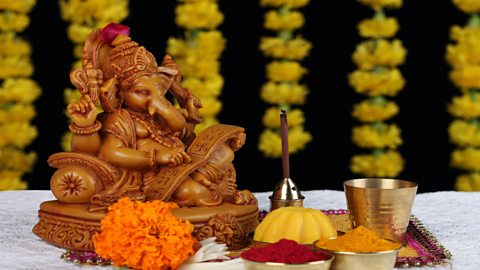
Typically, a worshipper will ring a bell to begin, before lighting some incense and washing the murti. Flowers or fruit are placed in the shrine and lamps are lit – usually a candle lamp. An act of worship and of adoration, using diva lamps made from cotton wool and ghee (purified butter). lamps often have ghee for fuel and have many wicks. The lamp is circled around in front of the murti, symbolising the light and love of the gods and goddesses. Hymns (bhajans) or A sacred (holy) prayer or word which often is chanted or sung rather than just spoken. are sung or said. Then the worshipper marks their forehead with kum-kum powder, and also marks the murti as a blessing.
Question
How are the five senses used in Hindu worship in the home?
By hearing the bell and the chanting, touching the objects in the shrine, seeing the murtis and the arati lamps, tasting the food and smelling the incense.
