Methods of the abolitionists
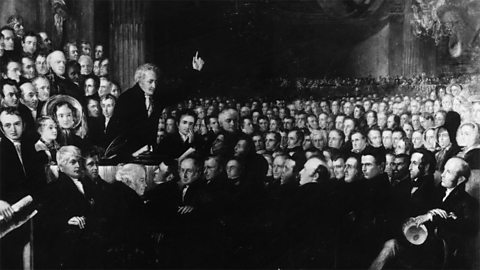
Meetings
The abolitionists used many ways to convince people that the slave trade should be abolished.
A network of local abolition groups was established across Britain. These groups campaigned through public meetings and the publication of pamphlets and petitions.
One of the main speakers at abolitionist meetings was John Newton, a former slave ship captain who became an abolitionist.
Evidence gathering
Thomas Clarkson gathered evidence of the evils of the slave trade.
He visited slave trading ports where he boarded slave ships.
He collected evidence such as iron handcuffs, branding irons and thumbscrews.
Clarkson’s investigations angered some ship captains and they tried to kill him by pushing him into the dock in Liverpool. They failed and Clarkson survived.
Clarkson gathered a diagram of the slave ship Brookes, showing the cramped conditions in which 450 enslaved people were stowed below decks.
In 1787 Thomas Clarkson went on a five month speaking tour of England, showing people chains and irons, and a model of a slave ship.
Establishment of legal rights
During the 1770s the abolitionist campaigner Granville Sharp campaigned against the slave trade through the law courts.
Granville Sharp won the Somersett legal case 1772 in London. Chief Justice Lord Mansfield (himself a slave owner) ruled that enslaved people in Britain could not be forced to return to the West Indies.
