Use of material properties in commercial products
Properties of materials in electronic products
In a household. appliances, such as televisions, washing machines and fridges, all use A copper sheet used to attach electrical components. to control the A part that when put together makes a product. needed to complete their various functions, eg timers or alarms. To increase functionality, these products may also have A computer chip used instead of a CPU that contains a processor, memory and inputs/outputs. that make decisions based on the input. For example, some washing machines sense the weight of wet clothes and adjust the speed it spins the clothes at.
Domestic white goods, such as washing machines and freezers, are usually encased with a steel shell that is Heated metal is dipped into powdered or a liquid polymer so that a coating of the polymer is bonded to the metal. in a plastic coating, which protects it from wear and rust, insulates it and makes it easy to keep clean. Drive belts, which turn washing machine drums and oven fans, are made from rubber or A synthetic resin that is hardwearing and flexible. plastic as it is hardwearing and flexible.
Properties of materials in mechanical products
Mechanical products are generally made of metal for strength and resistance to Wear through rubbing together. . The repetitive movement from engine pistons is a good example, where the piston must be resilient enough to withstand the friction and the buildup of heat produced by constant motion.
High-carbon steel is often used for the An exterior case or enclosure. of moving parts in mechanical products as it is hardwearing, smooth and resistant to Iron oxide formed on iron or steel, orange coloured, flaky.. It is used in car brakes and wheels. To cut down on weight, some components, such as engine blocks in sports cars, are made from aluminium, which can improve the performance of the car but is expensive.
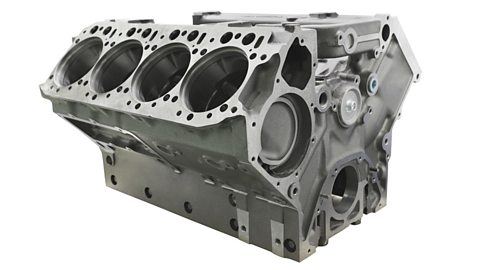
Car engines can get very hot, so the metals used in their production need to be able to withstand high temperatures. Alloys of metals, such as A steel alloy with a minimum of 10.5% chromium., which is a mixture of low-carbon steel and chromium, can be made to maximize their efficiency and produce certain properties. Stainless steel is resistant to rust, smooth, hardwearing and can be polished to a high shine.
