The experiences of Germans under the Nazis, 1933-1945
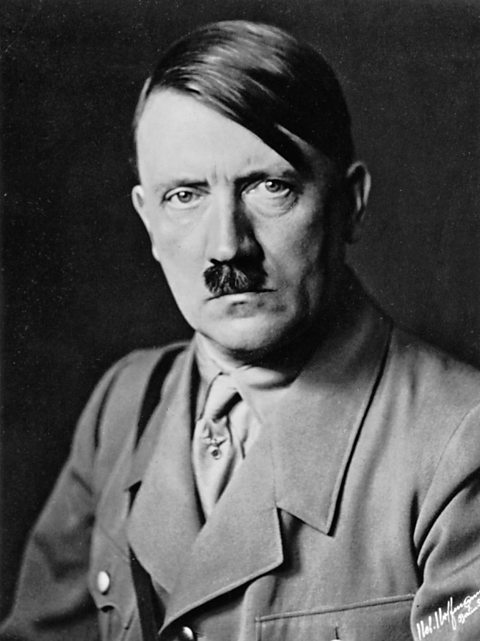
Nazi Germany was a totalitarian state, which means that the government sought to control every aspect of life. Germans experienced this through four areas:
- The police state
- The economy
- Social policy
- Persecution
The police state
Hitler used three weapons to control the German people:
- The Schutzstaffel (SS). This organisation was responsible for ensuring the population remained under control and any potential threats to the Nazis were dealt with. It oversaw the Gestapo (secret police), which spied on ordinary Germans, and it ran concentration camps where enemies of the state were sent.
- Control of the legal system. All judges had to swear an oath of loyalty to the Führer and all lawyers had to join the Nazi Lawyers’ Association. It was made harder to defend people placed on trial for suspected crimes and the death penalty was used much more widely than before.
- Propaganda and censorship. Joseph Goebbels ran the Ministry of Propaganda, whose job it was to convince the German people to embrace Nazi rule. This was achieved through control of the press, radio and the arts, and through rallies and sporting events.
There was limited resistance to the Nazis, mostly because the police state was so effective at crushing Disagreement.. It is hard to know exactly how much opposition there was to Hitler and his regime, though religious figures, underground members of the Social Democratic Party (SPD), Supporters of the communist movement or party., and the young did provide some resistance.
The economy
Hitler achieved virtually full employment through Manufacturing arms and increasing the army., National Service and marginalising groups like the Jews. However, living standards for working class Germans did not really improve and workers were expected to take part in Nazi Party schemes like Strength Through Joy, which gave them cheap holidays, in return for giving up their trade union rights.
The Nazis aspired to achieve A closed economy. Hitler's ideology that wanted Germany to cease trade with the outside world and rely entirely on its own resources., or economic self-sufficiency, but in general the economy was geared towards preparing for a future war. As such, workers were expected to work long hours for modest pay and to stay loyal to the Nazi regime.
Social policy
The Nazis’ social policies affected two groups in society the most – women and young people:
- Women were expected to embrace a life based around the ‘3 Ks’ of Kinder, Küche, Kirche (Children, Kitchen and Church). It was their duty to produce and raise children, in order to secure the future of the German word meaning 'realm', used to describe Germany as a country.. They were encouraged to give up work and received loans and awards for having lots of children.
- Young people were a particular target for the Nazis’ propaganda, as they represented the future. The school curriculum was altered to promote Nazi ideology and all young people were expected to join a Nazi youth organisation; the Hitler Youth for boys and the Band of German Maidens for girls.
In addition, the Nazis sought to control or limit the influence of Christianity. They set up an official state church, called the Confessing Church, which adapted protestant teachings to Nazi ideology. Also, despite signing a An agreement with the Vatican. with the Pope in which Hitler promised to leave the Catholic Church alone if it stayed out of politics, the Nazis attempted to infiltrate it and placed restrictions on worship.
Persecution
Nazi ideology centred on the belief that the A person of European descent - not Jewish - often with blond hair and blue eyes. The Nazis viewed Aryans as the superior human race. race of northern Europe was superior to all others and that some races were sub-human. Nazis also believed any weaknesses in the Aryan race, such as disabled people, should be weeded out to maintain racial purity. As such, many groups in Nazi Germany were persecuted, as well as the Nazis' political enemies. This persecution involved sterilisation, ‘The deliberate ending of life - in this context, the state-organised killing of people who the Nazis decided were 'unfit'.’ imprisonment in concentration camps and the loss of civil rights.
German Jews were the most frequently targeted minority group. Their rights were progressively taken away, including their German citizenship. The onset of war in 1939 escalated the nature and frequency of racist violence. The confusion of war gave the Nazis opportunity to plan and almost succeed in the murder of Europe’s Jewish population. 6 million perished in camps along with roughly 1 million other enemies of the Nazi state.
World War Two
The period ended in disaster for the German people. Despite Germany’s early successes, after 1942, World War Two brought rationing, bombing raids and labour shortages. Once the tide of war turned, from 1943 onwards, these difficulties intensified. In particular, the Allied bombing campaign had a brutal impact on the civilian population with hundreds of thousands killed, injured and displaced.
Opposition to the Nazis grew during the war and culminated in a failed attempt by army officers to assassinate Hitler in 1944. The eventual invasion of Germany in 1945, by the USSR from the East and Britain, the USA and France from the West, led to unconditional surrender and eventual occupation.
More guides on this topic
- Germany before World War One, 1890-1914 - AQA
- Weimar Germany, 1918-1924 - AQA
- QUIZ: Germany and the growth of democracy
- Weimar recovery and Stresemann, 1924-1929 - AQA
- Hitler into power, 1929-1934 - AQA
- QUIZ: Germany and the depression
- Life in Nazi Germany, 1933-1939 - AQA
- QUIZ: Experience under the Nazis
- World War Two and Germany, 1939-1945 - AQA
- Weimar Germany - exam preparation - AQA
