Biotic factors affecting the abundance and distribution of organisms
The abundance and distribution of organisms are also affected by Living elements of an ecosystem, such as plants and animals. factors, which are factors that are living.
Availability of food
All animals require food to live. The availability of food is a major factor in how many animals live in an The living organisms in a particular area, together with the non-living components of the environment.. Areas like rainforests with rich food supplies have more A type of organism that is the basic unit of classification. Individuals of different species are not able to interbreed successfully. of life than other areas like deserts and the polar regions where there is less food.
New predators
The arrival of new An animal that hunts, kills and eats other animals for food. in an ecosystem can have a devastating effect. In balanced ecosystems, predators and Organisms that predators kill for food. have evolved together. An animal that hunts, kills and eats other animals for food. can catch enough prey to survive, but not too many to mean they kill all their prey.
The arrival of a new predator can upset this balance. An example of this is the introduction of the red fox to Australia, which has caused concern over their effect on native birds and small mammals. Introducing new predators can cause a rapid decline in the numbers of prey, which then reduces the food supply for existing predators.
New pathogens
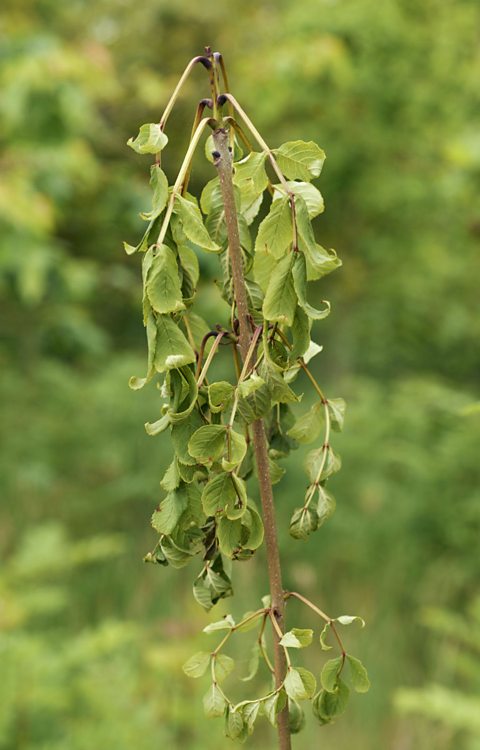
When organisms inhabit new ecosystems they often bring new Microorganism that causes disease.. As an example, when Europeans first colonised North America, they introduced new pathogens like the influenza virus. Many Native Americans had not developed immunity to new diseases such as this, and so many were killed by them.
There are many examples of new pathogens being introduced to the UK. Ash dieback is a disease caused by a fungus which has killed many ash trees since it was first found in the UK in 2012.
Pathogens have also been introduced on purpose. Myxomatosis is a disease that affects rabbits. It is caused by a virus and infected rabbits develop skin tumours and may go blind. In the 1950s it was purposefully released into the wild in the UK to reduce the All of the members of a single species that live within a geographical area. of rabbits. It did exactly this and some people estimate that more than 99 per cent of rabbits in the UK died. However, our rabbits developed immunity to it and the population has now returned to previous levels.
Out-competition
The introduction of a new species into an ecosystem can result in it out-competing another native species. Several hundred years ago grey squirrels were brought over from North America by wealthy people and let free in their grounds. Our smaller native red squirrel couldn't compete with the newer, larger grey squirrel. Because grey squirrels are larger they can store more fat and survive harsher winters. So the numbers of red squirrels and the places they live has reduced dramatically.
Other examples of out-competition of native species by newly introduced species include the Canada goose in Europe and the cane toad in Australia, Himalayan balsam in Cambodia and harlequin ladybirds in UK are also current concerns.
The effect of biotic factors on organisms
Red squirrels are native to Great Britain. They weigh around 300 grams, about half the mass of the larger grey squirrel. The grey squirrel A type of organism that is the basic unit of classification. Individuals of different species are not able to interbreed successfully. was introduced around a hundred years ago from America by wealthy land owners who wanted a fashionable addition to their forests.
The larger grey squirrel has provided competition for the native red squirrel, which has resulted in a lack of food for the species. Organisations like the Red Squirrel Support Trust have sampled the numbers of both squirrel types over time. Their results are shown below.
Question
What conclusions can you draw from this data? [4 marks]
In 1945 grey squirrels were only found in central Southern England and in small numbers on the East coast of Northern England [1 mark]. By 2000 they had spread throughout England and Wales [1 mark]. The red squirrel is now only found in parts of Cumbria, Isle of Wight, Scotland and Ireland [1 mark]. The pattern does not appear to have changed much between 2000 and 2010 [1 mark].
Question
What limitations might there be in drawing these conclusions and how could these be improved? [2 marks]
This information is only from one source [1 mark]. It could be compared with others to ensure its reliability [1 mark].
More guides on this topic
- What happens during photosynthesis? - OCR 21st Century
- How do producers get the substances they need? - OCR 21st Century
- How do producers transport the substances they need?
- How are organisms in an ecosystem interdependent? - OCR 21st Century
- How are levels maintained within an ecosystem? - OCR 21st Century
