Inventory storage and warehousing
Businesses need to decide on the best way to store inventory to make it:
- easily accessible
- cost effective
- well maintained
Businesses often store inventory in warehouses. Warehouses are facilities bought or rented by the company that are used to store and distribute inventory. They need to be secure to prevent theft or damaged stock.
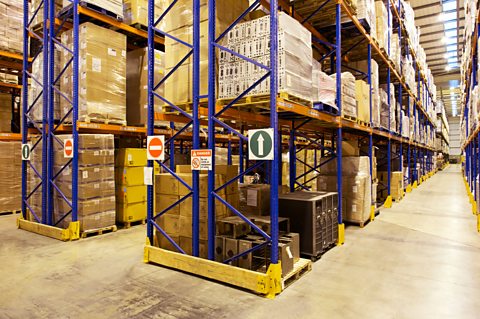
A business can choose to use:
- centralised storage/warehousing
- de-centralised storage/warehousing
Centralised storage
Centralised storage is when a company chooses one central location to store all the stock for the organisation. The stock will be distributed to departments as required from the central warehouse.
| Benefits | Costs |
| Suppliers are delivering to one location which reduces delivery costs | High costs incurred due to specialist equipment and large storage facilities |
| Economies of scale are gained due to bulk ordering | May incur increased delivery times and delays in receiving stock to departments |
| Specialised staff can be employed to manage inventory, which will reduce theft and improve efficiency | Increased wage costs as specialist staff are required to manage the storage and distribution of stock |
| Standardised procedures can be implemented | Harder to meet specific requirements of specialised departments within the company |
| Centralised warehouses are often located near good infrastructure making them accessible | Storing large amounts of stock may increase the chance of wastage |
| Reduces duplication of stock and administration costs |
| Benefits | Suppliers are delivering to one location which reduces delivery costs |
|---|---|
| Costs | High costs incurred due to specialist equipment and large storage facilities |
| Benefits | Economies of scale are gained due to bulk ordering |
|---|---|
| Costs | May incur increased delivery times and delays in receiving stock to departments |
| Benefits | Specialised staff can be employed to manage inventory, which will reduce theft and improve efficiency |
|---|---|
| Costs | Increased wage costs as specialist staff are required to manage the storage and distribution of stock |
| Benefits | Standardised procedures can be implemented |
|---|---|
| Costs | Harder to meet specific requirements of specialised departments within the company |
| Benefits | Centralised warehouses are often located near good infrastructure making them accessible |
|---|---|
| Costs | Storing large amounts of stock may increase the chance of wastage |
| Benefits | Reduces duplication of stock and administration costs |
|---|---|
| Costs |
De-centralised storage
De-centralised storage is when each department within the organisation is responsible for ordering and storing their own stock.
| Benefits | Costs |
| Inventory is accessible so no delay in receiving required goods | Increased delivery costs due to low amounts of inventory being delivered to multiple locations |
| Small amounts of stock being held prevents wastage | Security may not be as effective leading to increased theft |
| Departments are more responsive to local needs and changes in the market | No specialist staff dealing with stock may lead to disorganisation and delays |
| Benefits | Inventory is accessible so no delay in receiving required goods |
|---|---|
| Costs | Increased delivery costs due to low amounts of inventory being delivered to multiple locations |
| Benefits | Small amounts of stock being held prevents wastage |
|---|---|
| Costs | Security may not be as effective leading to increased theft |
| Benefits | Departments are more responsive to local needs and changes in the market |
|---|---|
| Costs | No specialist staff dealing with stock may lead to disorganisation and delays |
