The Earth’s early atmosphere
The Earth formed approximately 4.6 billion years ago. Scientists cannot be certain about what gases made up the Earth’s early The layers of gases that surround the Earth. The important gases in the atmosphere are nitrogen, oxygen and carbon dioxide.. Ideas about how the atmosphere was produced and has changed have developed over time as new Information or material that shows something is true. has been discovered. There is still not enough evidence for scientists to be certain.
Where did the atmosphere come from?
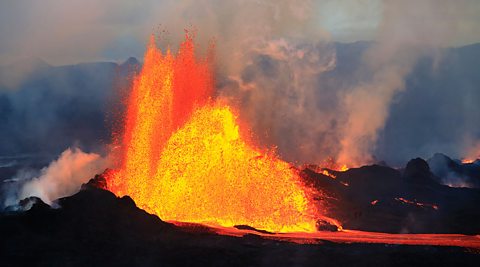
One theory suggests that the early atmosphere came from intense When a mountain with a hole in the top expels lava, ash, gas and other materials. activity, which released gases that made the early atmosphere very similar to the atmospheres of Mars and Venus today. These atmospheres have:
- a large amount of carbon dioxide
- little or no oxygen
- small amounts of other gases, such as ammonia and methane
Volcanic activity also released water Vapour is a cloud of liquid particles. Steam is water vapour., which Turned from a gas or vapour into a liquid, usually as a result of cooling. as the Earth cooled to form the oceans. Nitrogen was probably also released by volcanoes which gradually built up in the atmosphere because it is unreactive.
The modern atmosphere
For approximately 200 million years, the proportions of different gases in the atmosphere have been relatively Atoms are stable if their outer shell contains its maximum number of electrons.. The pie chart below shows the percentages of gases that make up the atmosphere.
Question
Name the most abundant gas in the modern atmosphere.
Nitrogen.
